Last updated October 9, 2026
ADU Builders Maintenance Checklist for Los Angeles Homeowners
A cracked stucco line ignored through two dry Los Angeles summers costs maybe $400 to patch. Ignore that same crack through one wet winter and you’re looking at $14,000 in water intrusion repairs, mold remediation, and re-stuccoing. That’s the maintenance math in Los Angeles: the city’s long dry stretches lull owners into complacency, then a single atmospheric river finds every gap you let ride. This guide lays out a month-by-month maintenance plan built for LA’s actual climate, not a generic four-season template written by someone in Ohio. You’ll learn which five failure points matter most here, which skipped maintenance items can void prefab warranties on brands like Mighty Buildings and Dvele, and what an honest annual maintenance budget looks like.
Quick Answer
An ADU maintenance checklist for Los Angeles homeowners should follow a month-by-month calendar: inspect stucco and caulking before winter rains hit (October), replace HVAC filters during Santa Ana wind season (September through January), descale tankless water heaters twice a year due to hard municipal water, check flat roofs for ponding after every significant rain, and seal foundation gaps against rodents every spring. Budget $800 to $2,400 per year depending on ADU size, and keep dated records of every service because skipped maintenance items can void prefab warranties from brands like Dvele, Abodu, and Mighty Buildings.
Table of Contents
- The Five LA-Specific Failure Points Most Checklists Miss
- The Month-by-Month Maintenance Calendar for LA ADUs
- Prefab Warranty Requirements: What Dvele, Abodu, and Mighty Buildings Expect
- What’s the Owner’s Job vs. What a Quality Builder Should Cover in Year One
- The Annual Maintenance Cost Ledger: Budgeting $800 to $2,400
- Termite and Pest Prevention Specific to Los Angeles
- Water Management: LA’s Most Underrated ADU Threat
- Common Mistakes to Avoid
The Five LA-Specific Failure Points Most Checklists Miss
Most ADU maintenance guides are written generically: check the roof, flush the water heater, clean the gutters. That advice isn’t wrong, but it misses what actually fails on accessory dwelling units in Los Angeles. For deeper help, see our ADU Builders Troubleshooting: Common Problems and How to Fix Them. In our experience building and servicing ADUs across the LA basin, five issues recur far more than any others, and they’re all tied to Southern California’s specific climate and infrastructure.
First: stucco micro-cracks. Los Angeles sits in a seismic zone with dramatic temperature swings between inland valleys and coastal zones. A 40-degree daily fluctuation in places like the San Fernando Valley causes stucco to expand and contract constantly. Hairline cracks form that you can barely see in August. When the winter rains arrive, those hairlines become channels for water. Once moisture gets behind stucco, it wicks into sheathing and framing. The fix is simple: walk the ADU exterior every October with a tube of elastomeric caulk and fill anything wider than a credit card edge. Elastomeric caulk stays flexible through temperature swings where regular acrylic caulk hardens and cracks again within a year.
Second: flat-roof ponding. Many ADUs, especially prefab units from Boxabl and Tuff Shed, use low-slope or flat roof systems. Los Angeles roofs deal with intense UV exposure for 300 days a year, which degrades roofing membranes far faster than in cloudier climates. When a membrane degrades, it loses its slight crown and water starts ponding. Ponding water is a compounding problem: standing water accelerates UV damage, which deepens the pond, which holds more water. After every significant rain event, take a photo of the roof from a ladder or drone. If water remains pooled 48 hours after rain stops, call a roofer. A $300 membrane patch now beats a $9,000 roof replacement in three years.
Third: tankless water heater sediment from hard municipal water. Los Angeles tap water runs hard, typically 7 to 12 grains per gallon depending on your DWP source. Tankless water heaters are standard in ADUs because they fit tight mechanical closets, but hard water kills them faster than anything else. Scale builds on heat exchangers, reduces efficiency, and eventually triggers overheat shutdowns. In LA, you should descale a tankless unit twice a year, not once. A $150 descaling service (or $40 in vinegar and a pump if you’re handy) prevents a $1,800 heat exchanger replacement. If your ADU has a traditional tank water heater, drain two gallons from the bottom valve every six months to flush sediment.
Fourth: pest entry at foundation gaps. Los Angeles has one of the highest rat and mouse populations of any major US city, and ADUs sit on grade with utility penetrations that create entry points. After the 2023 rodent surge that followed the heavy winter rains, we saw a huge spike in ADU pest complaints. Mice need a gap the width of a pencil to enter. Check where plumbing, electrical conduit, and gas lines penetrate the foundation or floor system, then fill gaps with copper mesh and expanding foam. Skip the standard steel wool: Los Angeles coastal air rusts it to dust within a season, which is exactly why we recommend copper mesh instead.
Fifth: HVAC filter neglect during Santa Ana wind season. Santa Ana winds blow September through January, carrying dust, ash, and particulate from as far east as the Mojave. Your ADU’s HVAC filter is the front line. A standard 1-inch filter needs replacement every 30 days during Santa Ana season, not the 90 days generic advice suggests. A clogged filter forces the blower motor to work harder, shortens its lifespan, and pushes dust into the coil where it becomes a $600 cleaning job. Buy filters in bulk, write the install date on the frame with a Sharpie, and set a phone reminder.
The Month-by-Month Maintenance Calendar for LA ADUs
Los Angeles doesn’t have four seasons. It has two: dry and wet, with Santa Ana season layered on top. Here’s the ADU Builders Maintenance Schedule: What to Do and When we recommend to every ADU owner, organized by month rather than by season. Print it, tape it inside a cabinet door, and let it do the remembering for you.
January
- Inspect the roof for ponding after December rains. Document with photos.
- Replace HVAC filter (Santa Ana season peaks December-February).
- Check under-sink plumbing for slow drips from temperature stress.
- Walk the interior for any musty smell indicating trapped moisture.
February
- Test GFCI outlets in kitchen, bath, and exterior. LA’s wet winters trip them more often than owners expect.
- Flush the water heater or schedule a tankless descale (first of two annual flushings).
- Inspect window and door weather stripping. Winter rain driven by onshore flow finds gaps.
March
- Deep clean dryer vent and bathroom exhaust fans. Lint plus winter humidity creates fire risk.
- Check irrigation lines near the ADU foundation. Leaks here cause soil expansion, which cracks slabs and stucco.
- Inspect exterior caulking on windows, doors, and penetrations. Start repainting or sealing any exposed wood.
April
- Rodent-proofing month. Fill foundation gaps with copper mesh and foam. LA’s rats start breeding in spring.
- Trim vegetation 12 inches back from all ADU walls. Overgrown plants hold moisture against stucco and create pest highways.
- Check crawl space or under-floor access for moisture and pest activity.
May
- Service the HVAC system before summer heat hits. Replace the filter, clean the condenser coil if the ADU has a split system.
- Test smoke and carbon monoxide detectors. Change batteries even if they test fine: LA heat kills them faster.
- Inspect roof flashing around skylights, vents, and the main house connection point.
June
- Check for termite activity. LA’s drywood termites swarm May through July. Look for wings near windowsills, frass pellets, or hollow-sounding wood.
- Deep clean window tracks and clear weep holes. Dust builds up through spring and clogs drainage.
- Inspect stucco for new cracks while the weather is warm and dry: this is the best time to fill them.
July
- Second HVAC filter replacement of the year (pre-summer heat wave protection).
- Check all exterior paint and stucco for UV damage. LA sun means southwest-facing walls fade and crack first.
- Test the garage door springs and rollers if the ADU has a garage. Heat weakens old springs.
August
- Schedule termite inspection if you skipped June. August heat drives termites deeper into wood.
- Clean gutters and downspouts before fire season. Dry debris is a fire risk and clogs before winter rain.
- Check exterior vents and screens. Replace any damaged screens now, before rats start looking for winter warmth.
September
- Start Santa Ana season filter schedule: replace monthly through January.
- Inspect all stucco, caulking, and flashing. This is the last good weather window before rains.
- Have a roofer inspect any areas that ponded during last winter. Fix them now while materials can cure in dry weather.
October
- Complete exterior waterproofing walk: caulk cracks, reseal penetrations, patch stucco. This is non-negotiable before first rain.
- Clean gutters thoroughly. LA’s first rain arrives with leaves and debris accumulated over nine dry months.
- Test all exterior lighting and door locks ahead of winter’s earlier sunsets.
November
- Flush/descale the water heater a second time before winter usage spikes.
- Check weather stripping again and install door sweeps where needed.
- Take pre-rain photos of the roof, stucco, and foundation. You want a baseline for comparison after storms.
December
- Monitor during rain events. Walk the ADU during the first real storm looking for leaks, drips, or water sheeting where it shouldn’t.
- After each rain, check the roof for ponding within 48 hours.
- Inspect interior walls for water stains or bubbling paint, especially on the west-facing sides.
Prefab Warranty Requirements: What Dvele, Abodu, and Mighty Buildings Expect
Prefab ADUs have transformed the Los Angeles market. Factory precision beats site-built framing for tolerances, and brands like Dvele, Abodu, and Mighty Buildings deliver units in weeks instead of months. But prefab warranties are written with teeth. Skip the maintenance schedule and you’re not just shortening the unit’s life; you’re actively voiding the warranty. Here’s what the major brands actually require.
Dvele builds high-performance panelized units with a strong focus on energy efficiency and indoor air quality. Their warranty documentation requires regular HVAC filter replacement and periodic inspection of the building envelope. The catch: Dvele’s envelope is so tightly sealed that ventilation depends on mechanical systems. A clogged filter doesn’t just reduce airflow; it forces the ERV (energy recovery ventilator) to work against resistance, which can void the mechanical warranty. Dvele specifically calls out that the homeowner must maintain proper drainage around the foundation and keep exterior penetrations sealed. If water damage traces back to an unmaintained exterior caulk joint, that’s on you, not Dvele.
Abodu produces studio-to-three-bedroom ADUs with a simplified installation process. Their warranty covers structural and finish work, but their documentation is explicit that the homeowner is responsible for routine maintenance including gutter cleaning, roof drainage, and sealing exterior penetrations. Abodu’s single-ply roof membrane carries a manufacturer warranty that requires evidence of annual inspection. No inspection records, no warranty claim. We recommend keeping a simple Google Drive folder with dated photos of your roof and exterior. It takes ten minutes a year and it’s the difference between a covered repair and a denied claim.
Mighty Buildings uses 3D-printed composite panels with a different failure profile than traditional construction. Their panels are extremely dimensionally stable, which means fewer expansion cracks than stucco. But the panel joints and window penetrations are the weak points, and Mighty Buildings’ warranty requires periodic inspection of these joints. The company also requires that any exterior modification, like drilling through a panel for a light fixture or hose bib, be performed by an approved contractor or it voids the structural warranty. This is a common gotcha: a handyman installs a security camera with a lag bolt through a Mighty panel, and suddenly the wall warranty is gone. Read the modification clause before you drill anything.
The shared thread across all three brands: dated documentation is your warranty insurance. A spreadsheet with columns for date, task performed, who did it, and photo evidence costs nothing and protects tens of thousands in potential claims. Photograph everything. Ten minutes each month keeps you covered when something actually fails.
What’s the Owner’s Job vs. What a Quality Builder Should Cover in Year One
There’s a line between maintenance and defects, and a good builder makes that line clear in writing. At Benson ADU Builders, we spell this out for every Los Angeles project because owners deserve to know what they’re signing up for. Here’s how the division works.
The builder’s responsibility in year one includes: material defects (a cabinet door that warps, a fixture that fails, a roof membrane seam that separates), installation errors (crooked tile, improperly flashed windows, a furnace wired wrong), and settling-related stucco cracks wider than 1/8 inch. If a door sticks because the unit settled unevenly, that’s a builder issue. If the toilet backs up the week after move-in because the waste line was installed at an improper slope, that’s a builder issue. Our 365-Day Done Right Promise covers exactly these things: if the work isn’t right within a full year, we make it right, in writing, with a free second visit if any covered repair fails.
The owner’s responsibility from day one includes: filter replacement, cleaning gutters, flushing water heaters, resealing caulk, managing vegetation, pest control, and documenting everything. These aren’t defects; they’re wear items. Every building system has consumables. A builder who tells you otherwise is either naive or setting you up for disappointment.
Here’s the nuance many owners miss: the line shifts when neglect causes the defect. A water heater that fails six months in because of a manufacturing fault is a builder issue. A water heater that fails because hard LA water scaled the heating element into failure and the owner never flushed it? That’s a maintenance issue, and no honest builder eats that cost. This is why we recommend the two-flush-per-year schedule so strongly. It protects the equipment and it protects your claim if something does fail.
When you work with ADU Builders in Los Angeles, insist on a written warranty that names specific covered items and specific exclusions. Verbal promises are worthless. The written guarantee is the only thing that survives contact with a failed part.
The Annual Maintenance Cost Ledger: Budgeting $800 to $2,400
Maintenance costs are shockingly predictable if you actually track them. We tell every owner the same thing: budget like a landlord, even if you’re housing your mother-in-law and not a paying tenant. Here’s the realistic range for a Los Angeles ADU.
Small ADU (under 500 sq ft): $800 – $1,200 per year
- HVAC filters (4 per year at $15 each): $60
- Tankless water heater descaling (2x at $150): $300
- Caulk and sealant (annual exterior walk, DIY): $80
- Pest prevention (copper mesh, bait stations, annual inspection): $150
- Gutter cleaning if you pay someone (2x at $100): $200
- Miscellaneous (batteries, weather stripping, touch-up paint): $150
Medium ADU (500 – 1,000 sq ft): $1,200 – $1,800 per year
- Everything above plus:
- HVAC service call (annual inspection and coil cleaning): $250
- Roof inspection by a professional: $300
- Termite inspection: $150
Large ADU (1,000+ sq ft, multiple baths): $1,800 – $2,400 per year
- Everything above plus:
- Additional bathroom fixtures and caulk replacement: $200
- Exterior paint touch-up on sun-exposed walls: $300
- Landscape and irrigation maintenance around foundation: $400
Here’s the counterintuitive part: spending more on preventive maintenance doesn’t just protect the structure. It protects the rental income. In Los Angeles, a well-maintained ADU rents for 10 to 15 percent more than a tired one, and it rents faster. If you’re pulling $2,500 a month from a one-bedroom ADU, a $1,500 annual maintenance budget is 5 percent of gross revenue. That’s the cheapest insurance policy available in the Los Angeles rental market.
The alternative is the deferred maintenance spiral. Skip two years of maintenance, save $3,000, and then write a check for $18,000 when the roof membrane fails, the stucco wicks water into the framing, and the renters move out because of mold. The math doesn’t require a spreadsheet to understand. If you’re planning a home addition contractor in Los Angeles can walk you through the same calculus for bigger projects, and the principle holds identically.
Termite and Pest Prevention Specific to Los Angeles
Los Angeles is drywood termite country. Unlike the subterranean termites common in the eastern US, drywood termites don’t need soil contact. They fly into exposed wood, bore in, and set up colonies inside your ADU’s framing. They swarm between May and October, with peak activity from July through September. The warm evenings when you leave windows open? That’s swarm time.
- Inspect in June and September. Look for three signs: discarded wings near windowsills (4 to 6 mm, translucent), frass (tiny hexagonal pellets that look like coarse sand or coffee grounds), and kick-out holes (pinhead-sized holes in wood surfaces with frass below them).
- Hire a professional termite inspection in year one. It costs $150 to $300 and establishes a baseline. In an ADU built adjacent to mature landscaping, you want this done before you’ve furnished the unit and made inspection access difficult.
- Maintain a 12-inch gap between soil, mulch, and wood siding. This matters more in LA than in wetter climates because our dry summers don’t rot wood quickly; they dessicate it, making it more attractive to drywood termites.
- Use borate treatments on exposed framing during construction. If you’re building now, insist on it. Borates are cheap, non-toxic to humans, and they make framing wood permanently unpalatable to termites. Retrofit treatment is far more expensive.
- Check your ADU’s perimeter monthly during summer. Look for mud tubes (subterranean termites), ant trails, and rodent entry points. Catch activity early and a pest control company can spot-treat before colonies establish.
Rodents deserve separate attention. Los Angeles consistently ranks in the top five US cities for rat complaints. ADUs, especially those built on slab foundations with utility penetrations, create multiple entry points. Check under the kitchen sink at the dishwasher drain, behind the washing machine at the drain line, around the water heater flue, and wherever the gas line enters the building. Any gap wider than a pencil needs copper mesh packed tight and expanding foam over it. Copper mesh doesn’t rust in our coastal air, and rats won’t chew through it. Steel wool rusts, and they will chew through it.
For a room addition contractor in Los Angeles handling a project with an existing rat problem, the sequence matters: exclusion first, then trapping, then monitoring. Trapping without exclusion is just inviting new rodents into a cleaned-out space.
Water Management: LA’s Most Underrated ADU Threat
When people think about water damage, they think about floods. Los Angeles doesn’t flood the way Houston or Miami does, so owners assume water is a minor concern. That assumption is expensive, because water damage in LA comes slowly, through cracks and joints, and it accumulates for years before anyone notices.
The primary culprit is LA’s rain pattern. We get essentially zero rain from May through October, then atmospheric rivers deliver a year’s worth of precipitation in eight to twelve storm events between November and April. Dry soil shrinks away from foundations during the summer, creating a channel for water to run directly to the footing when the first heavy rain hits. This is why maintaining proper grading around the ADU matters: soil should slope away from the foundation at least six inches over the first ten feet. Over time, settlement flattens this slope, and water starts pooling against the slab. Once a year, put a level on the ground around your ADU and check that the slope still runs away from the structure. If it doesn’t, add soil or regrade.
Gutters and downspouts matter disproportionately in LA because they’re dry and brittle for nine months, then suddenly inundated. A downspout that discharges next to the foundation will erode soil in one wet season. Every downspout should carry water at least five feet from the structure, ideally into a drain pipe or to a splash block that directs water downslope. During a November rain, go outside and watch where water goes. That’s the single most informative ten minutes of the entire maintenance year.
Flat roof maintenance ties into this directly. A Boxabl unit with a low-slope roof needs drainage inspection before every winter. Leaves, dust, and Santa Ana debris accumulate in scuppers and drains during the dry months, then the first rain backs up and ponds. Clean scuppers in October, check them after every significant rain, and take photos. If ponding persists more than 48 hours after rain, the roof needs professional attention before the next storm cycle.
Common Mistakes to Avoid
- Treating maintenance as optional until something breaks. LA’s long dry season makes neglect feel consequence-free. Then a wet winter arrives and every deferred item becomes an emergency repair at triple the cost. Schedule the maintenance or the maintenance will schedule itself at the worst possible time.
- Following a four-season checklist written for another climate. Generic advice says clean gutters in fall and check for ice dams in winter. The ice dam advice is useless in Los Angeles, and “fall” here means late October, not September. Use a calendar built for Southern California’s two-season reality.
- Using the wrong sealant on stucco cracks. Standard acrylic caulk hardens and fails within a year under LA’s temperature swings. Elastomeric caulk costs a few dollars more per tube and flexes through daily expansion-contraction cycles. This tiny detail prevents most recurring stucco leaks.
- Ignoring the modification clause in prefab warranties. Drilling through a Mighty Buildings panel or cutting into an Abodu wall to add a light fixture without approval can void the entire structural warranty. Read the warranty before you modify anything.
- Letting HVAC filters ride through Santa Ana season. A filter that lasted three months in June will clog in three weeks during a strong Santa Ana event. This puts unnecessary strain on the blower motor and reduces indoor air quality when you need it most.
- Flushing the water heater once a year and calling it sufficient. LA’s hard water demands a twice-yearly schedule. A single annual flush leaves scale building for months, and tankless units in Los Angeles routinely fail early when owners follow the generic once-a-year advice.
- Neglecting documentation. A warranty claim on a Dvele unit, an Abodu roof, or a structural issue all require evidence of regular maintenance. No records, no coverage. A shared photo album with dated images takes minutes per month and preserves every claim you might ever need to make.
When to Call a Professional
Some maintenance tasks are genuinely DIY: changing filters, filling small stucco cracks, checking battery-powered detectors. Others cross into territory where the cost of a mistake outweighs the savings of doing it yourself. Call a professional if you see stucco cracks wider than 1/8 inch, ponding water on a roof 48 hours after rain, any evidence of termite activity, water stains on interior ceilings or walls, a water heater making popping or rumbling sounds, or a foundation gap that has evidence of rodent traffic through it. These are all conditions where professional assessment saves money in the long run. ADU Builders offers free estimates in Los Angeles – call (903) 568-7222 and we’ll walk the unit with you, identify what’s a real issue versus normal wear, and put any recommended work in writing before anything starts.
Frequently Asked Questions
Annual ADU maintenance in Los Angeles typically costs $800 to $2,400 depending on unit size, with small ADUs under 500 square feet at $800 to $1,200, medium units at $1,200 to $1,800, and larger ADUs with multiple bathrooms at $1,800 to $2,400. This covers filters, water heater descaling, caulking, pest prevention, gutter cleaning, and professional inspections. Call (903) 568-7222 for a maintenance walkthrough tailored to your specific unit.
Prefab ADUs from brands like Dvele, Abodu, and Mighty Buildings require the same core maintenance as site-built units: regular HVAC filter replacement, exterior caulk and sealant maintenance, water heater descaling, gutter and roof drain cleaning, and documented annual inspections. Each brand has specific warranty requirements, and skipping documented maintenance can void coverage.
Flush or descale a tankless water heater in Los Angeles twice a year, every six months. LA municipal water runs 7 to 12 grains per gallon of hardness, which causes scale buildup on heat exchangers faster than in most US cities. A twice-yearly descaling costs $150 per service or $40 in supplies if you do it yourself, and it protects a heat exchanger that costs $1,800 to replace.
Homeowner’s insurance covers sudden and accidental damage to an ADU, not routine maintenance. However, insurance companies in Los Angeles increasingly deny water damage claims when maintenance records show neglect, such as unrepaired roof ponding or ignored stucco cracks. Documenting your maintenance calendar protects your insurability as much as your structure.
Inspect your ADU roof in October before the winter rain season starts, again after every significant rain event during winter, and once in June to check for UV damage from summer sun exposure. Los Angeles roofs face dual threats: winter rain and year-round UV degradation that breaks down membranes and flashing materials.
Most routine ADU maintenance is owner-doable: changing HVAC filters, flushing a water heater with a descaling kit, filling small stucco cracks with elastomeric caulk, and cleaning gutters. Call a professional for stucco cracks wider than 1/8 inch, ponding water that persists 48 hours after rain, termite evidence, interior water stains, or any structural concern. Free estimates are available from Benson ADU Builders at (903) 568-7222.
The Bottom Line
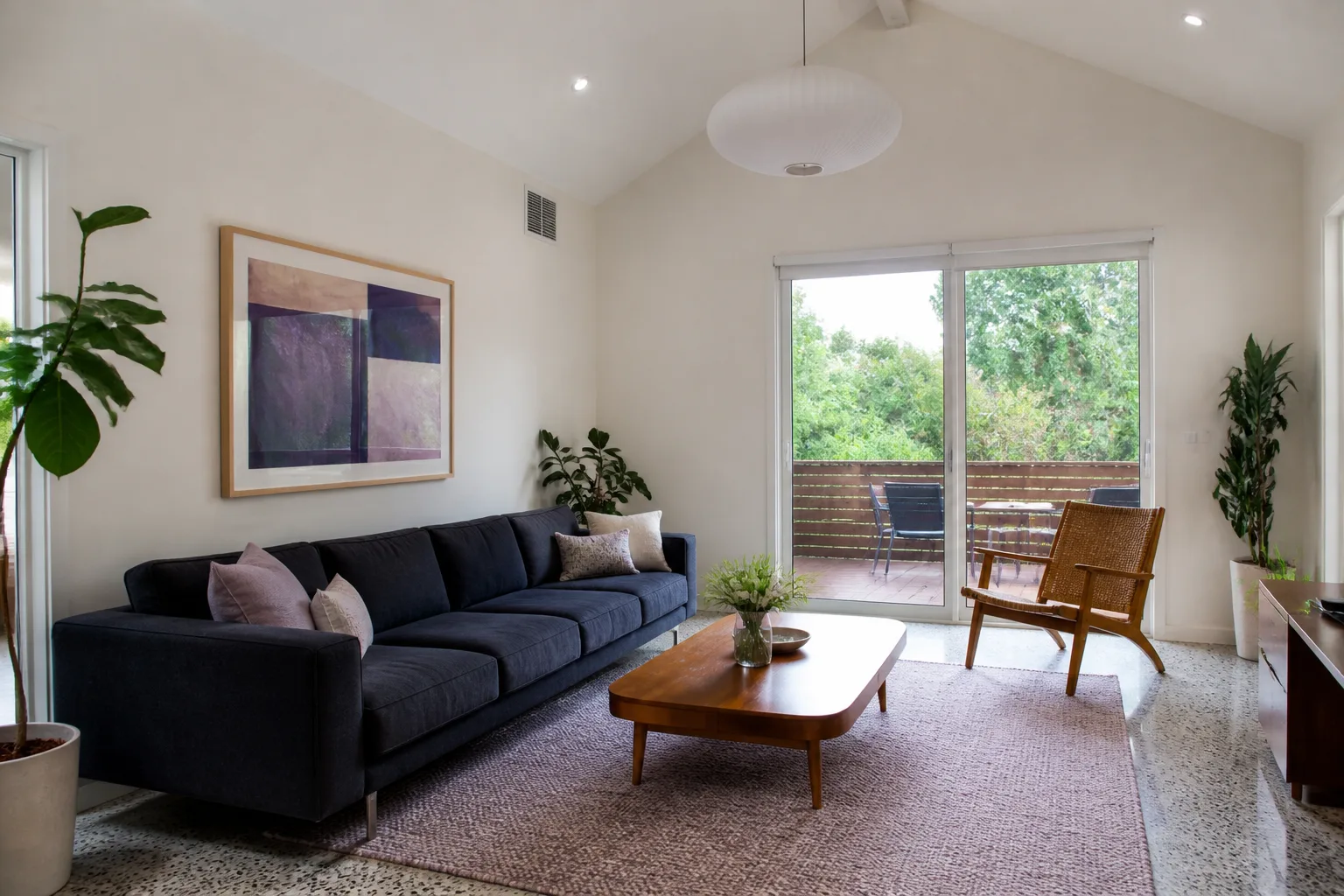
An ADU in Los Angeles is a 30-year asset, and maintenance determines whether it survives as a rental machine or turns into a money pit. The city’s specific failure points, including stucco cracking from temperature swings, flat-roof ponding after atmospheric rivers, tankless water heater scaling from hard water, and pest pressure along slab foundations, all respond well to a disciplined monthly calendar. Budget $800 to $2,400 annually, document everything you do, and respect the warranty terms on prefab units from Dvele, Abodu, and Mighty Buildings. When the maintenance exceeds your comfort level, call a professional before the small problem becomes an emergency, or explore our more guides & resources for additional help. Benson ADU Builders gives Los Angeles homeowners free estimates and written pricing before any work begins, so you know the cost before you commit.
Written by Troy Eastman, Owner at Benson ADU Builders, serving Los Angeles since 2006.