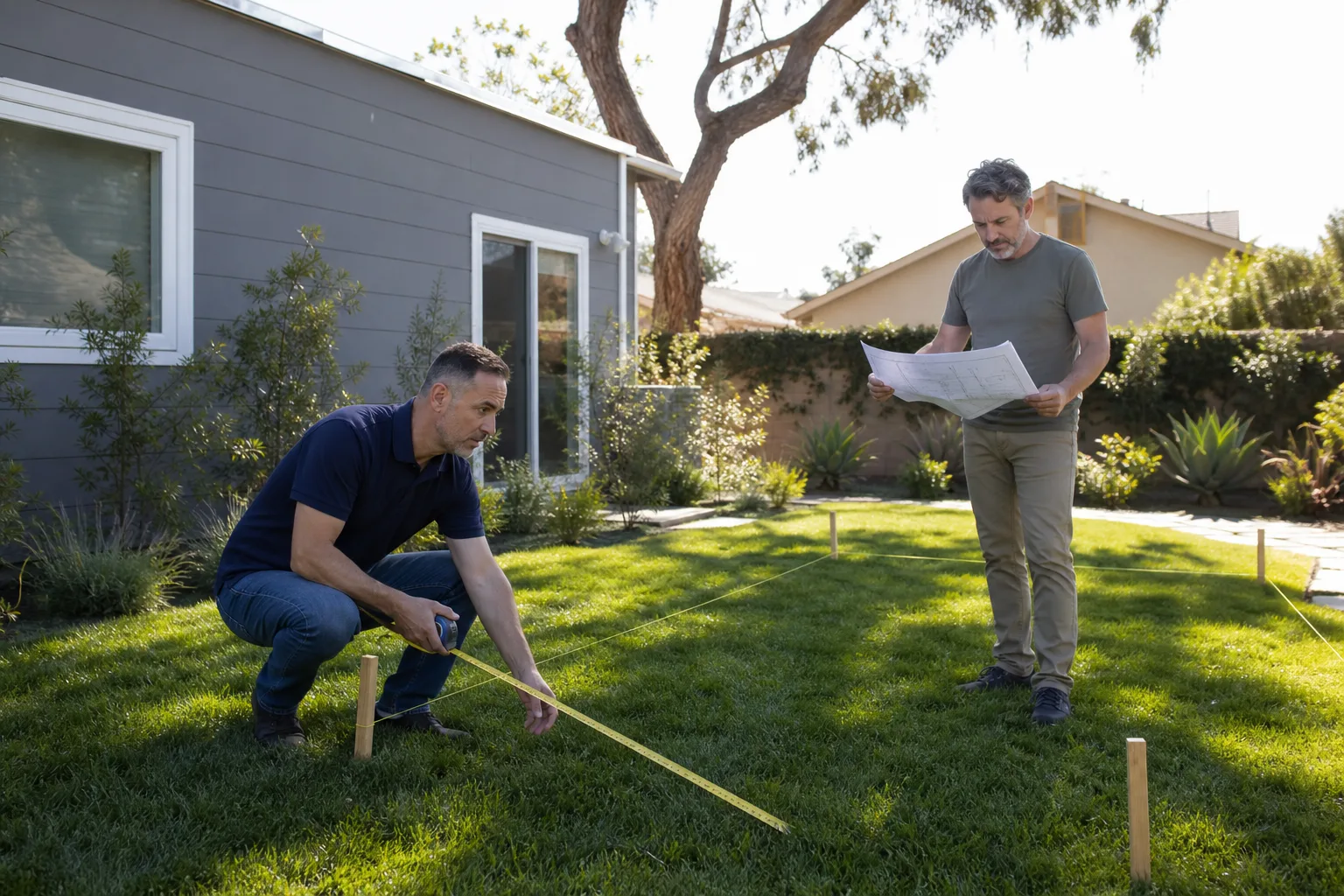








A free site visit, a check of what your lot allows and a written, line-item price.
Get your free estimateHome Addition Contractor Stopped Working
When a home addition contractor stops showing up, it almost always means one of three things: a cash-flow problem on their end, a scheduling conflict they haven’t told you about yet, or a dispute over scope that stalled the job. In most cases the work stoppage is not random – there’s a specific trigger, and finding it quickly is the difference between a two-day delay and a project that sits unfinished for months.
Whatever the cause, you’re standing in front of an open wall, a half-framed room addition, or a foundation that hasn’t been touched in a week – and you need to know what to do next. This page walks through the four most common reasons a home addition contractor goes dark, what you can do right now before anyone arrives, and how your local Benson ADU Builders team gets the project moving again.
What’s Happening

A home addition contractor who has stopped working has almost certainly run into a money problem, a permit hold, a subcontractor conflict, or a dispute over what the original contract actually covers. These are the four causes behind the overwhelming majority of residential construction stoppages. The work didn’t stop because of your project specifically – it stopped because something upstream of your project broke down.
Here’s what that looks like in practice. A contractor who is short on cash pulls their crew to a job where the next draw payment just came in. A permit hold stops all physical work legally – not just optionally. A subcontractor who didn’t show up (the framer, the electrician, the concrete crew) creates a bottleneck that a small contractor often doesn’t know how to route around. And a scope dispute – where the contractor believes the original contract didn’t include something you thought it did – can freeze communication entirely while both sides wait for the other to blink. None of these resolve themselves. Each one needs a specific action to break the stall.
Why It Happens
1. The Contractor Has a Cash-Flow Problem
Residential contractors often fund active jobs with draws from other jobs. When a payment from another client is late, or a material supplier demands payment before delivering the next order, your job site is the one that goes quiet. You can tell this is the cause if your contractor is still responsive by phone or text but keeps pushing the “crew is coming Tuesday” date forward without a clear reason. Ask directly whether materials for your next phase have been ordered and paid for.
2. A Permit or Inspection Is on Hold
Most jurisdictions require a passed inspection before framing can be closed, electrical can be energized, or concrete can be poured. If your contractor applied for a permit late, submitted incomplete plans, or failed a rough inspection, work legally cannot continue until the hold is cleared. You can usually check permit status yourself through your local building department’s online portal – search your property address and look for any “correction required” or “failed inspection” status flags next to your project’s permit number.
3. A Key Subcontractor Didn’t Show
A general contractor on a home addition or room addition project typically coordinates framers, electricians, plumbers, HVAC crews, and concrete workers – none of whom are direct employees. If one subcontractor goes dark, the entire sequence can stall because each trade often must finish before the next one can start. This is usually the cause when work was progressing normally and then stopped abruptly at a very specific phase – framing is done but nothing has happened since, for instance. Ask your contractor exactly which sub is scheduled next and whether that sub has confirmed the date.
4. A Scope Dispute Froze Communication
When a contractor believes the contract doesn’t cover something you assumed was included – a window header, an electrical panel upgrade, finish work on an adjoining wall – they sometimes stop work entirely rather than do unpaid labor and argue about it later. You’ll recognize this cause because communication drops off right after you asked about a specific item or after a site visit where something unexpected came up. Pull out your original contract and look for language about what is and isn’t included. Vague contracts almost always favor ambiguity – and ambiguity stalls jobs.
What to Do Right Now
- Document the current state of the site with photos and video. Walk the perimeter and interior, timestamp everything, and note any open walls, exposed framing, uncovered roof sections, or materials left on site. This record protects you in any later dispute about what work was completed.
- Pull out your contract and read the payment schedule and scope sections word for word. Look specifically for what was promised, what the payment draw schedule requires, and whether there’s a clause about work stoppage or abandonment. Most contracts require the contractor to give written notice before stopping.
- Contact your contractor in writing – email or text – not just by phone. A written record of the date you reached out matters if you need to escalate. Ask specifically: what is the reason for the work stoppage, and what is the confirmed restart date?
- Check your permit status through your local building department. Most departments have an online lookup by address. If there’s a failed inspection or correction notice, that’s information you need before calling anyone.
- Secure any open or exposed areas safely if you can do so without climbing or electrical work. Covering an open wall section with a tarp is fine. Do not attempt to work around any open electrical panel, exposed wiring, or load-bearing framing that has been partially modified – those are situations where you call a professional before anyone goes near them.
How We Fix It
When your local Benson ADU Builders team arrives, the first thing Troy and the crew do is assess exactly what phase the project is in and what’s structurally or mechanically exposed. That means a full walk of the site – not a glance from the driveway. The technician documents what’s been completed, what’s been left open, and what materials are already on site.
From there, we put together a written scope that covers the remaining work, referencing the original plans where they exist. That scope gets a written price attached to it before any work starts – no verbal estimate that shifts later, no surprises billed after the fact. That’s the Relay Visibility Guarantee, and it’s stamped on every project we touch.
Depending on where your project sits, this resolves through our Home Addition Contractor or Room Addition Contractor services. Most site assessments happen within a day or two of your call. The written estimate follows immediately after. Work typically begins once the price is agreed in writing and any permit questions are resolved with your local building department.
The 365-Day Done Right Promise covers the work we do. If something isn’t right within a full year of completion, we come back and make it right. That’s in writing, not a handshake.
Frequently Asked Questions
It depends on what’s exposed. A stalled addition with open framing and no weatherproofing can cause real structural damage in a single rain event – water behind fresh framing leads to mold and rot faster than most homeowners expect. If you have an open roof section, exposed electrical rough-in, or load-bearing walls that have been partially removed, do not wait. Call (903) 568-7222 so we can assess the site and secure anything that needs to be addressed immediately.
Your local Benson ADU Builders team works to get a site assessment scheduled as quickly as possible – call (903) 568-7222 and a live person will pick up and get you on the calendar. We don’t do voicemail loops. The Relay Standard means you get a real arrival time, not a four-hour window, and we send before and after photos of the work so you always know what happened on your site.
Not with us. Every project gets a written price before any work starts – that’s not a talking point, it’s the written guarantee on every job. Scope changes require a written change order with a new price agreed before the additional work begins. The number you sign is the number you pay.
That’s a legal question that depends on your contract and your jurisdiction, but in most cases materials purchased specifically for your project and delivered to your property belong to you once they’re on site – especially if you made a draw payment that covered them. Keep those materials documented with photos and don’t move or return them until you’ve read your contract carefully. If there’s a dispute, a construction attorney in your area can clarify quickly – this is worth a one-hour consultation before anyone removes anything.
Get It Fixed
Your project doesn’t have to stay stuck. Call (903) 568-7222 – a live person answers every call, every day – or book online to schedule your free written estimate. Your local Benson ADU Builders team will assess the site, put the remaining scope in writing, and get the work moving again under the Relay Visibility Guarantee.
Written by Troy Eastman, Owner and Lead Builder at Benson ADU Builders, part of the Relay Home Co. family since 2006.
What Our Customers Say
"Booked a consult online and met the project manager two days later. Weekly progress updates arrived by text with photos. ADU finished on schedule."
- Hannah W."Clean, quiet crew. They respected the neighbors, kept noise to working hours, and swept the driveway every evening."
- Hope C."Communication was the best part. I always knew what was happening that week without having to ask."
- Dolly N.