James Hardie New Detached ADU: The Los Angeles Owner’s Guide
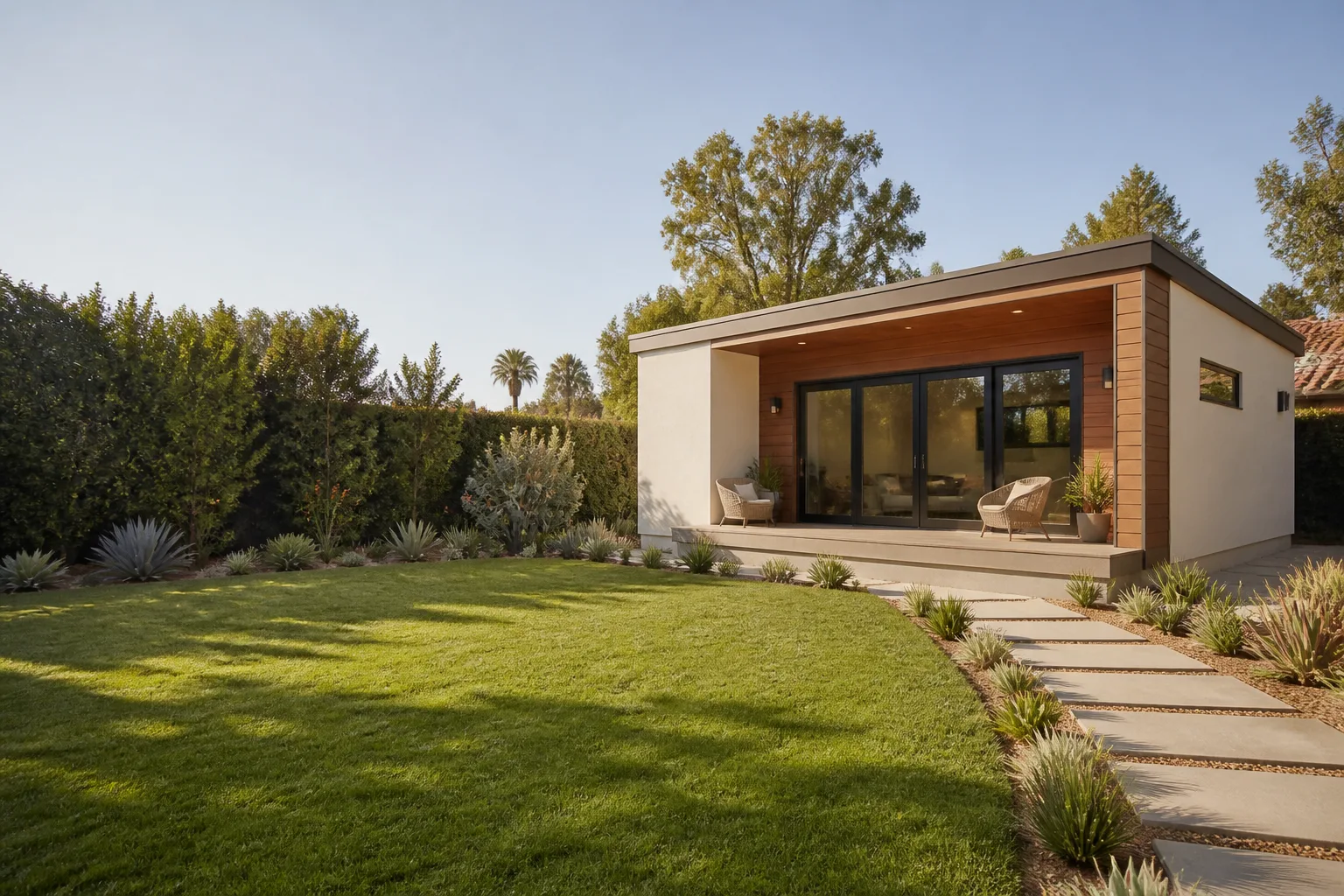
We stock and install new detached ADU builds using James Hardie fiber cement siding and trim throughout Los Angeles, with most complete builds running $180,000 to $250,000 for a 500-square-foot unit depending on site conditions and finish level. If you’re researching this page because your existing James Hardie-clad ADU has a failing part, know that most individual components can be replaced without a full rebuild. The most common failure point we see in LA is HardiePlank lap siding or HardieTrim boards that have absorbed moisture at the bottom edge or around window penetrations, often after years of sprinkler overspray against the wall.
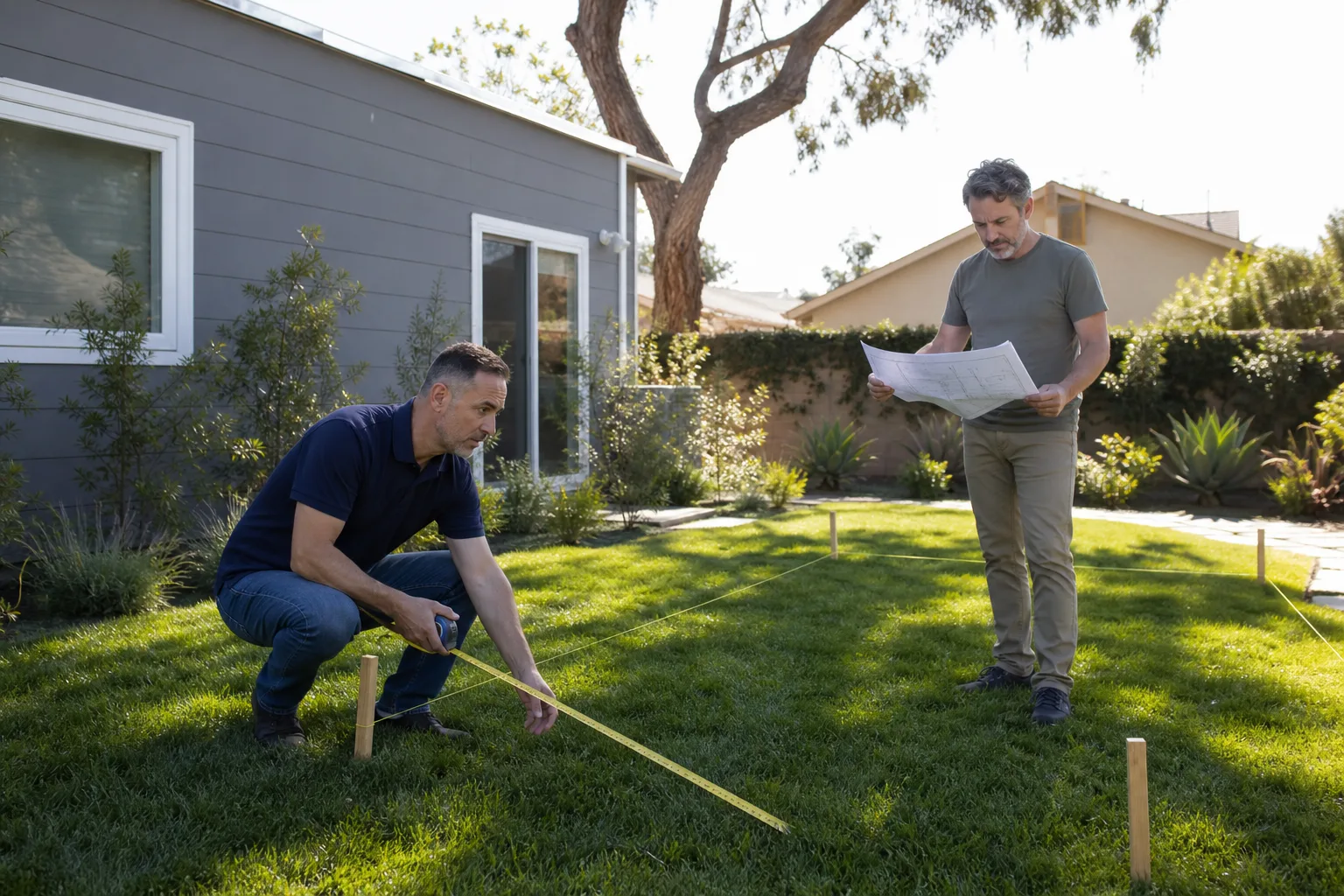
The fastest way to verify what you’re dealing with is to measure the exposure and thickness of the affected board. James Hardie lap siding comes in specific profiles, and matching them matters more than you’d think.
Which James Hardie Models This Applies To
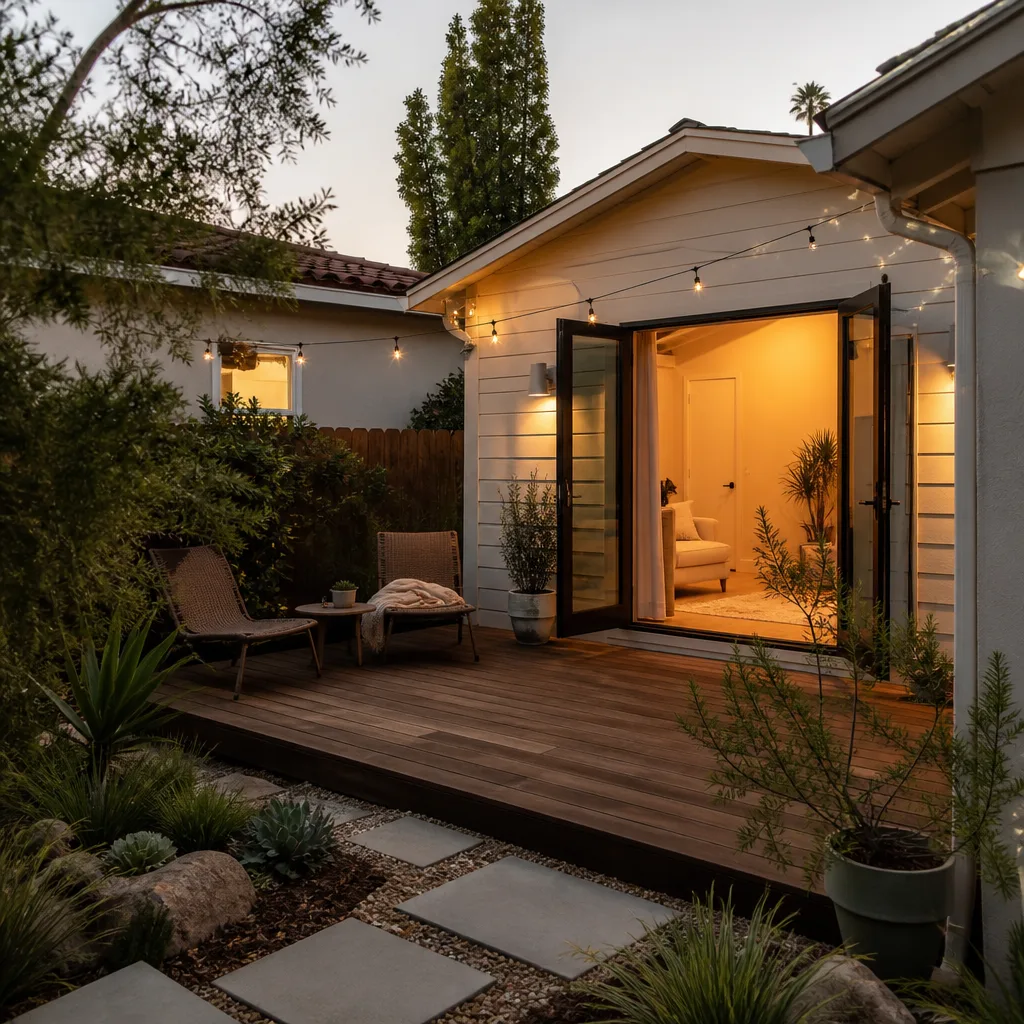
James Hardie manufactures several product lines for exterior cladding, and the compatibility details differ enough that we’re going to walk through them plainly. The three you’re most likely to find on a detached ADU in Los Angeles are HardiePlank lap siding (the horizontal boards), HardiePanel vertical siding (the 4×8 sheets), and HardieTrim boards (the corner, window, and door trim pieces). Each of these has distinct thicknesses and profiles that must match what was originally installed. HardiePlank lap siding, for example, comes in 5/16-inch and 7/16-inch thicknesses, and you cannot swap one for the other without the siding plane looking visibly wrong and the overlap geometry failing.
Here’s the compatibility gotcha most homeowners bump into: the color-matched caulk and touch-up paint from James Hardie’s ColorPlus line only adheres correctly to the factory-finished ColorPlus boards. If your ADU has raw primed HardiePlank that was painted on site, you’ll want a high-quality 100% acrylic exterior paint instead. We carry OEM James Hardie boards and trim on the truck for common profiles, and we also stock quality aftermarket equivalents for standard primed boards when the lead time on ColorPlus inventory stretches, which happens more in LA than suppliers like to admit. Benson ADU Builders is an independent contractor, not affiliated with James Hardie, and we’ll give you the straight answer on whether OEM or a proven equivalent makes sense for your specific ADU.
Signs Your James Hardie New Detached ADU Is Failing
- Swelling or spongy edges at the bottom of lap boards. This means water has wicked up through a cut or unpainted end. In LA’s wet winters, this gets worse fast once the board loses its seal, and you’ll typically see it first on the side of the ADU facing sprinklers or a narrow side yard where water pools after rain.
- Gaps opening at board joints or corners. Fiber cement expands and contracts with temperature swings, and the Los Angeles sun is hard on sealant. If you can slide a putty knife behind a HardieTrim corner board, the seal has broken and moisture is getting into the framing behind it.
- Surface cracking or flaking paint in a repeating pattern. HardiePlank doesn’t rot, but the paint film does. When you see flaking that follows the board profile rather than a single impact point, the finish has failed and the board needs sanding, priming, and repainting, or replacement if the surface has started to erode.
- Nail heads popping or rust streaks below fasteners. This tells you the original install used the wrong fasteners. James Hardie specifies corrosion-resistant nails or screws, and a rust streak means the fastener is failing and the board is no longer properly secured to the wall.
- Cracks at inside corners or around window rough openings. Fiber cement is rigid, and if the framing behind it moved, the board cracks rather than flexing. In LA, this often shows up after seismic activity or when an ADU was built on an older slab that has settled unevenly.
Replacement Cost & What’s Included
For targeted James Hardie part replacement on a detached ADU in Los Angeles, you’re typically looking at $400 to $1,200 for a single damaged HardiePlank board, including removal, flashing check, new board, caulk, paint, and cleanup. A full HardieTrim replacement around a standard 3-foot-by-4-foot window usually lands between $600 and $900. If the water damage got behind the siding and into the sheathing, that opens the wall, and the repair can climb to $2,500 to $5,000 depending on how far the rot traveled.
Every quote from us includes a written line-item price for parts and labor, so you know the board cost, the labor hours, and the materials budget before you approve anything. We don’t bill change orders after the fact. The work is covered by our 365-Day Done Right Promise: if the repair fails within a year, we return and make it right at no charge. Call (903) 568-7222 and we’ll schedule a site visit to measure the exact profile and give you a firm number.
DIY or Call Us?
You can safely document the problem: take photos of the affected boards from a few feet back and up close, measure the board thickness with a tape measure at an edge, and check whether the finish is factory ColorPlus or site-painted. That information actually helps us quote faster. What goes wrong with DIY on fiber cement is the cutting and fastening. HardiePlank requires a specific blade and produces silica dust that you do not want in your lungs, and an improperly driven nail will crack the board you just paid for. Troy Eastman has seen more than one weekend repair turn into a three-board job because the first board snapped on install. If the damage is at the bottom row of siding, the fix also involves checking the flashing and potentially pulling the starter strip, which is not a beginner move.
If the failure is isolated to one or two boards and you have the tools and a respirator, a careful homeowner can manage it. If you’re seeing signs of water behind the siding, call (903) 568-7222 before you open the wall. That’s the point where guessing gets expensive.
FAQs
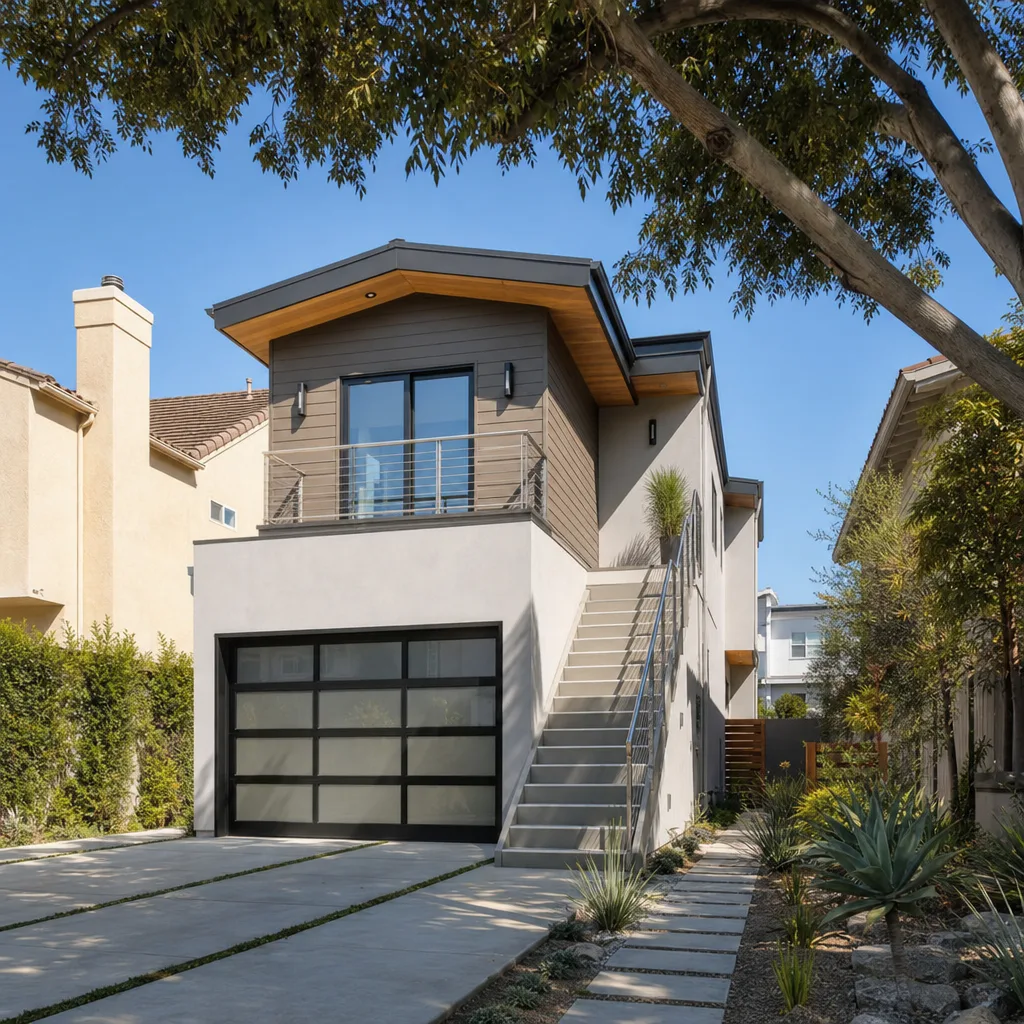
James Hardie fiber cement siding typically lasts 30 to 50 years when installed correctly, and in Los Angeles the primary limiters are moisture exposure at the bottom edges and UV degradation of the paint film rather than the board material itself. A well-flashed install with proper clearance from grade can run four decades before boards need replacement, though the paint will need redoing every 10 to 15 years. Call (903) 568-7222 to have us assess the condition of your ADU’s cladding.
A small crack or chip can be patched with an approved exterior filler and repainted, but any board with swelling, moisture absorption, or failure at the overlap joint should be replaced, since the structural integrity of the lap depends on a full-thickness board. We’ll tell you honestly which category your damage falls into when we see it. Call (903) 568-7222 for a free assessment.
A single-board replacement on a detached ADU in Los Angeles is usually a same-day job, about 2 to 4 hours including setup, removal, new board install, caulking, painting, and cleanup. A full trim replacement around multiple windows can run a full day or two depending on how much scaffolding is needed. We’ll give you a written timeline before we start, so you can plan around it.
We stock common HardiePlank profiles, HardiePanel sheets, and HardieTrim boards in standard sizes and colors on our trucks, and we order specialty ColorPlus finishes or lesser-used profiles from Los Angeles suppliers with a typical 2-to-5-day lead time. We also build new detached ADUs using James Hardie cladding, along with prefab options from Abodu, Cover, and Dvele, so we keep inventory moving year-round. If you need a specific profile confirmed before scheduling, call (903) 568-7222 and we’ll check stock while you’re on the phone.
Written by Troy Eastman, Owner & Lead Builder, Benson ADU Builders at Benson ADU Builders, serving Los Angeles and nearby areas.