James Hardie Junior ADU Conversion: The Los Angeles Owner’s Guide
We stock and install James Hardie-compatible siding, trim, and panel materials for junior ADU conversions across Los Angeles, with most partial siding repairs landing between $1,800 and $4,500 installed and full re-clads running $14,000 to $32,000 depending on the unit’s footprint. Call (903) 568-7222 and we’ll match the exact HardiePlank lap profile, HardiePanel sheet, or HardieTrim board your JADU needs, usually within the same week. Most owners discover the problem the hard way: a hairline crack along the bottom edge after a rain, paint bubbling where moisture got behind the panel, or a corner trim piece that’s started to rot because the original installer buried it against a planter bed. In Los Angeles, where we get maybe 14 inches of rain a year, people assume water damage isn’t a real threat until they see it with their own eyes.
Here’s the truth about James Hardie fiber cement in a coastal-desert climate: it handles sun far better than wood or vinyl, but it has zero tolerance for two things. Ground contact, and repeated moisture wicking from sprinkler overspray. When those conditions exist, even Hardie products fail at the edges first. That’s what brings most Los Angeles JADU owners to us.
Key Takeaways
- Most James Hardie junior ADU siding repairs in Los Angeles run $1,800 – $4,500 installed
- Full re-siding a 500-square-foot JADU typically lands between $14,000 and $32,000
- James Hardie fiber cement fails most often at trim edges, bottom courses, and penetrations, not mid-panel
- We match OEM Hardie profiles and stock the common board widths on our truck
- Every quote comes in writing before work begins, and every repair carries our 365-Day Done Right Promise
Which James Hardie Models This Applies To
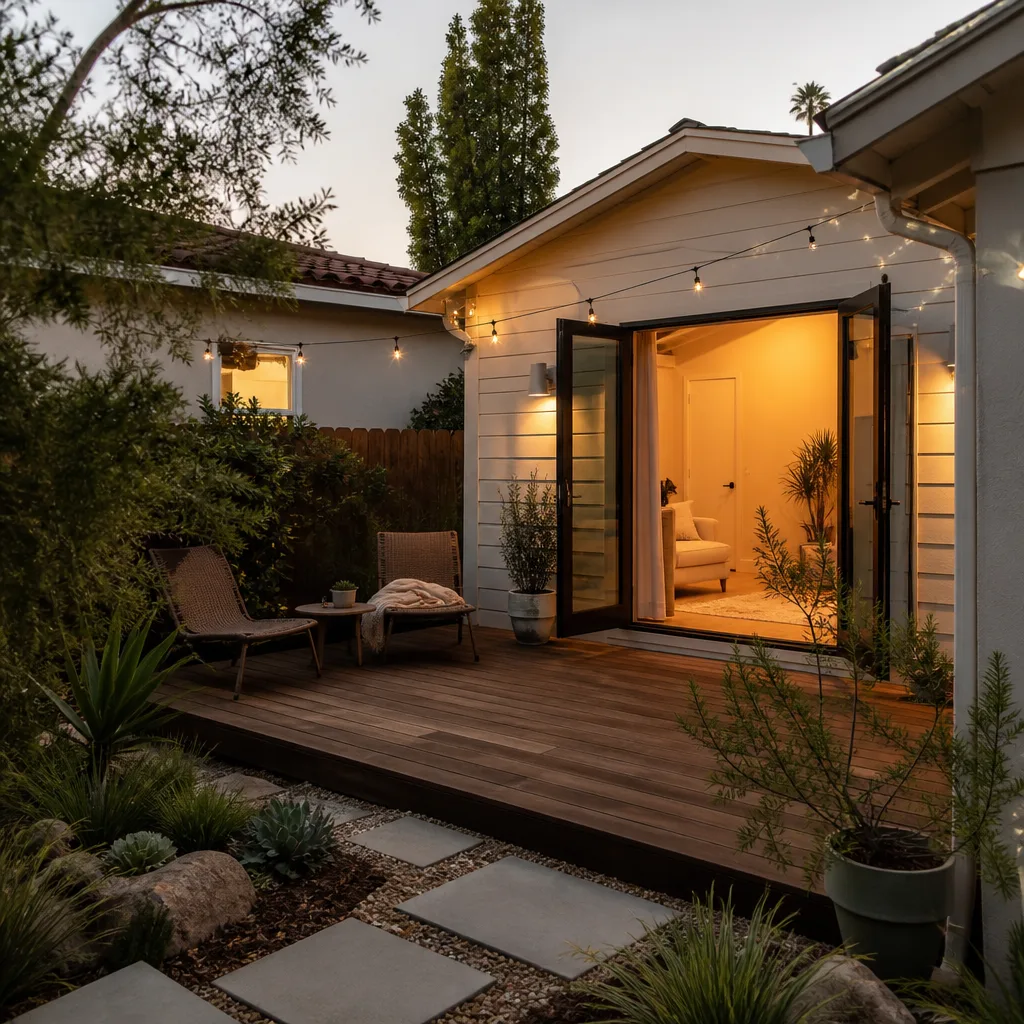
Junior ADU conversions in Los Angeles almost always use one of three James Hardie product families: HardiePlank lap siding, HardiePanel vertical sheet, or HardieTrim boards for corners, windows, and door openings. The most common failure we see involves HardiePlank lap siding in the 5/16-inch thickness, which carries a 30-year limited warranty when installed to spec. That spec matters more than most people realize. The 6-1/4-inch exposure lap profile handles water differently than the 8-1/4-inch exposure, and if a previous contractor installed both on the same wall without flashing at the transition, water finds the seam.
Identifying what you have is straightforward. Grab a tape measure. Most HardiePlank lap boards are 12 feet long and 5/16 inch thick. HardiePanel sheets are 4×8, 4×9, or 4×10 and typically 7/16 inch thick. Check the back of any leftover board for the lot code and product name stamp; it’s usually printed near one edge. For aftermarket versus OEM: James Hardie doesn’t license third-party manufacturers for their exact fiber cement formula, so genuine Hardie products come direct from James Hardie or from distributors carrying factory stock. We only install genuine James Hardie boards because the color-matched caulks, flashings, and touch-up paints are all formulated for the exact cementitious composition. Off-brand fiber cement from overseas manufacturers won’t hold paint the same way, and the warranty disappears the moment you mix systems.
Signs Your James Hardie Junior ADU Conversion Is Failing
- Chalky white residue on the panel face. Efflorescence means water is moving through the fiber cement and carrying minerals to the surface. It’s an early warning that the board’s moisture barrier has been compromised, usually from ground splash or a failing caulk joint above.
- Soft spots at the bottom edge. Fiber cement doesn’t rot like wood, but long-term ground contact makes it swell, delaminate, and crumble at the bottom course. In Los Angeles, we see this most on JADUs built over dirt without a proper 6-inch clearance gap.
- Paint bubbling or peeling in a straight vertical line. That line usually follows a seam where the original installer didn’t leave the required 1/8-inch gap between planks. When the boards expand and contract with temperature swings, a butt joint without proper flashing opens up and lets moisture in.
- Cracked HardieTrim boards at outside corners. Corner trim takes the brunt of sun exposure on a Los Angeles JADU. When it cracks, it’s often because the installer nailed too close to the edge without pre-drilling, or used fasteners that corroded and expanded.
- Wavy or buckled planks. This happens when boards were installed tight to the studs over wall imperfections, or fastened too tightly with no room for thermal movement. Los Angeles goes from 40-degree winter nights to 100-degree summer afternoons; fiber cement needs room to move.
Replacement Cost & What’s Included
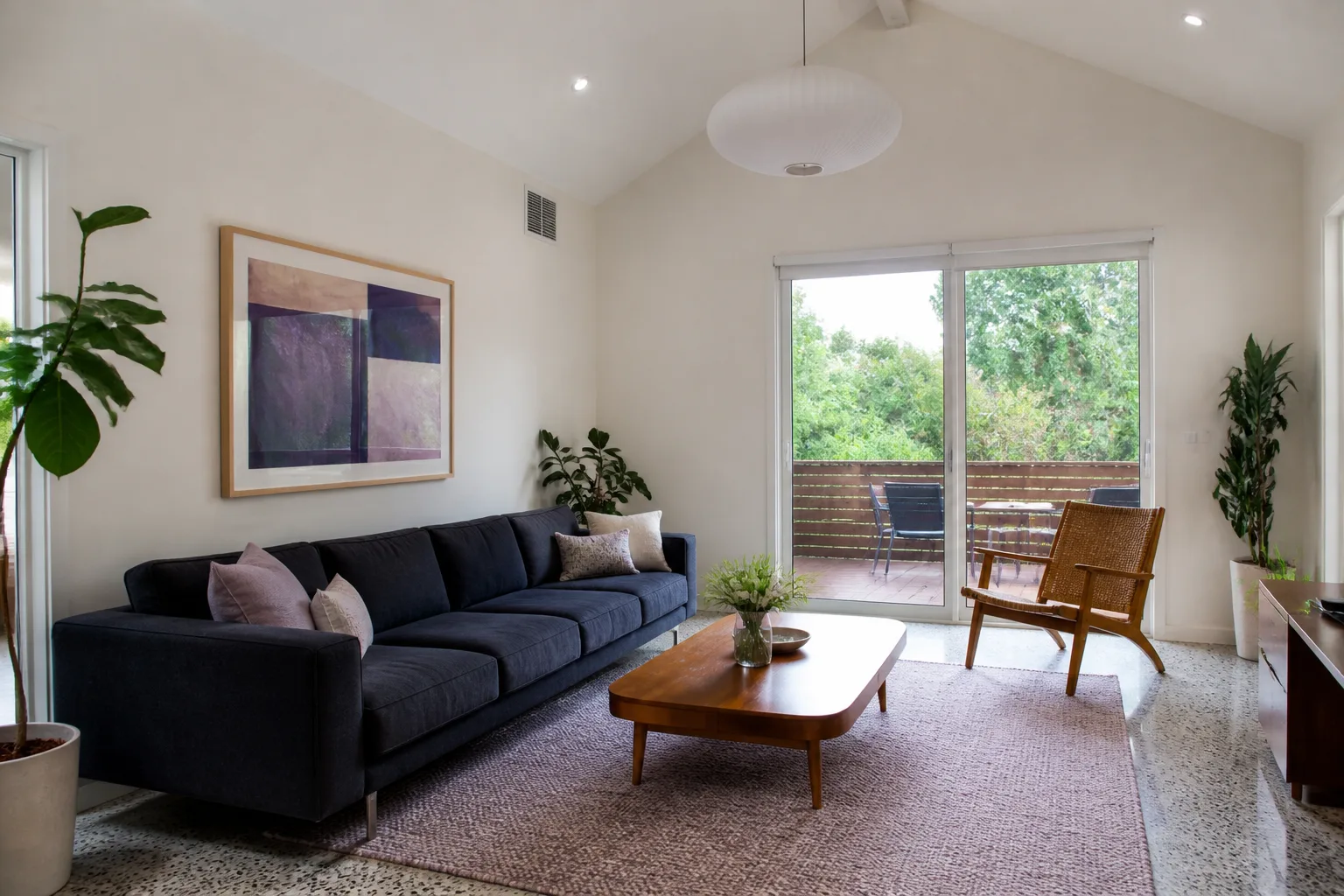
For a typical Los Angeles junior ADU, partial James Hardie siding replacement runs $1,800 to $4,500. That assumes we’re replacing 10 to 30 linear feet of lap siding, including tear-out, flashing correction, primed OEM HardiePlank, color-matched caulk and touch-up paint, plus disposal. When the damage is widespread, a full re-clad of a 500-square-foot JADU with HardiePlank lap siding, new corner trim, and proper house wrap usually lands between $14,000 and $32,000. The spread comes down to whether we’re replacing just the siding or also fixing underlying framing, re-flashing windows, and bringing the JADU up to current Los Angeles building code for a conversion that was originally built without permits.
Every Benson ADU Builders quote is a written line-item price, not a verbal ballpark. You’ll see the material costs, the labor, the disposal, and the permit fees (if the repair scope requires one) listed separately. If the work doesn’t hold up for a full year, our 365-Day Done Right Promise means we come back and fix it, on us. That’s in writing on every project, the same as it’s been since the day we started.
DIY or Call Us?
Fiber cement siding repair is not a spring or an electrical panel, so a careful homeowner can replace a single short plank without serious injury risk. But the phrase “careful homeowner” is doing real work there. James Hardie boards are heavy, silica dust from cutting them is a genuine respiratory hazard, and the flashing details that separate a five-year repair from a fifteen-year repair are exactly the details most people skip because they look unimportant. We also see a lot of homeowners install boards tight against adjacent panels, which creates the same wave-and-crack failure within two seasons.
The smart DIY move is diagnosis, not surgery. Measure your boards, note where the failure starts, take photos, and check your sprinkler line clearance. Then call (903) 568-7222 and send us the photos. We’ll tell you over the phone whether it’s a $300 single-board job or a sign that the whole wall envelope needs attention. If the repair is small and you still want to handle it yourself, we’ll tell you exactly what materials to buy and what we’d charge if you change your mind. No pressure, no gatekeeping on information.
FAQs
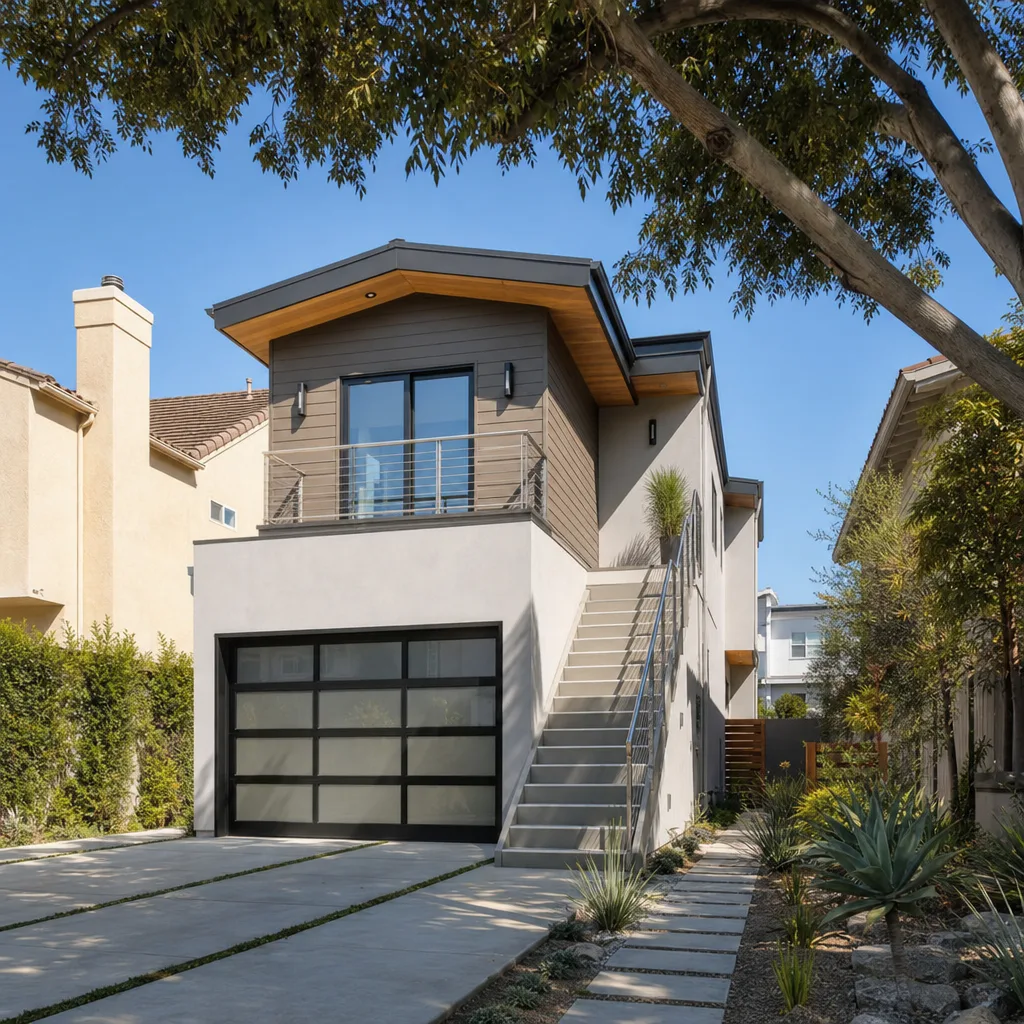
In Los Angeles conditions, with correct installation and 6-inch ground clearance, HardiePlank lap siding typically lasts 30 to 40 years before needing replacement. The weak links are trim pieces and bottom courses, which rarely make it past 15 to 20 years if they’re near sprinklers or dirt. Most JADU owners replace trim and individual planks long before the full wall fails.
Individual cracked or swollen boards can be replaced without re-siding the whole wall, as long as the underlying sheathing and framing are sound. What cannot be repaired is the flashing behind the board; if water got past the siding, the repair scope expands to whatever is wet behind it. Call (903) 568-7222 and we’ll inspect the actual water path before quoting anything.
A single-board or small trim replacement usually takes 2 to 4 hours on site, including cutting, fastening, caulking, and touch-up paint. A full re-clad of a 500-square-foot JADU typically runs 5 to 8 working days. We schedule all repair work with a written arrival window and send photo updates as the job progresses.
Yes. Our trucks carry the most common HardiePlank lap profiles (6-1/4-inch and 8-1/4-inch exposure in smooth and cedar-texture), 4×8 HardiePanel sheets, and standard HardieTrim widths for both 5/4 and 4/4 trim applications. Less common profiles and colors are ordered factory-direct and usually arrive in Los Angeles within 3 to 5 business days.
If your James Hardie junior ADU conversion has a failing board, a cracked corner, or paint bubbling where it shouldn’t, call (903) 568-7222 today. We’ll schedule a free inspection, put the price in writing, and get your JADU’s exterior watertight again. Benson ADU Builders also works with ADU systems from Abodu, Cover, and Dvele, and we bring the same James Hardie material expertise to every conversion we touch.
Written by Troy Eastman, Owner & Lead Builder, Benson ADU Builders at Benson ADU Builders, serving Los Angeles and nearby areas.