Boxabl Site Prep & Utilities: The Los Angeles Owner’s Guide
Site prep and utility connections for a Boxabl home in Los Angeles typically run $28,000 to $65,000 installed, depending on your lot’s slope, soil condition, and how far the nearest sewer and electrical lines sit from your build pad. We stock the utility connection components and site materials Boxabl installations require, and our crew handles the full underground-to-hookup sequence. Most owners discover this “part” failed when the city inspector flags grading, compaction, or a trench depth issue that stalls the entire project before the unit even lands on the pad.
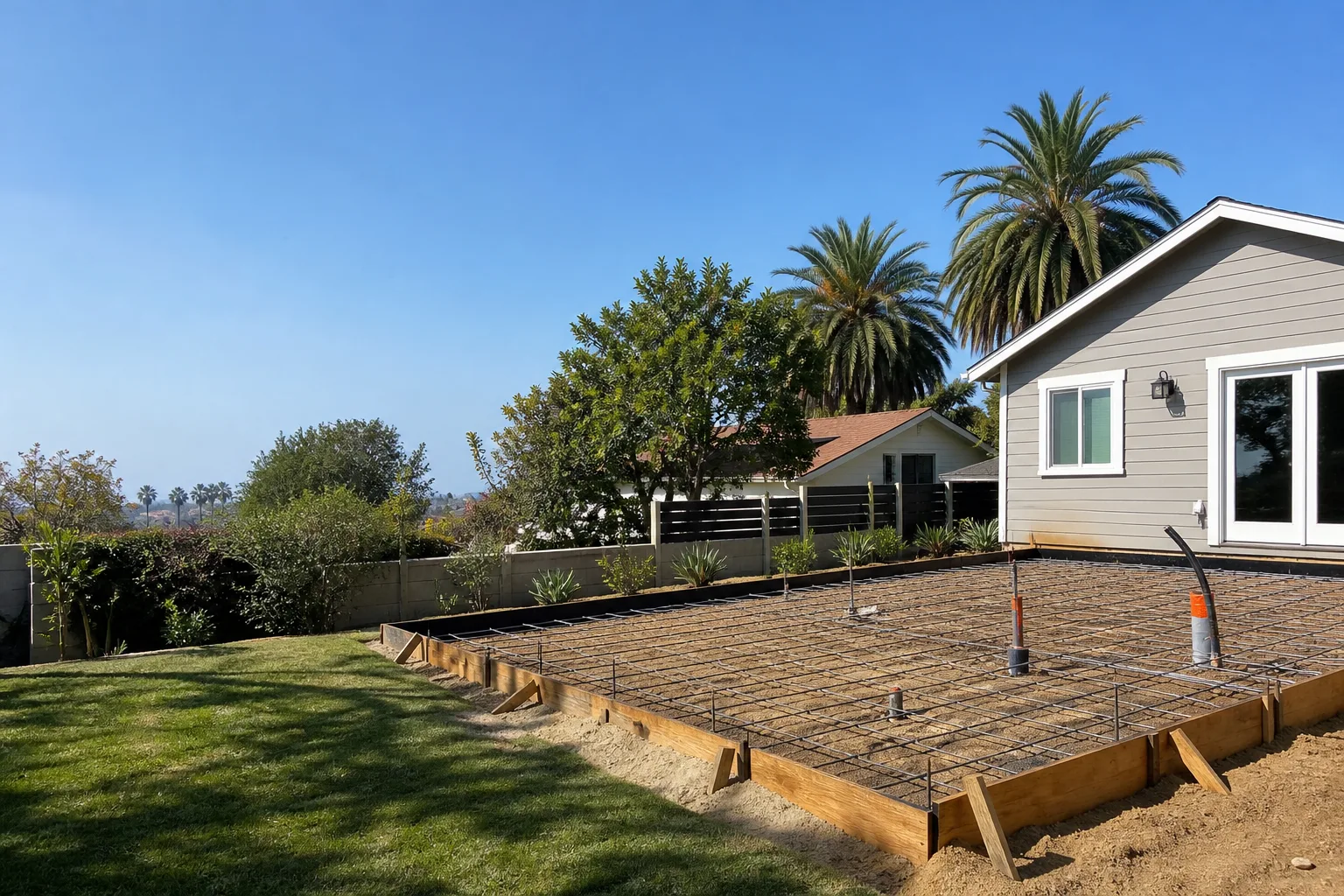
The frustrating thing about site prep is that it’s invisible once it’s done right. You see a level pad and a few stub-out pipes. What you don’t see is the 12 inches of compacted aggregate base, the moisture barrier, the exact fall on the sewer lateral, or the torque spec on the electrical lugs. When any of those is off, the Boxabl itself can be perfect and you’ll still fail inspection or chase utility problems for years.
Which Boxabl Models This Applies To
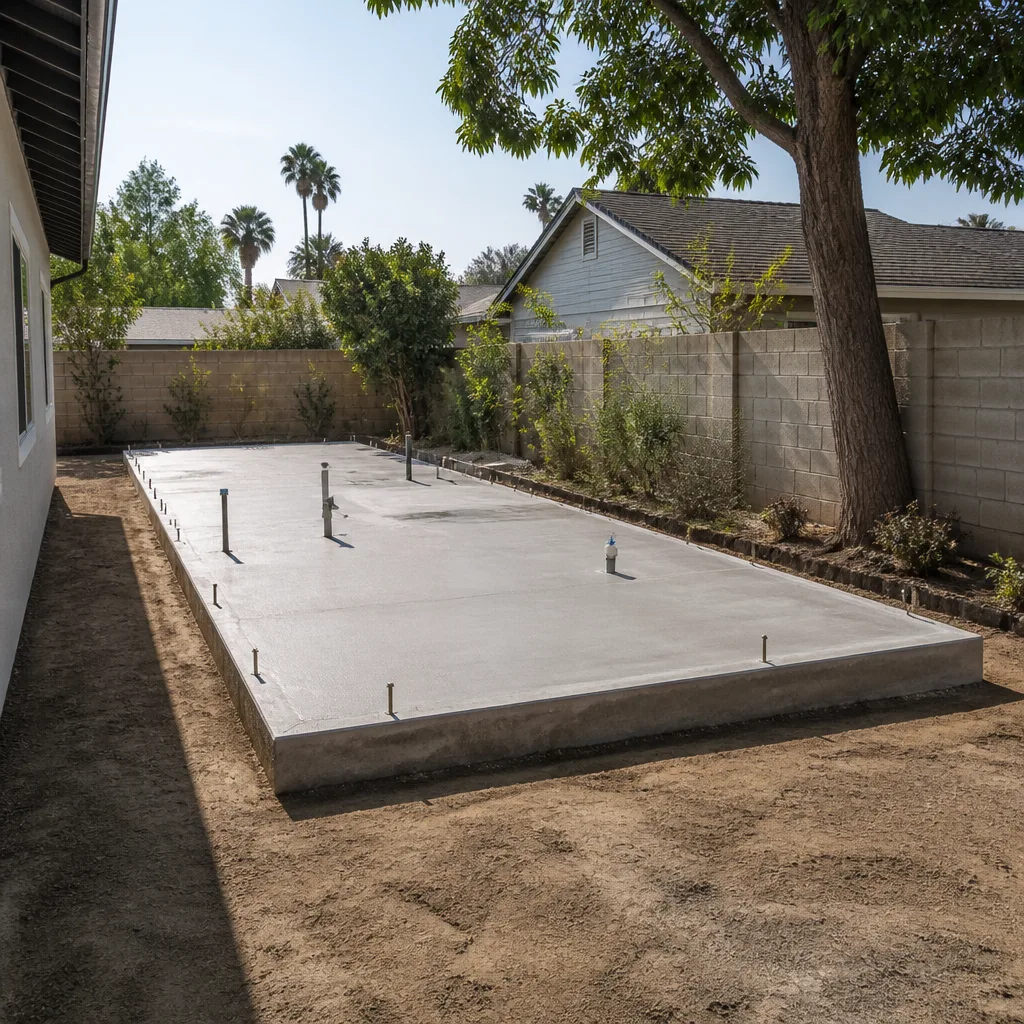
Boxabl currently ships the Casita model, a 19.5-foot by 19.5-foot folding unit that unpacks to roughly 375 square feet. Site prep for the Casita requires a concrete pad or reinforced gravel base engineered for the unit’s ~12,000-pound transport weight, plus utility stubs positioned to match the unit’s connection points: a 100-amp or 200-amp electrical service, a 3/4-inch or 1-inch water line, and a 4-inch sewer stub placed within the Casita’s service corridor. If you’re stacking units or pairing a Boxabl with a site-built addition, the utility sizing changes, and that’s where we see owners buy the wrong gear.
One compatibility gotcha: Boxabl ships with proprietary fold-down utility panels, but the underground work feeding those panels is standard residential gear, which means you’re not locked into factory-only components for the trenching, conduit, valves, or meters. OEM parts matter for the unit itself. For site work, code-compliant materials from supply houses in Los Angeles perform every bit as well and often ship faster than anything ordered through a prefab channel. We’re an independent contractor, not affiliated with Boxabl, so we source whatever passes city inspection at the best real-world price and stand behind the work ourselves.
Signs Your Boxabl Site Prep & Utilities Is Failing
- Standing water near the pad after rain. Los Angeles gets bursts of heavy rain, and if your grading doesn’t slope away at least 2 percent for the first ten feet, water ponds against the foundation. That’s a compaction or finish-grade problem that leads to slab settling and moisture wicking into the unit.
- Breaker trips or flickering lights when the AC kicks on. If the electrical service was undersized or a subpanel connection was torqued wrong during the original hookup, the Casita’s HVAC load will expose it fast. Loose lugs heat up, arc, and eventually fail.
- Sewer smells in the unit or gurgling drains. That points to either a sag in the sewer lateral or insufficient fall from the stub-out to the city tap. In Los Angeles, most sewer laterals run 1/4 inch per foot for 4-inch pipe, and a dip anywhere in that run creates a clog magnet.
- Low water pressure at more than one fixture. If the pressure regulator at the meter wasn’t installed or was set wrong, you’ll get weak flow throughout the Casita. The utility side doesn’t care how nice the fixture package is.
- Cracks in the concrete pad within the first year. Hairline cracks are cosmetic. Cracks wider than 1/8 inch that run through the pad often mean the base wasn’t compacted in lifts or the soil wasn’t tested before concrete was poured. In LA’s expansive clay zones, that’s a structural issue, not a cosmetic one.
Replacement Cost & What’s Included
Here’s the range we quote for Boxabl site prep and utility work in Los Angeles, with the caveat that every lot is different:
- Grading, compaction, and pad prep: $8,000 to $18,000 depending on slope, soil, and how much dirt needs to move.
- Concrete pad or reinforced gravel base: $7,000 to $14,000 for a Casita-sized pad.
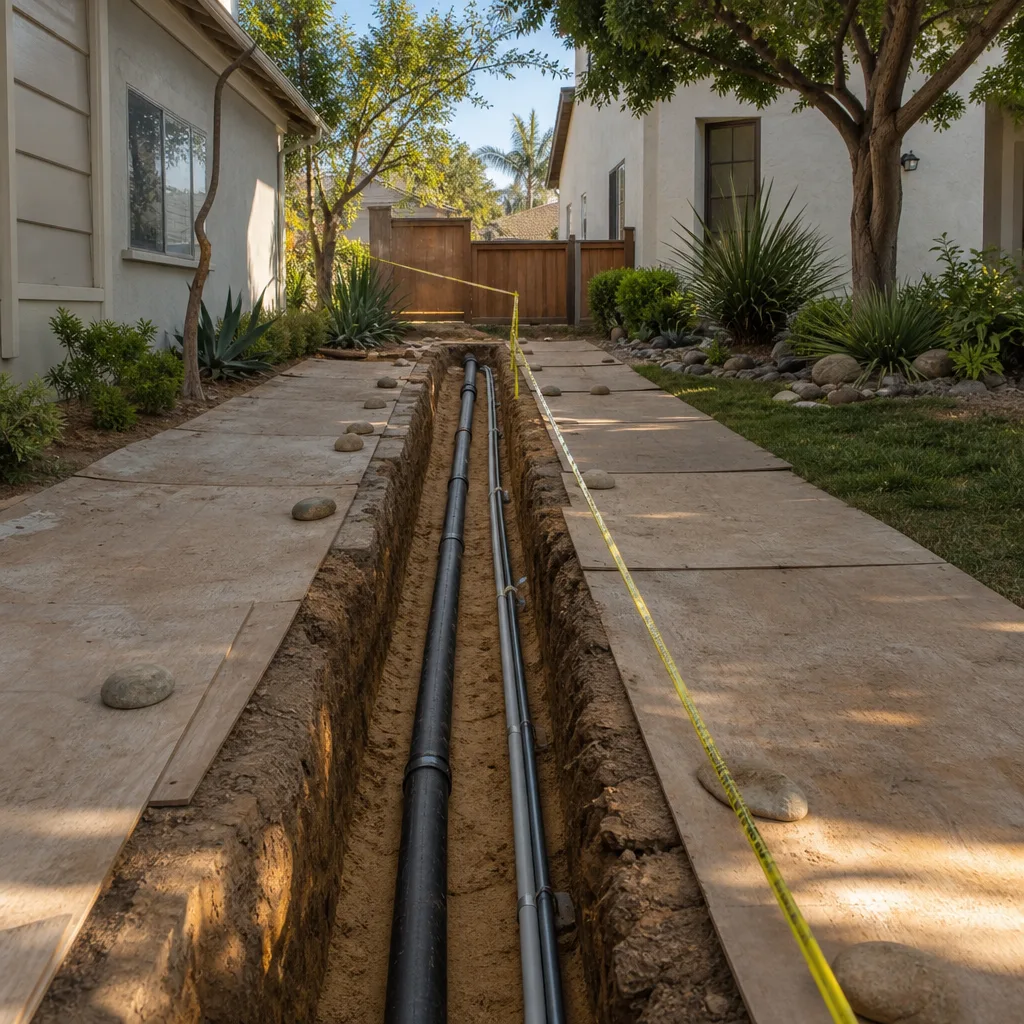
- Electrical service and underground conduit run: $4,000 to $10,000 depending on panel size and distance from the transformer.
- Water line installation and meter connection: $2,500 to $6,000.
- Sewer lateral and connection to city tap: $4,000 to $12,000 depending on depth, distance, and whether street cutting is required.
- Permits, inspections, and engineering: $2,500 to $5,000.
Every quote includes a written line-item price before work starts, the permit fees broken out separately, and our 365-Day Done Right Promise on the work. If something in our scope fails within a year, we come back and fix it at no charge. You’ll never get a verbal ballpark that balloons into a change order at Benson ADU Builders.
DIY or Call Us?
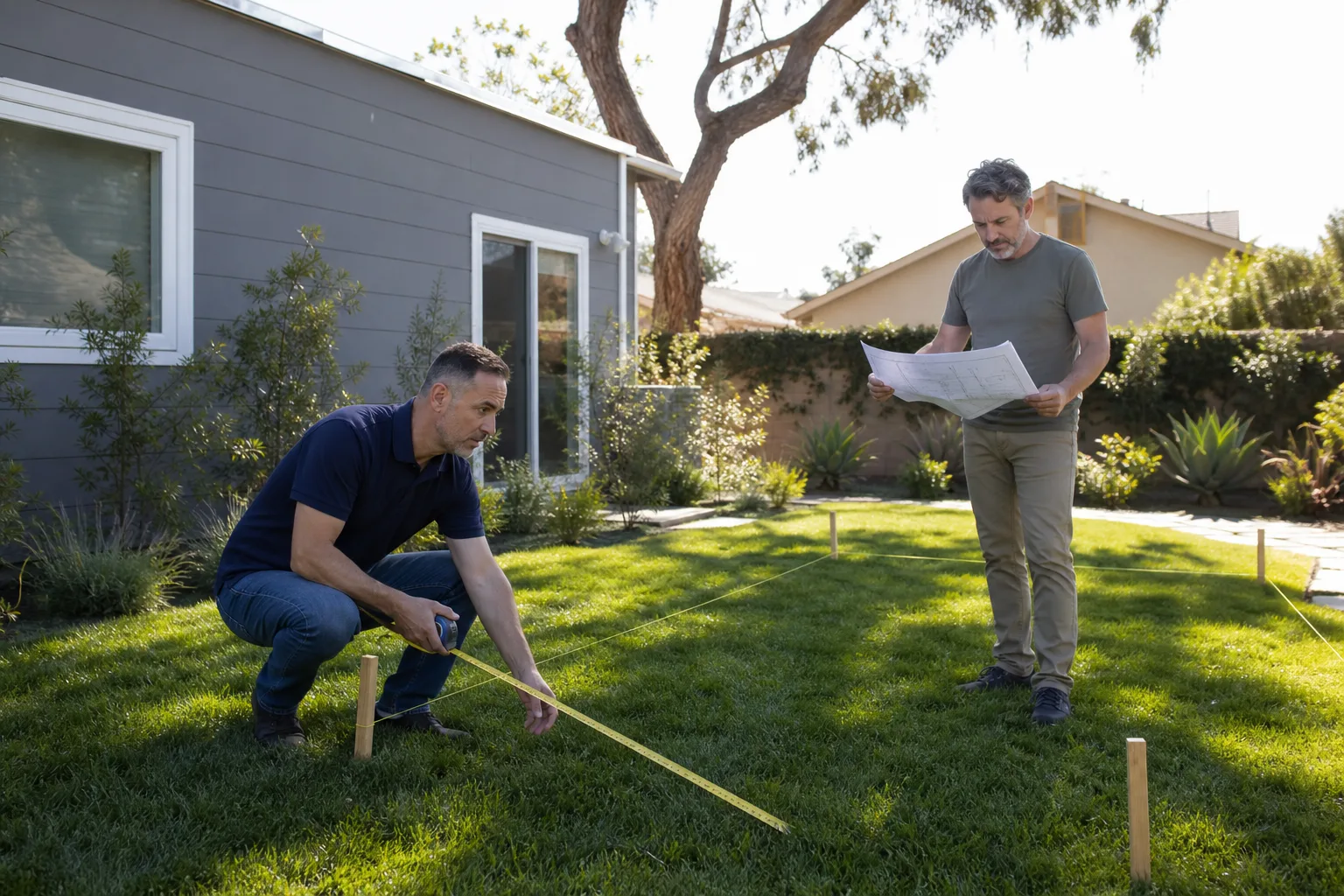
You can safely handle a few things yourself: clearing the build area of shrubs and debris, confirming your property lines against your survey, and calling 811 to have underground utilities marked. That saves time and money. What you should not do is trench for electrical, run a sewer lateral, pour the structural pad, or touch any live connection. A sewer lateral trenched too steep or too flat will fail slowly and expensively. An electrical conduit with a bad glue joint holds water, and water in a conduit destroys insulation. The equipment and the learning curve aren’t worth what a failed inspection costs you in Los Angeles. Call (903) 568-7222 and we’ll walk the site with you and put the plan in writing.
FAQs
Most Boxabl site prep and utility work in Los Angeles takes 3 to 6 weeks from first dig to final inspection, with the concrete pad’s curing time and the city’s inspection scheduling driving the schedule more than the labor itself.
Utility company hookups, especially LADWP, add their own wait time that no contractor controls. We’ve seen electrical service connections take anywhere from two weeks to three months depending on transformer load and crew availability in your neighborhood. Call (903) 568-7222 and we’ll give you a realistic timeline for your specific street.
Small fixes are possible: a sagged sewer lateral can be spot-repaired, a loose electrical connection can be re-torqued, and drainage issues can sometimes be corrected with regrading and swales.
If the concrete pad itself is cracking structurally from poor compaction, spot repair doesn’t work. The root problem is underneath the slab, and you’re looking at tearing it out and redoing the base. That’s why we test and compact in lifts the first time. Call us at (903) 568-7222 and we’ll tell you honestly which situation you’re in before any estimate is written.
A properly engineered and compacted Boxabl pad in Los Angeles should last 50-plus years with no structural failure, though surface wear and minor hairline cracking are normal within the first few years.
The pad generally outlives the utility connections. Electrical panels, water regulators, and sewer laterals each have their own lifespan: 30 to 40 years for a panel, 15 to 20 years for a pressure regulator, 50-plus years for properly bedded sewer pipe. If your site prep was done right, the utilities are the only things you’ll eventually touch again.
We stock the common utility connection components, conduit, meter bases, disconnect boxes, and backflow preventers in our Los Angeles shop, and source the rest from local supply houses the same week.
For the Boxabl unit itself, we coordinate directly with Boxabl or your dealer for anything covered under the unit’s own warranty. The site-side work is our scope, and our trucks roll with the gear for it every day. Call (903) 568-7222 for availability on what you need.
Call Benson ADU Builders at (903) 568-7222 for a free estimate on Boxabl site prep and utilities in Los Angeles. Every promise goes in writing before a single shovel turns.
Written by Troy Eastman, Owner & Lead Builder, Benson ADU Builders at Benson ADU Builders, serving Los Angeles and nearby areas.