
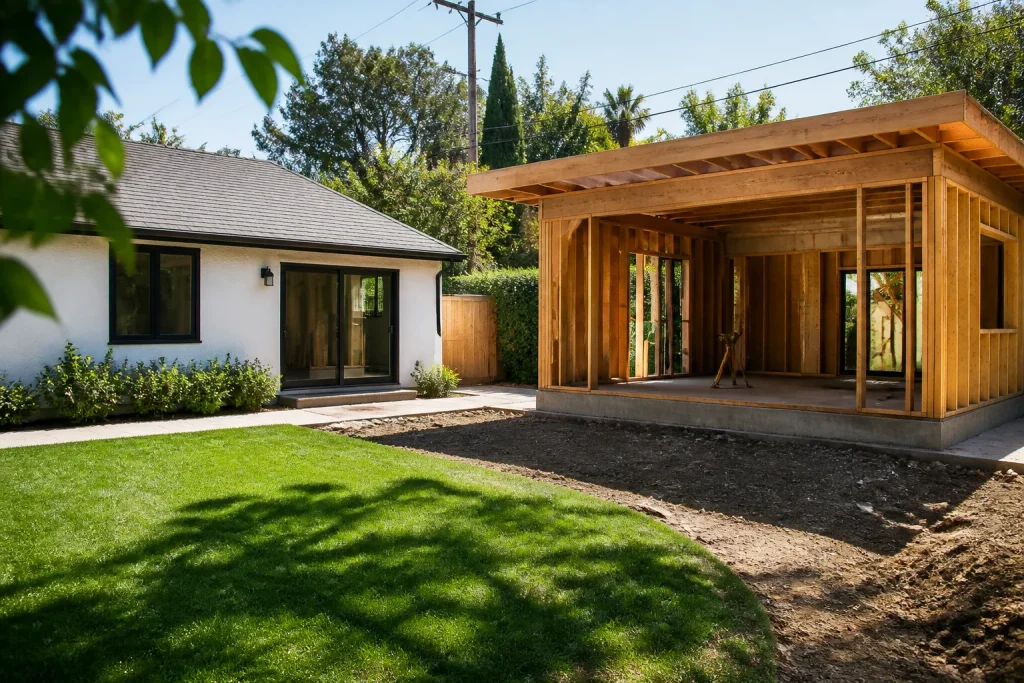
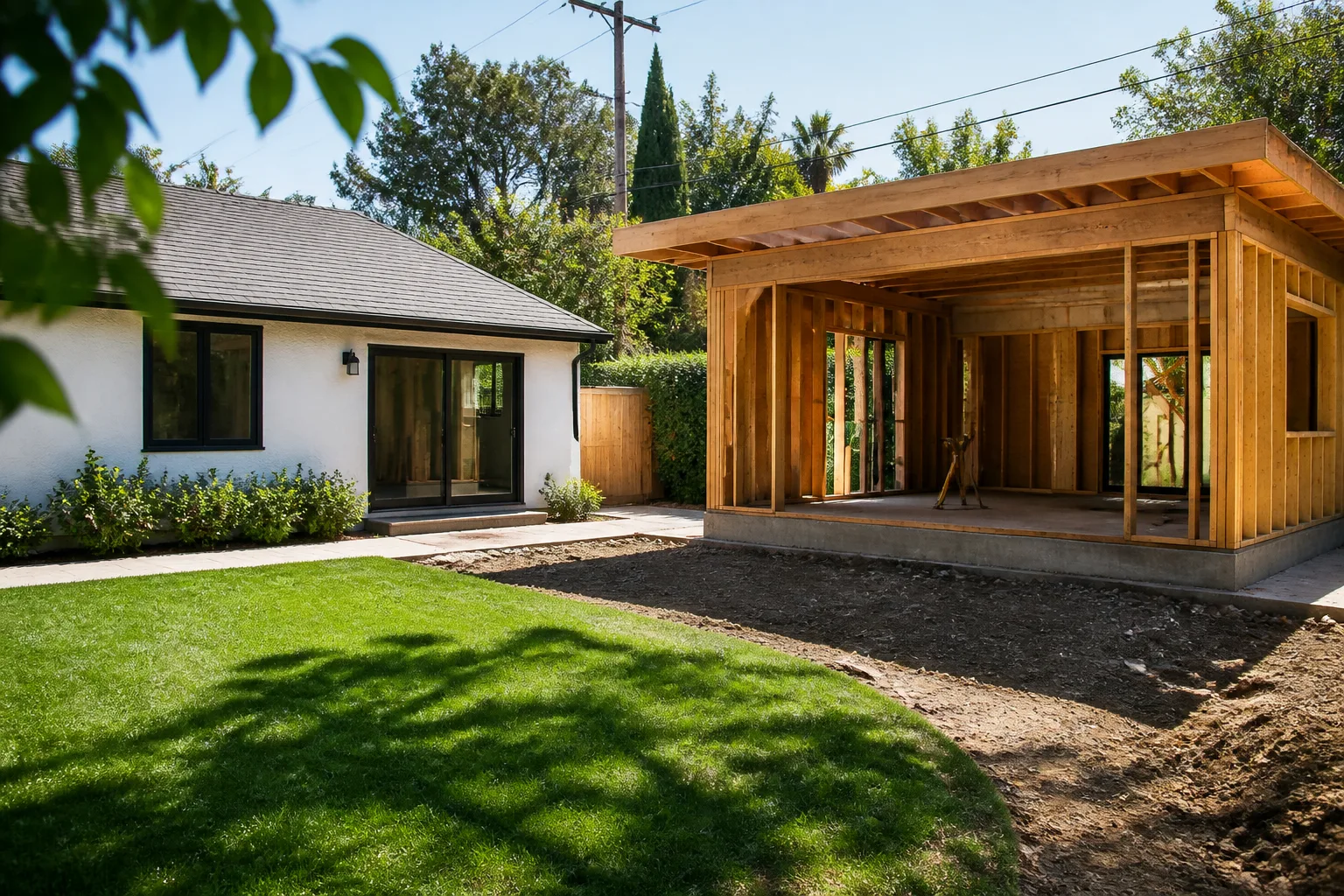
Home Addition Contractor: Repair or Replace? How Los Angeles Homeowners Decide
Most Los Angeles homeowners assume a cracked foundation or water-stained ceiling means a repair. That assumption is expensive. The real question is whether pulling the repair permit triggers code compliance upgrades that make replacement the cheaper option. If your addition was built before 2002, the answer is usually yes. Here’s the decision tree we’ve refined over 19 years of building and fixing home additions across Los Angeles, and if you’d rather skip the research, call (903) 225-2278 for a free estimate.
Key takeaways before we dig in:
- A structural repair permit on a pre-2002 Los Angeles addition can trigger mandatory seismic retrofitting, electrical panel replacement, and full foundation compliance work.
- When repair plus code upgrades reaches 80% of replacement cost, replacement wins on a 10-year total cost basis nearly every time.
- James Hardie fiber cement cladding eliminates the repaint-and-rot cycle that eats LA homeowners’ budgets within seven years.
- A written fixed-price contract with a defined scope converts a compliance surprise from your problem into a contract conversation.
The LA Department of Building and Safety Trigger List: What Actually Forces a Full Upgrade
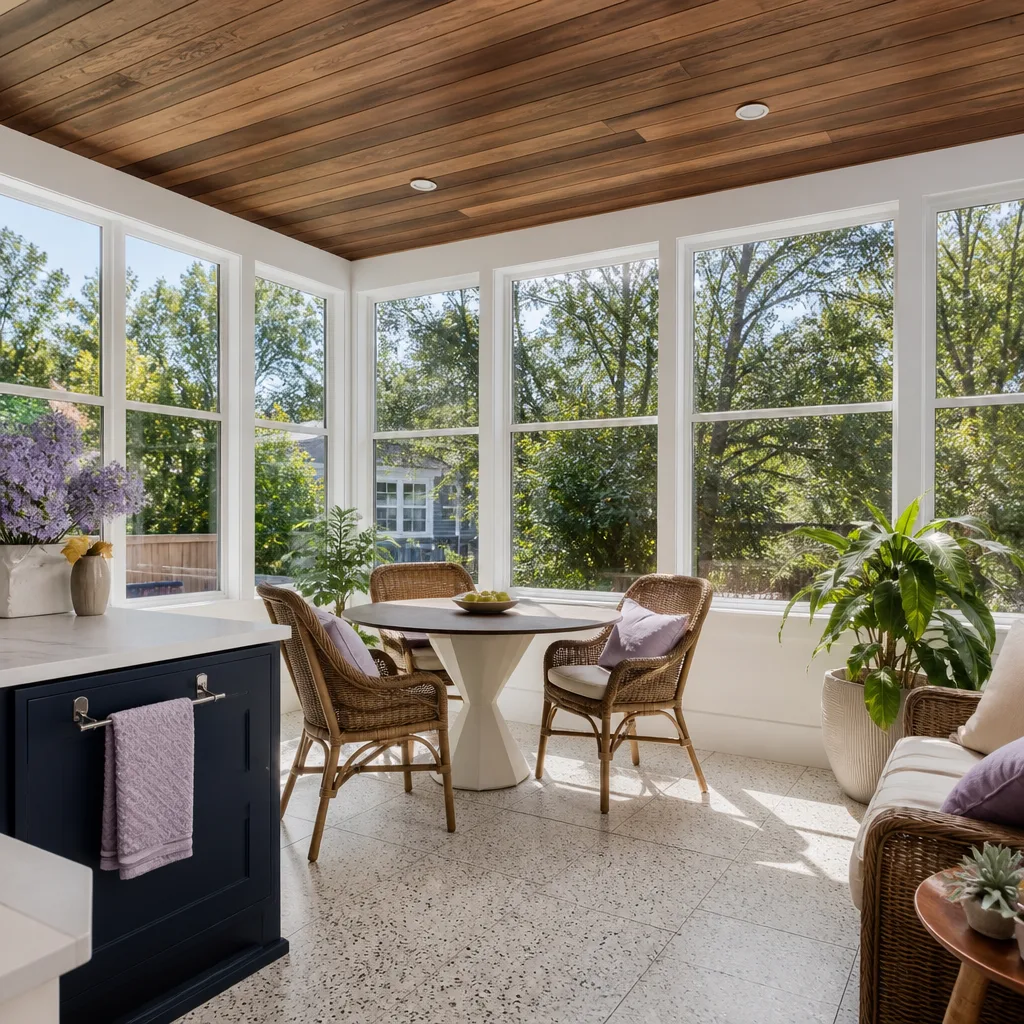
Los Angeles has specific rules about when a repair permit opens the door to mandatory code compliance work. Under LA Department of Building and Safety (LADBS) practice, certain repair categories on additions built before 2000 automatically require the entire system to be brought to current code before inspection sign-off. These triggers include:
- Foundation work beyond 10% of the perimeter. If your contractor needs to shore up or replace more than a small section of the foundation, the inspector will require the entire foundation system to meet current seismic standards. That means hold-downs, anchor bolts, and possibly shear panels that never existed in the original build.
- Structural wall and roof framing changes. Opening a wall to fix rot or termite damage, or replacing more than 25% of the roof sheathing, triggers a structural review that often expands into full lateral bracing upgrades.
- Electrical panel replacement. If you’re touching anything electrical beyond a receptacle swap, LADBS typically requires grounding upgrades, AFCI/GFCI protection, and sometimes a full service panel swap to 200 amps.
- Water intrusion where the source is in the building envelope. Fixing a leak at the roof-wall junction or around windows on an older addition can trigger insulation and ventilation code requirements that were optional when the addition was built.
In our experience across Los Angeles, homeowners rarely learn about these triggers from a contractor’s verbal estimate. They learn about them when the inspector red-tags a partially completed repair. That’s the moment a $15,000 patch becomes a $60,000 mandated retrofit. A reputable contractor flags the trigger before you sign.
How to Read a Repair Estimate for Hidden Upgrade Costs
Most contractors write estimates that look complete but hide the compliance exposure. Here’s how to read between the line items:
Signals your contractor knows about LA compliance triggers:
- The estimate includes a line item for “plan check and permit coordination” with a realistic dollar figure.
- There’s a note that says “any additional code-required work will be documented and priced in writing before proceeding.”
- The contractor asks about your addition’s build year before giving a number, not after.
- Foundation, shear, and electrical compliance appear as line items with actual numbers, even if they’re marked “if required by inspector.”
Signals your contractor is hiding compliance exposure until mid-project:
- The estimate has a vague “miscellaneous / as needed” category with no cap.
- The contractor won’t confirm whether they’ll pull the permit themselves.
- There’s no language about what happens when the inspector requires additional work.
- The estimate is significantly lower than two others; that’s not a good deal, it’s an estimate that ignores reality.
We write fixed-price contracts in Los Angeles because we’ve seen too many homeowners trapped by change orders that appeared after the wall was already open. A written price protects you from exactly that sequence. Ask for one.
The Replacement Math: When a 400 – 600 Sq Ft Addition Repair Approaches Replacement Cost
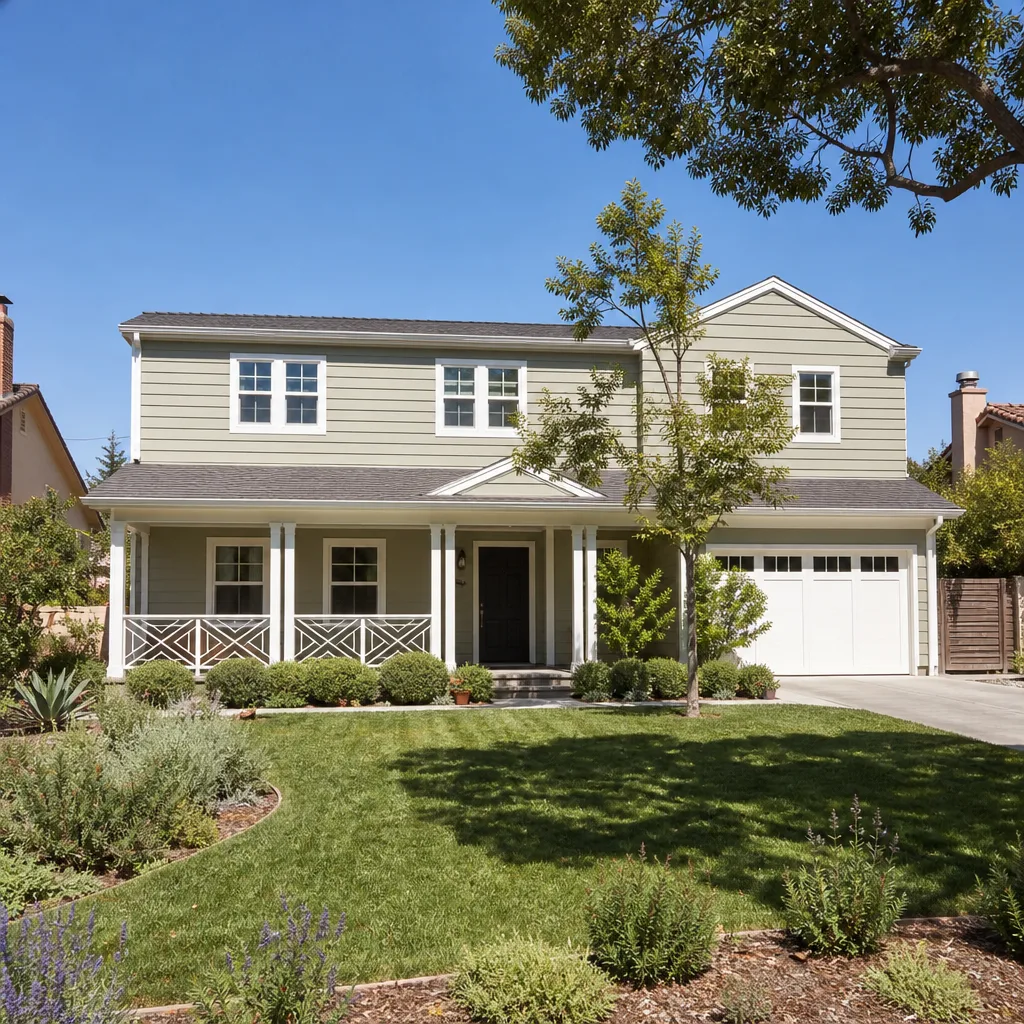
Here’s a practical threshold we use when advising Los Angeles homeowners. It’s not original to us; it’s the number that consistently shows up when you work through real projects.
For a 400 to 600 square foot addition, a full repair with seismic retrofitting, electrical compliance, insulation, drywall, and finishes typically lands between $180 and $320 per square foot. That’s $72,000 to $192,000, depending on condition and scope.
A new stick-frame replacement addition built to current code runs $280 to $420 per square foot in Los Angeles. A prefab or panelized addition from brands like Abodu, Cover, or Boxabl lands between $250 and $380 per square foot, with the advantage of factory precision and a compressed timeline.
Here’s the comparison that matters:
| Scenario | Low End (400 sq ft) | High End (600 sq ft) |
|---|---|---|
| Repair + code compliance | $72,000 | $192,000 |
| New stick-frame replacement | $112,000 | $252,000 |
| New prefab replacement (Abodu, Cover, Boxabl) | $100,000 | $228,000 |
When the repair-plus-upgrade lands within 20% of replacement, replace. You get a code-compliant addition with a new warranty, current insulation, and no hidden future failures. That’s the disciplined financial call, even when it feels like spending more today.
A note on terminology: when we say “prefab panel,” we mean large wall and roof sections built in a factory, trucked to your Los Angeles property, and assembled on-site with a crane. “Site-built” means the conventional method where lumber is cut and assembled piece by piece in your backyard. Both methods work. Prefab moves faster and reduces weather-related construction delays, which matter when you’re building through a Los Angeles rainy season.
Why James Hardie Fiber Cement Cladding Eliminates LA’s Most Common Regret
If you replace your addition, the cladding choice matters more than the paint color. Los Angeles sun, marine air, and seasonal Santa Ana cycles are hard on wood siding. Homeowners who choose natural wood tell us the same story: they’re repainting within five to seven years, and they’re replacing rotted boards near the bottom edges within ten.
James Hardie fiber cement changes that math. It’s a composite board made of cement, sand, and cellulose fibers. It doesn’t rot, doesn’t expand and contract like vinyl, and holds paint twice as long as wood. For a Los Angeles addition, that means:
- Repaint roughly every 12 to 15 years instead of every 5 to 7.
- No rot repair along the bottom course where sprinkler overspray hits.
- Resistance to termite damage that quietly destroys wood-framed additions in Southern California.
- Fire resistance that matters in Los Angeles hillside and canyon zones.
We specify James Hardie on most replacement additions in Los Angeles because the 10-year maintenance cost difference is too large to ignore. The board costs more upfront, roughly $2 to $4 per square foot more than basic wood siding, but it pays for itself at the first skipped repaint.
When you’re evaluating a replacement, ask the contractor which cladding they spec by default. If they say “whatever’s cheapest,” you’re signing up for the seven-year repaint cycle. Ask for the material names. Good brands are ones you can Google and verify independently, which is exactly why we build with James Hardie and prefab systems from names like Dvele and Mighty Buildings that you can research before we ever shake hands.
The Written Fixed-Price Contract: Your Only Real Protection Against Compliance Surprises
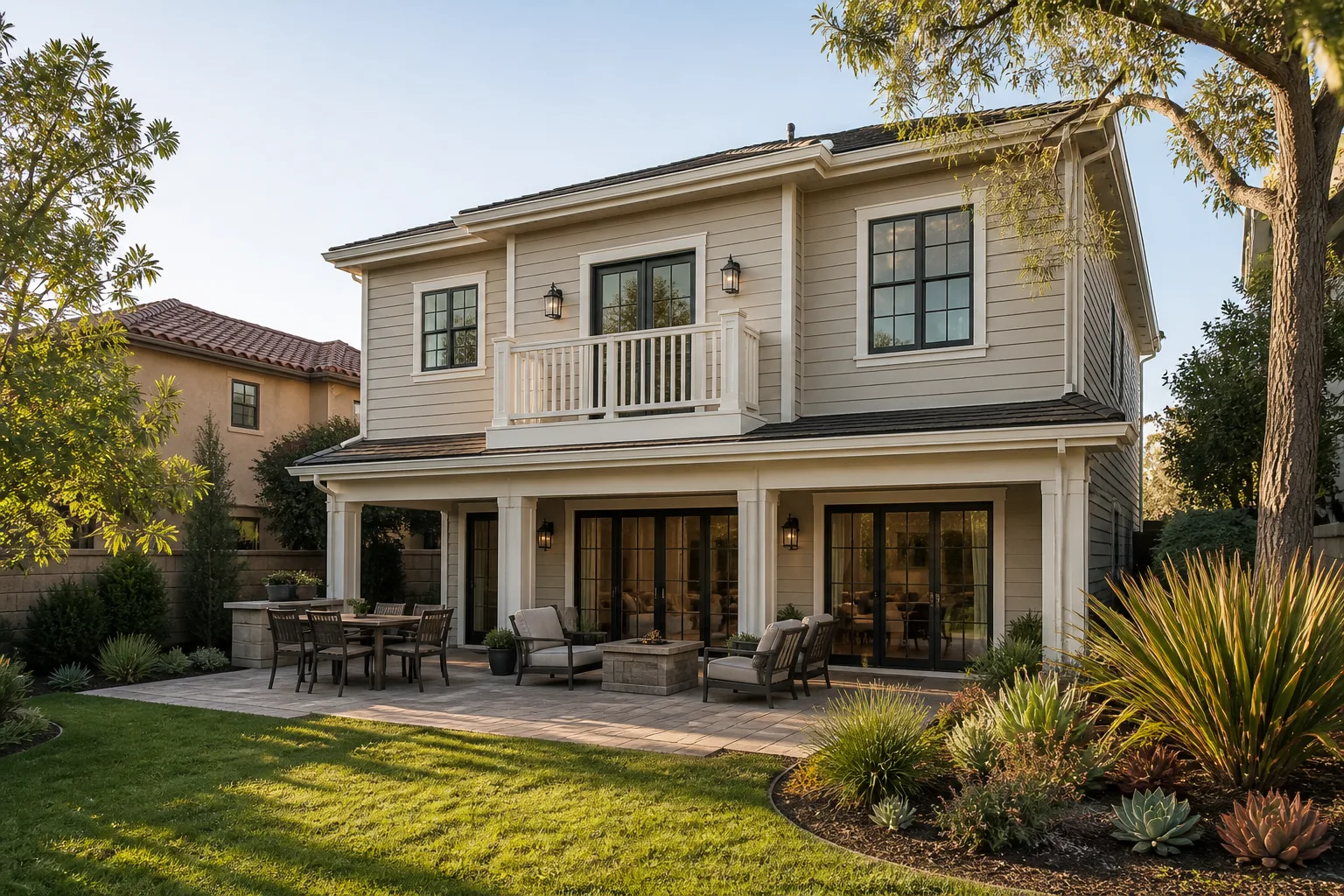
Here’s the unglamorous part of the repair-or-replace decision that saves Los Angeles homeowners more money than any material choice. The contract.
A verbal estimate is a guess. A written fixed-price contract with a defined scope is a legal boundary. When a compliance trigger appears mid-project, the difference between the two determines whether you pay for the surprise or the contractor owns it.
Let’s be specific about what “written fixed-price” means:
- A defined scope with square footage, materials, and finishes listed. If the scope changes, the price changes in writing, before work proceeds. No “we’ll figure it out later.”
- A line item for permit fees and plan check. If the contractor handles permits without a written permit line item, that’s a red flag.
- A change-order process written into the contract. You approve every change in writing with a dollar figure attached, before any additional work starts.
- A defined end date with a written penalty or extension process. Without it, your addition sits half-finished for months.
We include all four in every project document because we’ve inherited jobs from Los Angeles contractors who didn’t. One project in the Mid-City area sticks with us: a homeowner had a $24,000 verbal estimate for a foundation repair on a 1980s addition. The permit triggered seismic retrofitting and electrical compliance. Final cost: $71,000. No written scope. No cap on change orders. No protection.
That homeowner’s repair crossed the replacement threshold and they didn’t know it until the walls were open. A written contract wouldn’t have eliminated the code requirements, but it would have forced the compliance discussion before demolition, at a price the homeowner could have compared against replacement.
When to call a pro
If you see horizontal cracks in your addition’s foundation, diagonal cracks spreading from window corners, doors that stick seasonally, or a roof leak that reappears after each repair attempt, stop patching and call someone who understands Los Angeles permit triggers. The symptoms are telling you something structural is moving, and the longer you wait, the more expensive the code compliance conversation becomes.
Related services in Los Angeles: If you decide replacement is the right call, our Home Addition Contractor in Los Angeles page covers the full build process. For smaller-scope work, see our Room Addition Contractor in Los Angeles guide. And if you want the complete decision framework for building new from scratch, start with ADU Builders in Los Angeles.
The Bottom Line
When your Los Angeles home addition shows structural problems, don’t default to repair. Ask two questions first: What year was the addition built, and what type of permit will the repair trigger? If the answer is pre-2002 with structural or electrical work, get a written estimate that includes compliance costs before you commit to anything. Then run the math: if repair plus upgrades reaches 80% of replacement cost, replacement wins. A new addition with James Hardie cladding and current seismic code beats a patched 1980s addition on 10-year total cost almost every time.
If you’re in Los Angeles and want real numbers for your specific addition, Benson ADU Builders offers free estimates with written pricing before any work starts. Call (903) 225-2278. We’ll walk your addition, open the permit conversation early, and put the repair-versus-replacement numbers in writing so you can decide with confidence. And if you’d like to see how we approach building from the ground up, start with our Benson ADU Builders home page.
Frequently Asked Questions
A structural home addition repair in Los Angeles typically costs between $180 and $320 per square foot when code compliance work is included, which means $72,000 to $192,000 for a 400 to 600 square foot addition. The range depends on foundation condition, electrical compliance requirements, and whether seismic retrofitting is triggered. Call (903) 225-2278 for an exact quote on your addition, estimates are free and written.
Not if you have a written fixed-price contract with a defined scope and a change-order process. Without one, a Los Angeles structural repair can legally trigger code compliance work that doubles your cost mid-project. Before you sign anything, ask the contractor to put the permit and compliance line items in writing. Call (903) 225-2278 and we’ll walk you through what that document should look like.
Yes, any reputable Los Angeles contractor handles the permit and plan-check process directly and includes it as a written line item in your estimate. If a contractor tells you to pull your own permit or asks to work without one, walk away. Unpermitted structural work puts you at legal and insurance risk. Call (903) 225-2278 to discuss your specific addition and what the permit process will require.
A structural repair with code compliance work typically takes 6 to 12 weeks depending on inspection turnaround and the scope of mandated upgrades. A full replacement addition typically takes 4 to 7 months site-built, or 3 to 5 months with a prefab system from brands like Abodu or Cover. We’ll give you a written project timeline with your estimate. Call (903) 225-2278 to schedule your free consultation.
Written by the team at Benson ADU Builders.
Need ADU Help?
Call Benson ADU Builders - licensed & insured, here with fast after-hours help in Los Angeles.
(903) 225-2278