
Dvele ADU Builders in Los Angeles: A Homeowner’s Guide
Dvele builds prefab ADUs around a “health-first” performance spec: low-VOC materials, continuous ERV ventilation, tight air sealing, and real-time indoor air monitoring. It’s the most technically sophisticated ADU option we offer, and it’s genuinely excellent for people with asthma, chemical sensitivities, or long-term rental strategies targeting wellness-minded tenants. But here’s what most guides won’t tell you: a Dvele unit only delivers those specs if the installer gets the mechanical commissioning right. Buy the box from Dvele, but make sure the builder knows what they’re doing on the ground. If you’d rather skip the research and get a straight answer on cost and site readiness, call Benson ADU Builders at (903) 225-2278.
What Makes Dvele Different From Other Prefab ADU Brands
Dvele’s pitch isn’t “we’re fast” or “we’re cheap.” It’s “we build the healthiest home on the market.” That’s not marketing fluff. Dvele units ship with a whole-home ERV (energy recovery ventilator), which continuously pulls stale air out and pushes filtered fresh air in. Most stick-built ADUs in Los Angeles don’t have any mechanical ventilation beyond a bathroom fan. Dvele also specs low-VOC and zero-VOC finishes, uses an all-electric mechanical package with induction cooktops and heat pumps, and includes a monitoring system that tracks indoor air quality, CO2, humidity, and temperature in real time.
Compare that to site-built ADUs, where standard practice is whatever drywall, paint, and flooring the contractor picks up at the local supply house. The difference is real. Where Dvele overlaps with other prefab brands like Benson ADU Builders is in the factory-built approach itself: modules are framed, insulated, wired, plumbed, and finished inside a controlled facility, then shipped to your property and set with a crane. That controlled environment is what makes the tight air-sealing possible. Framing tolerances in a factory are measured in fractions of an inch; on a Los Angeles job site, they’re measured in whatever the crew can manage between wind, rain, and a busy street.
Which Health Specs Are Standard, and Which Are Upgrades
Before you budget, know what’s included and what costs extra. Dvele’s base units include:
- ERV ventilation – standard on every model. This is the big one; most ADU builders treat it as an optional upgrade, and most homeowners skip it because nobody explains what it does.
- Low-VOC paints, adhesives, and cabinetry – standard. You won’t get that fresh-remodel chemical smell.
- All-electric mechanical package – standard. No gas line to run to the ADU, which also simplifies LA building department interactions.
- Indoor air quality monitoring – standard, tied into the Dvele app.
- Solar-ready wiring – standard. Actual solar panels and battery storage are add-ons.
What’s not standard: upgraded insulation packages beyond Dvele’s already-high baseline, water filtration systems, and smart-home integration beyond the core monitoring platform. In our experience planning ADU builds in Los Angeles, most homeowners are surprised that the base package covers what other builders bill as $8,000 to $12,000 in upgrades. That narrows the price gap between Dvele and a quality site-built ADU more than you’d think.
Dvele and Title 24: Why the Envelope Simplifies LA Compliance
Every ADU in Los Angeles must pass California’s Title 24 energy code. For a conventional build, that means paying an energy consultant, modeling the design, and sometimes adding insulation or better windows to hit the required score. Dvele’s factory-built envelope typically exceeds Title 24 prescriptive requirements before the unit even leaves the factory. The walls, roof, and floor assemblies are designed as a complete thermal system, not an assembly of parts picked by a framer.
So what does that mean for you? A tighter envelope means the Title 24 calculation gets easier. The energy model will show lower heating and cooling loads, which lets you install a smaller, cheaper heat pump. It can also reduce or eliminate the need for added wall insulation beyond what’s built into the panels. A good builder will still run the formal Title 24 compliance package through a licensed energy consultant, but the numbers generally land favorably. For anyone building in Los Angeles’s hotter inland neighborhoods like Van Nuys or Canoga Park, that heat pump sizing matters for your SDG&E or LADWP bill.
One caveat: Title 24 compliance is only as good as the installation. If the modules aren’t joined and sealed correctly on site, or the ERV ducting is kinked during crane placement, the real-world performance won’t match the model. This is exactly why Dvele’s technical specs are demanding on the builder side.
Real Installed Costs for a Dvele ADU in Los Angeles
You’ll see Dvele’s base model pricing quoted anywhere from $220,000 to $280,000 for a one-bedroom unit. That’s factory cost. Installed cost in Los Angeles is a different number, because you’re paying for site work, permits, utilities, and the crane day that every prefab needs. Here’s the ballpark breakdown we give homeowners:
| Cost Category | Typical Range (1-Bedroom Dvele) |
|---|---|
| Dvele unit (factory cost, delivered) | $220,000 – $280,000 |
| Site prep (grading, foundation, trenching) | $25,000 – $45,000 |
| Utility connections (electrical panel, water, sewer) | $15,000 – $30,000 |
| Permits and Title 24 compliance | $8,000 – $15,000 |
| Crane day and module setting | $5,000 – $10,000 |
| Builder project management and finish-out | $30,000 – $55,000 |
| Total installed range | $303,000 – $435,000 |
That’s a meaningful spread, and it’s driven by site conditions. A flat backyard in Westchester with easy street access for the crane will land on the lower end. A hillside property in Mount Washington where the crane has to thread a needle will land higher. This is the single most important thing to understand about Dvele in Los Angeles: the unit price is fixed, but the site determines your final number. Any builder who quotes you a total before seeing your property is guessing, not estimating.
For comparison, a quality site-built ADU of similar size in Los Angeles typically runs $250,000 to $350,000. A Dvele is not dramatically more expensive when you account for the mechanical systems already included. What you’re paying for is the performance envelope and the health specs, not the square footage. We pulled a Dvele module out of a narrow alley access in Koreatown last year where the crane operator had four feet of clearance on each side. The unit went in clean, but that day cost more than the entire permitting phase. That’s the reality of prefab in a dense city.
Who Should Actually Pay for a Dvele
Dvele is not for everyone. If your plan is a basic rental ADU and you’re optimizing strictly for cost per square foot, a conventional build or a simpler prefab option like a room addition built site-side will beat it on price. But if you match any of these profiles, the premium starts to look like a sound investment:
- Health-sensitive occupants. If you or a family member has asthma, allergies, MCS (multiple chemical sensitivity), or an autoimmune condition, the low-VOC materials and continuous filtered ventilation are not luxuries. They’re the reason to build.
- Aging parents moving into the ADU. Older adults spend a disproportionate amount of time indoors, and indoor air quality has a direct correlation with respiratory health. The air monitoring also gives you remote visibility into how the home is performing.
- Long-term rental strategy. Tenant turnover is the single biggest cost in LA rentals. A unit that markets as “health-first, all-electric, real-time air monitoring” attracts tenants who stay longer and pay a small premium. We see this consistently with wellness-focused renters in Silver Lake and Echo Park.
- You plan to live in the ADU yourself and rent out the main house. In that case, the health specs are a personal benefit, not just a marketing line.
If you’re building an ADU to house family or generate rental income, and the difference between “standard” and “exceptional” indoor air matters to you, Dvele earns its premium. That said, Dvele is not the only reputable prefab option on the market. Home additions and ADUs built with other systems like Abodu and Cover each have their own strengths in speed, design, or footprint flexibility. A good builder helps you weigh them honestly against your site and your goals, not against a sales brochure.
What Proper Commissioning Looks Like After Installation
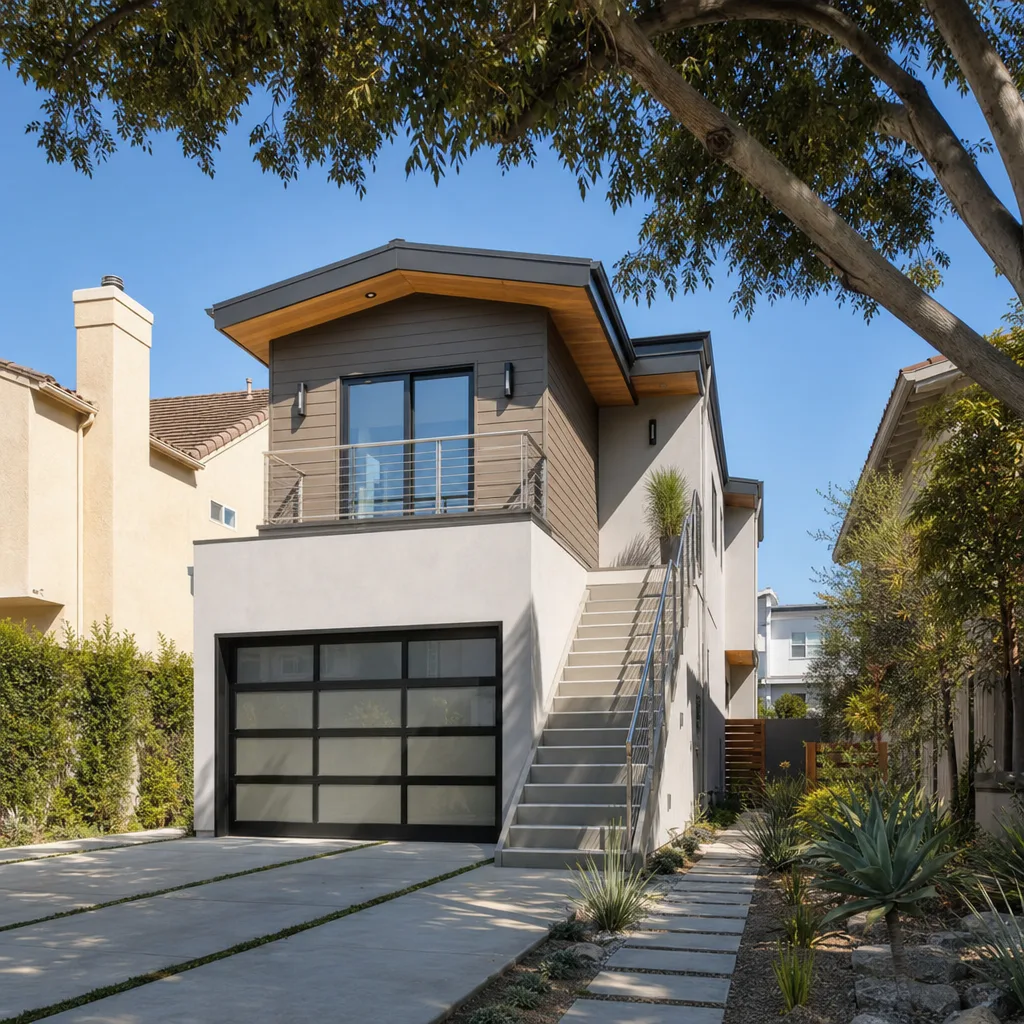
The moment the crane sets the last module is not the moment you hand over final payment. A Dvele unit is a high-performance system, and systems need testing. This is the step most commonly skipped by builders who treat prefab as “just set it and go.” Here’s what we believe a responsible Dvele install includes, and what you should ask for in writing before signing:
- Blower door test to verify the air-sealing meets Dvele’s spec. If the number doesn’t hit the target, the joints need re-sealing before the siding goes on.
- ERV system balancing and commissioning – airflow measured at each supply and return register, not just powered on and assumed fine.
- Indoor air quality baseline test after the unit has been running for 24 to 48 hours, with results documented in writing.
- Crawl space and roof cavity inspection after module join, looking for any gaps in the thermal envelope.
- Handoff documentation: operation manuals, maintenance schedule for the ERV filters, warranty registration, and a written summary of the Title 24 compliance results.
This is the part of a Dvele build where builder quality is most visible, because none of it is visible once the interior is finished. The testing happens between module set and final wall close-up. If your builder doesn’t talk about commissioning in plain language before you sign, that’s a warning sign. The warranty is only as good as the commissioning that backs it up. At Benson ADU Builders, every project is governed by The Relay Visibility Guarantee: a written price before work starts, a Done Right Promise, and a written guarantee stamped on every project we deliver.
When to Call a Pro
Site assessment is the moment when a professional actually earns their fee on a Dvele build. Your job as the homeowner isn’t to know setback rules or crane logistics off the top of your head. It’s to know whether your property can physically accept a module delivery. We’ve seen buyers fall in love with a prefab unit only to discover their side yard access is 11 feet wide and the crane needs 14. The right builder walks the site, measures access, checks the panel capacity, and gives you a written feasibility report before you commit a dollar to the factory. If someone gives you a Dvele price without visiting your property, get a second opinion.
Related services in Los Angeles: If Dvele’s price or site requirements don’t pencil out, we also build with Abodu, Cover, and Mighty Buildings, and we handle full ADU construction throughout Los Angeles, from site assessment to final inspection.
The Bottom Line
Dvele builds the most performance-focused prefab ADU on the market, and for the right Los Angeles homeowner, the health specs justify the price. The unit itself ranges from $220,000 to $280,000 factory cost, with installed totals typically landing between $303,000 and $435,000 depending on site conditions. The key is that Dvele only performs as designed when the builder handles mechanical commissioning, air sealing verification, and Title 24 documentation with real rigor. Ask your builder about blower door testing and ERV balancing before you sign. If they can’t answer clearly, keep looking. If you’re in Los Angeles and want a written, no-surprises estimate for a Dvele ADU, Benson ADU Builders offers free estimates and a written price before any work starts. Call (903) 225-2278.
Frequently Asked Questions
Installed, expect a range of $303,000 to $435,000 for a one-bedroom unit. Factory cost runs $220,000 to $280,000, and the rest covers site prep, utilities, permits, crane day, and builder oversight. Hillside sites and tight access increase the bottom of that range. For an exact number based on your property, call (903) 225-2278 for a free site assessment.
It depends on who will live in the unit. For health-sensitive occupants, aging parents, or a strategy of long-term wellness-focused rentals, the ERV ventilation, low-VOC materials, and air monitoring earn back the premium. For a basic rental unit where cost per square foot is the priority, a quality site-built ADU remains a strong alternative.
Yes. Dvele’s factory-built thermal envelope typically exceeds Title 24 prescriptive standards, which simplifies the energy modeling and can allow for smaller, more efficient heat pump sizing. You still need a formal compliance package from a licensed energy consultant, but the numbers generally work in your favor.
Ask whether they perform a blower door test after module set, whether they commission and balance the ERV system, and whether they provide written air quality baseline results and Title 24 documentation before final payment. A builder who can’t explain commissioning in plain language is likely to skip it. Call (903) 225-2278 and ask us directly.
Written by the team at Benson ADU Builders.
Need ADU Help?
Call Benson ADU Builders - licensed & insured, here with fast after-hours help in Los Angeles.
(903) 225-2278