Last updated October 9, 2026
ADU Cost Breakdown: The Los Angeles Homeowner’s Reference for 2026
The $150,000 to $400,000 range you see on every ADU cost article isn’t wrong. It’s just that both ends describe completely different projects, and knowing which end you’re on before you get a bid is worth more than any price guide. A garage conversion with a modest finish package in Van Nuys is not the same project as a two-bedroom detached unit on a downslope in Silver Lake, yet they get lumped into the same range. This guide breaks down what actually drives cost at each decision point, so you can walk into your first contractor conversation with a realistic number for Los Angeles in 2026, not a guess that’s off by six figures.
Quick Answer
An ADU in Los Angeles costs between $80,000 for a basic garage conversion (JADU) and $450,000+ for a custom detached two-bedroom unit, with most homeowners landing between $180,000 and $320,000 all-in. The range is driven by five decisions: ADU type, finish level, lot access, utility distance, and site grading. Soft costs (ADU Permits, Codes & Inspections in CA: What You Need to Know) add $25,000 to $55,000 on top of construction, and prefab brands like Abodu and Cover typically land 10 to 20 percent below site-built pricing for comparable finishes.
Table of Contents
- Hard Cost Benchmarks by ADU Type
- The Soft Costs Most Estimates Hide
- How Prefab Brand Pricing Actually Works
- The Five Decisions That Inflate Cost the Most
- Financing Options and the Rental Break-Even Math
- Common Mistakes to Avoid
- When to Call a Professional
- Frequently Asked Questions
Hard Cost Benchmarks by ADU Type
Hard costs are the actual construction line items: foundation, framing, roofing, drywall, flooring, fixtures, appliances, and finish carpentry. In Los Angeles, the type of ADU you build sets the baseline, and everything else adjusts from there. We’ve built or quoted hundreds of these projects, and the per-square-foot numbers below reflect what 2026 pricing looks like in this market when you’re working with a licensed contractor who pulls permits and passes inspections.
Stick-Built Detached ADU: $280 to $420 per square foot
This is the traditional route: a contractor frames the structure on your property from lumber, runs the trades through it, and finishes it like a small house. A 500-square-foot one-bedroom detached unit typically lands between $140,000 and $210,000 for construction. A 1,000-square-foot two-bedroom runs $280,000 to $420,000. The wide range reflects finish level more than anything else: builder-grade flooring and big-box fixtures sit at the low end, while custom cabinetry, high-efficiency HVAC, and premium windows push toward the top. Los Angeles labor rates for framing, electrical, and plumbing are among the highest in the country, which is why site-built ADUs cost more here than in almost any other metro area.
Prefab Detached ADU: $190 to $320 per square foot
Prefab construction has matured considerably, and in Los Angeles it’s no longer the budget compromise it was a decade ago. Companies like Abodu and Cover build the module off-site in controlled factory conditions, then deliver and set it on a prepared foundation. A 500-square-foot Abodu unit typically prices between $190,000 and $230,000 installed, depending on site conditions and finish selections. That’s roughly $380 to $460 per square foot at the small end, which sounds steep until you factor in that the price includes engineering, a significant portion of the permit package, and factory-level build quality. At larger sizes, the per-square-foot number drops because the fixed costs (delivery, crane, site prep) get amortized across more space. Cover’s model works differently: their panels are assembled on-site, and their pricing for a 600-square-foot one-bedroom generally starts around $180,000 before foundation work, utility connections, and permits.
Attached Addition ADU: $220 to $360 per square foot
An attached ADU shares one or more walls with the main house, which trims foundation and wall costs but adds complexity around fire separation, sound insulation, and tying into your existing roofline. A 400-square-foot attached unit in Los Angeles runs about $88,000 to $144,000 for construction. The catch is that attached ADUs often trigger more extensive retrofitting of the existing structure, especially in older Los Angeles homes where the foundation or electrical panel may need upgrading before work can begin-issues covered in our ADU Warning Signs: A Los Angeles Homeowner’s Reference Guide.
JADU Garage Conversion: $80,000 to $130,000 All-In
Junior ADUs (JADUs) are the most cost-effective path to a rental unit in Los Angeles. A JADU is a conversion of existing space, typically a garage or a portion of the home, capped at 500 square feet. Since the shell already exists, you’re paying for conversion work rather than new construction: insulation, drywall, electrical, a small kitchen, a bathroom with a shower, and a separate entrance. The $80,000 to $130,000 figure includes permits and soft costs for most projects. A caveat: garage slab foundations in Los Angeles are often not up to code for living space, and bringing them up can add $10,000 to $25,000 if the slab needs cutting and repouring for proper drainage and vapor barrier.
Our ADU Builders in Los Angeles page has more detail on how we scope each of these project types.
The Soft Costs Most Estimates Hide
Here’s where the sticker price diverges from the real number. Soft costs are everything you pay that isn’t lumber, drywall, and labor. In Los Angeles, a realistic soft cost budget is $25,000 to $55,000 on top of construction, and almost no contractor includes them in a verbal estimate because they’re hoping to look cheaper than the next bid. At Benson ADU Builders home, we put these in writing from the first conversation.
- LA DBS permit fees: The Department of Building and Safety charges based on project valuation. Most ADU permits in Los Angeles run $3,000 to $8,000, but if your project triggers a coastal development review, hillside review, or a zoning variance, that number climbs fast.
- LADWP utility connection: Connecting water, sewer, and power to a detached ADU runs $8,000 to $20,000 depending on how far the trench has to go. Sewer lateral work on older Los Angeles properties can add thousands if the existing line is clay and needs replacement.
- Soils report and structural engineering: Most Los Angeles hillside and older flatland lots require a soils report ($2,500 to $5,000) and structural calculations ($3,000 to $8,000) before the permit application is even complete.
- Architectural drawings: $5,000 to $20,000 depending on whether you use a design-build firm, an independent architect, or a prefab brand that bundles design into the price.
- Title-24 energy compliance: California’s energy code requires solar-ready wiring, high-efficiency insulation, and specific HVAC sizing. Compliance testing and documentation adds $2,000 to $5,000 on a typical project.
- School district fees: Los Angeles Unified School District assesses fees on new residential square footage. For an ADU under 750 square feet, these fees are often waived, but larger units trigger charges of $3 to $5 per square foot.
The takeaway: when a contractor gives you a price per square foot, ask if it includes permits, engineering, utility connections, and energy compliance. If the answer is no, add the numbers above before you compare bids.
How Prefab Brand Pricing Actually Works
Prefab ADU manufacturers publish base prices that look remarkably affordable, usually $150,000 to $250,000 for a one-bedroom unit. What gets less attention is the difference between the factory price and the installed, permitted, connected price. Understanding that gap is the difference between a realistic budget and a surprise at the end.
What the Published Price Includes
Abodu’s base price covers the module itself: the structure, interior finishes, kitchen, bathroom, lighting, and built-in appliances. What it doesn’t include: the foundation, the crane or delivery, the utility connections, and the permit package beyond Abodu’s pre-engineered plans. Cover’s panel system similarly prices the building envelope and finishes but requires a separate contract for site work, concrete, and utilities. Mighty Buildings prices their 3D-printed panel units similarly, with site work and foundation as separate line items.
The Real Installed Cost
In our experience in Los Angeles, a prefab unit’s published price ends up being 15 to 30 percent of the gap between base price and turnkey cost. For example: an Abodu 500-square-foot unit with a base price of $190,000 typically needs $35,000 to $55,000 in site work, foundation, utility connections, and permit fees, landing the real total around $225,000 to $245,000. That’s still competitive with site-built construction for comparable finishes, but you need to budget for it from day one. The same applies to units from Home Addition Contractor in Los Angeles projects, which often blend prefab modules with site-built elements.
Where prefab genuinely saves money is speed and predictability. A factory-built unit arrives with finishes already installed, which means fewer weeks of open framing in Los Angeles sun and rain, fewer change orders from on-site material substitutions, and a compressed construction loan window. We build with Abodu and Cover because their quality control is consistent, and their engineering packages speed up LA DBS plan check substantially.
The Five Decisions That Inflate Cost the Most
Once you’ve chosen an ADU type and settled on prefab versus site-built, these five variables move the number more than anything else. Each one is a decision point, which means you can control them before you ever sign a contract.
1. Finish Level: $40 to $120 per square foot difference
The same 600-square-foot floor plan can cost $190,000 or $310,000 depending on what goes inside. Builder-grade laminate flooring, stock cabinets, and a basic appliance package sit at the low end. Wide-plank engineered hardwood, custom millwork, a heat pump with zoning, and stone countertops push the number up. We see this most clearly in Los Angeles neighborhoods where residents plan to rent to tenants with expectations matching the local market: a rental in Glassell Park doesn’t need the same finish level as one in Brentwood.
2. Lot Access Difficulty: $5,000 to $35,000 added
If your backyard is accessible by a wide driveway with no overhead obstructions, materials and equipment move freely. If your lot is down a narrow hillside road, behind a retaining wall, or only reachable through a tight side yard, expect to pay for smaller delivery vehicles, crane time, hand-carrying materials, or temporary access improvements. Prefab units are particularly affected here: a crane that can’t reach a site in Los Angeles can add $8,000 to $15,000 for alternative lifting methods or smaller modules.
3. Utility Distance from Main: $10,000 to $25,000 added
The further the ADU sits from the main house and its utility connections, the more trenching, pipe, and conduit you’re paying for. A detached unit at the back corner of a 5,000-square-foot Los Angeles lot might need 80 feet of sewer line, 60 feet of electrical conduit, and 50 feet of gas line. That trench work runs $100 to $200 per linear foot in this market when you include backfill, compaction, and inspection.
4. Slope and Grading: $15,000 to $50,000 added
Los Angeles hillside lots are beautiful and brutal on budgets. A sloped site may require a stepped foundation, retaining walls, drainage engineering, or pier-and-grade-beam construction instead of a simple slab. We’ve worked on Silver Lake and Echo Park projects where site preparation costs exceeded $60,000 before a single wall went up. Flat lots in the Valley almost never carry this line item.
5. Timeline Compression: 10 to 20 percent added
If you need the unit finished before a relative moves in or a lease starts, expect to pay a premium for expedited plan check, overtime labor, and prioritized trade scheduling. A normal ADU project in Los Angeles runs 8 to 14 months from design to final inspection. Compressing that to 6 months usually adds 10 to 20 percent to the total. The Room Addition Contractor in Los Angeles page explains how we phase projects to balance speed against cost.
Financing Options and the Rental Break-Even Math
Most Los Angeles homeowners finance an ADU through one of four paths. Each has different cost implications, and the 2026 rate environment makes the comparison more consequential than it was a few years ago, when cheap money made over-borrowing painless.
- HELOC: A home equity line of credit typically offers the lowest origination costs and interest-only draw periods. Current rates for well-qualified Los Angeles borrowers sit in the high-6 to mid-8 percent range, depending on loan-to-value ratio. The risk: variable rates adjust with prime, so your payment can climb during the construction period.
- ADU construction loan: Some lenders now offer products specifically underwritten against the projected rental income of the ADU. Rates run slightly higher than HELOCs but offer fixed terms and sometimes allow borrowing up to 90 percent of post-construction value.
- CA ADU Finance Program: California’s state-backed financing initiative offers income-based grants and low-rate loans for qualifying homeowners. The program has income caps, and fund availability varies by county allocation, but for eligible homeowners it’s the cheapest capital available.
- Cash-out refinance: If you bought or refinanced when rates were lower, a cash-out refi may be the most predictable option, but it replaces your entire mortgage with a new loan at 2026 rates, which often negates the benefit unless your current rate is close to market.
Break-Even Rental Math
A $250,000 ADU financed at 7 percent carries an annual debt service of roughly $20,000, assuming a 30-year amortization. Market rents for a one-bedroom ADU in Los Angeles currently range $1,800 to $2,800 per month, depending on neighborhood and finish level. At $2,300 a month, you’re generating about $27,600 in annual rent, less property tax increases of $2,500 to $3,500 and maintenance reserves of $1,500 to $3,000, leaving a net of roughly $21,000 to $23,600. That puts a $250,000 unit at or slightly above break-even in year one, with stronger cash flow as rents appreciate and the loan pays down.
The math gets better for garage conversions, where the $80,000 to $130,000 all-in cost translates to a debt service of $6,500 to $10,500 a year against the same rent potential. A JADU is genuinely cash-flow positive in almost every Los Angeles rental market.
Common Mistakes to Avoid
- Comparing bids on price per square foot only. A $350-per-square-foot bid that includes utility connections, permits, engineering, and all fixtures is often cheaper than a $280-per-square-foot bid that excludes them. Ask for line-item scope, not a single number.
- Ignoring the panel upgrade. Many older Los Angeles homes have 100-amp electrical panels, and a detached ADU with a kitchen and HVAC usually requires 200 amps. A panel upgrade adds $3,000 to $8,000, and it should be in the contract from day one.
- Assuming the garage slab is code-ready. Pre-1960 Los Angeles garages often sit on unreinforced slabs with no moisture barrier. Converting one without addressing the slab leads to cracking, moisture intrusion, and failed inspections down the line.
- Signing before your soils report comes back. Hillside properties in Los Angeles can have expansive soils or hidden fill that requires deep foundations or piers. If your contractor quotes before the soils report, that quote is a guess.
- Underestimating the permit timeline. LA DBS plan check for ADUs has improved, but hillside, coastal, and historic district projects still face extended review. Build six to eight months of permitting time into your schedule, not two.
- Choosing finishes before choosing a rental market strategy. A $40,000 finish upgrade on a rental ADU in a mid-market neighborhood adds maybe $200 a month in achievable rent. That’s a 16-year payback. Spend on finishes where the rent justifies it.
- Buying a prefab unit without a site inspection. Some prefab brands quote installation without ever walking your lot. Access issues, slope, and utility routing can add tens of thousands to the real cost. Any reputable builder will inspect the site before quoting.
When to Call a Professional
If you’re considering an ADU in Los Angeles and your lot has a slope, the utilities are more than 30 feet from the proposed site, or you’re debating between two or three different project types, a professional consultation will save you more than it costs. For related preparation tips, see our ADU Emergency Preparedness Guide for Los Angeles Homes. A qualified ADU contractor can assess access, identify hidden soft costs, and compare prefab against site-built options with real numbers rather than marketing ranges. Benson ADU Builders offers free estimates in Los Angeles, and every estimate includes a written price breakdown with permits, utilities, and site work itemized, so you can see exactly what’s driving the number. Call (903) 568-7222 to schedule.
Frequently Asked Questions
An ADU in Los Angeles costs between $80,000 and $450,000 depending on type and finish, with most projects landing between $180,000 and $320,000 all-in. Garage conversions sit at the low end, while custom detached two-bedroom units on sloped lots sit at the high end. Call (903) 568-7222 for a written estimate specific to your property.
A garage conversion JADU is the cheapest path, running $80,000 to $130,000 all-in because the structure already exists. The main cost risk is the slab foundation, which may need $10,000 to $25,000 in upgrades to meet code for living space.
Prefab units from brands like Abodu and Cover typically land 10 to 20 percent below site-built pricing for comparable finishes, but only when you compare turnkey costs that include foundation, utilities, and permits. Published base prices exclude site work, which adds $35,000 to $55,000 in Los Angeles.
Most Los Angeles ADU projects run 8 to 14 months from design to final inspection, with permitting accounting for 3 to 8 months of that timeline. Prefab units typically shave 2 to 4 months off construction compared to site-built because most finishes are completed in the factory.
Yes, every ADU in Los Angeles requires permits from the LA Department of Building and Safety, regardless of whether it’s site-built, prefab, or a garage conversion. Unpermitted units cannot be legally rented and can block future refinancing or sale of the property.
Yes, but less than many homeowners expect. Property taxes are reassessed only on the value of the ADU addition, not the entire property. A $250,000 ADU typically adds $2,500 to $3,500 per year to your Los Angeles property tax bill, based on the standard 1 percent base rate plus local assessments.
The Bottom Line
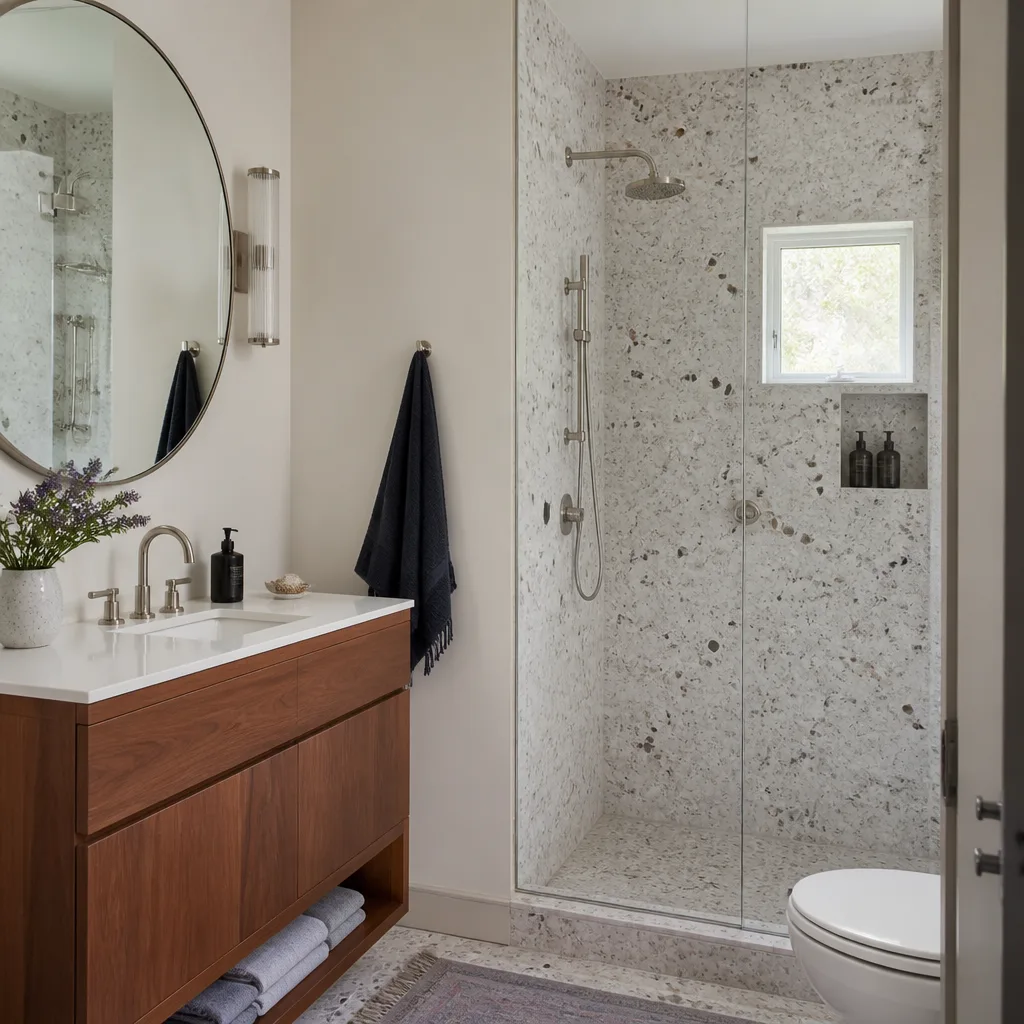
The $150K to $400K range is real, but it describes different projects, not one project with a wide margin of error. Your number depends on ADU type, finish level, site conditions, and whether you build on-site or buy prefab. Soft costs add $25,000 to $55,000 regardless of which path you take. Financing rates matter more in 2026 than they did five years ago, and a garage conversion is the clearest path to immediate positive cash flow. Los Angeles rewards homeowners who get line-item quotes before they sign, and punishes those who trust a verbal number. Get the written price, then decide, or explore more guides & resources to plan your project.
Written by Troy Eastman, Owner at Benson ADU Builders, serving Los Angeles since 2006.