
5 Mistakes to Avoid With Home Addition Contractor
The biggest mistakes with a home addition contractor in Los Angeles aren’t about picking the wrong paint color or misreading a floor plan. They’re about paperwork, or more precisely, the absence of it. Most homeowners lose money because they accept verbal promises where written documents should exist.
Key Takeaways
- Never accept a lump-sum bid without a line-item breakdown
- Verify permits on the LADBS portal before paying anything
- California law caps the down payment at 10% or $1,000, whichever is less
- Get a written change-order policy signed before demo day
- Address neighbor and HOA concerns before the permit lottery starts
Mistake 1: Accepting a Lump-Sum Bid Without an Itemized Cost Sheet
A home addition in Los Angeles is rarely a single number. It’s excavation, foundation, framing, electrical, plumbing, insulation, drywall, roofing, windows, flooring, paint, and finish carpentry, each with its own price tag. When a contractor hands you a single figure like “$180,000 for a 400-square-foot addition,” you have zero way to evaluate that number. It’s a take-it-or-leave-it guess with nothing behind it.
The fix is a line-item breakdown. Every legitimate home addition contractor in Los Angeles should be able to show you exactly what each phase costs: how much for the foundation pour, what the framing package runs, what you’re paying per square foot for flooring. When we prepare a written price for a client, the estimate lists every trade and every material allowance, down to the door hardware. Not because homeowners ask for it, but because it’s the only way to compare one bid against another.
Here’s why that matters beyond price shopping. An itemized sheet catches scope gaps. If one bid at $150,000 includes a 200-amp electrical upgrade and another at $142,000 doesn’t mention electrical at all, the cheaper bid isn’t actually cheaper. You’ll find out when the electrician shows up and the contractor wants $9,000 more. Verbal explanations don’t hold up three months into a project. Written line items do.
We pulled a project out of a garage conversion over in West Adams last year where the previous contractor’s bid was exactly that: one number on a napkin, no breakdown, no material specs. The homeowner had already paid a deposit before we were called in to make sense of it. When we opened the walls, the original scope didn’t include shear wall upgrades, a requirement on that specific lot. That’s a $12,000 fix that was nowhere in the contract.
Ask for it in writing. If a contractor refuses to break down the number, that’s an answer in itself.
Mistake 2: Skipping the Permit Verification Step
A shocking number of addition projects in Los Angeles begin without a valid permit on file. Not because the homeowner wants unpermitted work, but because they trust the contractor’s word that permits are “in process” or “we’ll handle that.” Months later, LADBS posts a stop-work order and the job halts.
Los Angeles County makes this easy to avoid. The LADBS portal (Los Angeles Department of Building and Safety) allows any homeowner to search for permits by address. You type in your street number, and the system shows you every permit record tied to that property: application status, issued permits, inspections passed, and any violations. It takes five minutes.
Here’s the sequence you want: the contractor applies for the permit, the permit number is generated, and you verify it on the LADBS portal before work starts. If the contractor can’t produce a permit number, you don’t pay a deposit. If the number doesn’t appear on the portal, you don’t pay a deposit. It’s that simple, and it’s something nobody tells you, because most homeowners never think they have the power to check. You do.
A real permit file protects you in ways that go beyond legality. Permitted additions are documented additions. When you sell the house years later, the new buyer’s inspector will look at the addition and ask for the record. Unpermitted square footage becomes a negotiation liability, and in some cases, a deal killer. In Los Angeles, where buyers are already picky about square footage, unpermitted space can knock tens of thousands off your sale price.
A contractor who says “we’ll just do it without permits; it’ll save you money and time” is not doing you a favor. They’re transferring risk onto you.
Mistake 3: Paying Too Much Up Front
California law caps the down payment for home improvement work at 10% of the total contract price or $1,000, whichever is less. That’s not a suggestion and it’s not a negotiation point. It’s state law under the California Contractors State License Board regulations. If your addition contract is $200,000, the legal maximum down payment is $1,000. Any contractor asking for $40,000 “to secure materials” before work starts is violating the law.
So what should a payment schedule look like? It should be tied to construction milestones, not calendar dates. You never pay for work that hasn’t happened. A typical draw schedule for a Los Angeles room addition might look like this:
- Deposit: $1,000 (legal cap) at contract signing
- Foundation complete: 20% after inspection and pour
- Framing and roof complete: 25% after sheathing and watertight
- Rough-in complete: 20% after electrical, plumbing, and HVAC are in
- Drywall and finishes: 25% after walls are closed and cabinets installed
- Final: 10% after final inspection and full punch list resolution
Notice that each draw is tied to something you can see and verify. You don’t pay for “progress” that you can’t confirm. We see contractors in LA who try to front-load payments early in the schedule precisely because they’re undercapitalized or they’re using your money to pay for someone else’s job. That’s how abandoned projects happen.
The payment structure also tells you something about how the contractor runs their business. A reputable builder has credit with suppliers and doesn’t need your cash to buy lumber. Our projects work the other way: the price is written before work starts, and draws are scheduled so the contractor is always working toward the next verified milestone.
Mistake 4: Hiring Without a Written Change-Order Policy
Nobody sets out to spend $30,000 more than they planned. It happens through “while we’re at it” moments. You say, “While we’re at it, can we add a second window?” The contractor says yes. Later, you ask for a small bump-out in the laundry room. Fine. Then someone mentions that the electrical panel should be upgraded anyway. The requests pile up, but without a written change-order policy, none of them have a price attached until the bill arrives.
A change order is a written document that describes exactly what’s changing, materials included, and the new price, with your signature approving it before the work starts. Without this, a contractor can claim a verbal conversation authorized additional scope, and you have no paper trail. In a city like Los Angeles where addition projects routinely stretch over six to nine months, the number of decisions made in hallway conversations is enormous.
Here’s what a written change-order policy should include:
- Every change in scope, no matter how small, requires a written change order
- The change order lists the exact work, materials, new total price, and any schedule impact
- The homeowner signs the change order before the new work begins
- No work outside the signed contract or signed change orders is performed
- The final invoice reflects only the original contract plus signed change orders
Most disputes in home addition projects are not about the big items. They’re about 40 small decisions where the contractor assumed you wanted premium trim or you assumed part of some wall movement was included. The change-order policy eliminates the assumption problem. It’s not bureaucratic, it’s protective.
If you’re browsing ADU builders in Los Angeles, the good ones will already have a change-order process built into their contract. If they don’t, that’s a red flag.
Mistake 5: Ignoring the Neighbor and HOA Notification Window
Los Angeles addition projects near property lines can trigger neighbor objections that delay permits by months. Specifically, if your planned addition sits within a certain distance of a side or rear property line, LADBS may require a neighbor notification. That means the city formally notifies your adjacent neighbor that construction is proposed, and the neighbor has a window of time to raise objections. If they do, you’re now in a dispute resolution process that can add months to your timeline.
The mistake is treating this step as optional or as something the contractor will “figure out.” The smart approach is proactive. Before the permit is even submitted, talk to the neighbors. Explain what you’re building, show them the elevations or a rough sketch, and answer their questions. A neighbor who’s been consulted in advance is far less likely to file a formal objection than one who finds out from a letter in the mail with a permit reference number.
HOAs add another layer. If your property sits in a homeowners association, the HOA has its own approval process, often requiring a review of architectural plans, materials, and placement. Their review runs parallel to the LADBS process, not instead of it. Miss the HOA step, and you can end up with a city-issued permit and a stop-work demand from the association. That’s a mess that takes months, and sometimes lawyers, to untangle.
The timeline matters more than you think. A two-month delay on a Los Angeles home addition isn’t just an inconvenience. It’s real money in carrying costs if you’re financing the project, or rental income loss if you’re building an ADU for revenue. We’ve seen projects where a neighbor objection pushed a start date from spring to fall, and the homeowner ended up paying higher framing lumber prices because the market moved. Being proactive costs you a conversation. Being reactive can cost you $20,000.
What to Look for in a Written Contract
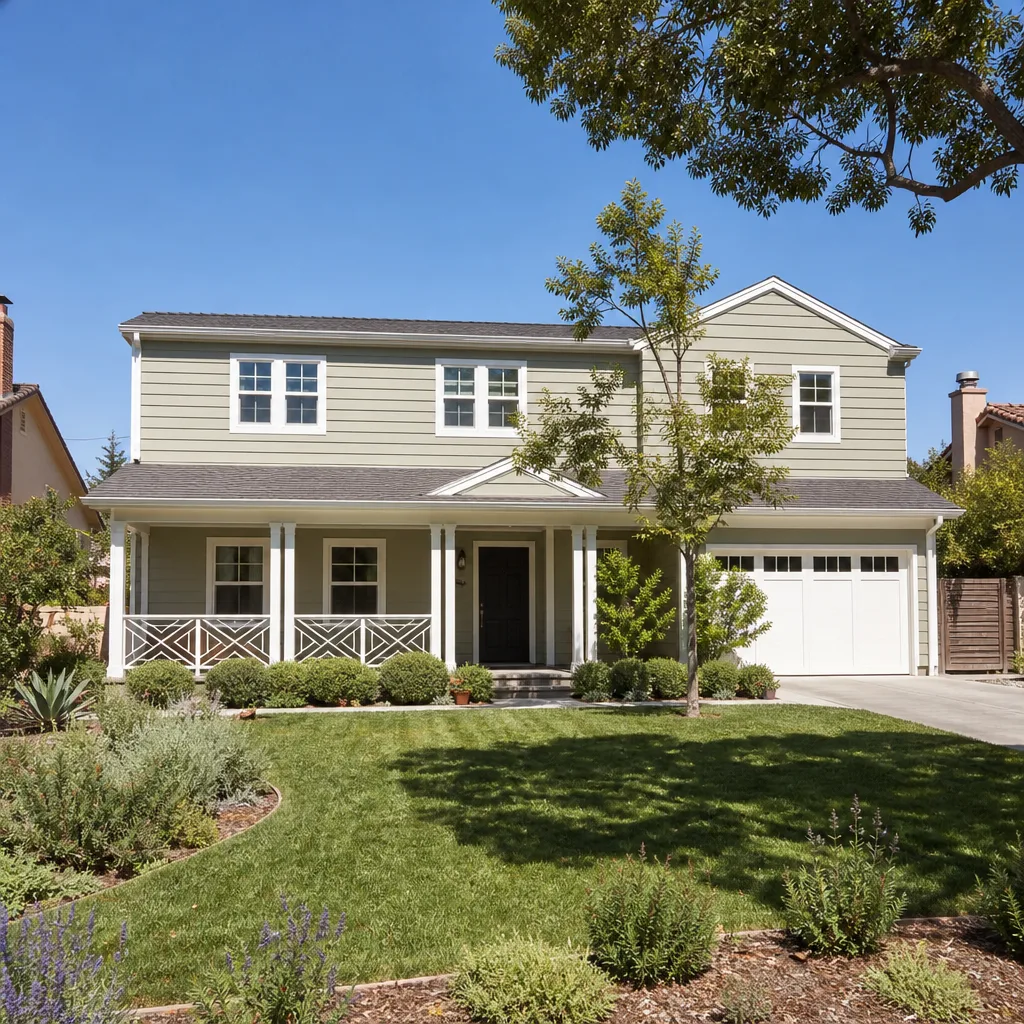
If all five of these mistakes share a root cause, it’s this: homeowners let verbal agreements substitute for documentation at every stage. The fix is a contract that reads like a legal document, because it is one. Before you sign anything, confirm the contract includes:
- A line-item cost breakdown with material allowances and labor separated
- The LADBS permit number (or a clause stating permits will be applied for and the project won’t start without them)
- A down payment of 10% or $1,000 maximum, consistent with California law
- A draw schedule tied to construction milestones, not an arbitrary timeline
- A written change-order policy that requires your signature on any scope change
- A completion timeline with defined start and end dates, not just estimates
- A written warranty that states what’s covered and for how long
At Benson ADU Builders, that last line is where we hang our credibility. Every project we take in Los Angeles gets a written price before work starts and a Done Right Promise. If the work isn’t right within a year, we make it right. We put that guarantee in writing and stamp it on every contract. We also use materials and prefab systems from brands like Abodu, Dvele, and James Hardie, so the products in your addition are ones you can research independently before you commit.
For related projects, our room addition contractor in Los Angeles work follows the same documentation discipline. Whether you’re adding a master suite, a home office, or an ADU, the contract rules don’t change.
One more thing: a live person answers our phone around the clock. That sounds like a small detail until you’ve spent a week leaving voicemails with a contractor who went quiet after the deposit cleared.
The Bottom Line
The five costliest mistakes with a home addition contractor in Los Angeles all come down to one failure: no paper, no proof, no price in writing. Demand an itemized bid. Verify the permit yourself on the LADBS portal. Never pay more than the legal down payment cap. Get a written change-order policy. And handle the neighbors before the city does. If you do those five things, you’ve already eliminated most of the risk in a project that scares the hell out of people because of these exact mistakes.
If you’re in Los Angeles and need help, Benson ADU Builders offers free estimates. Call (903) 225-2278 and we’ll put the price in writing before anything else.
Frequently Asked Questions
A typical home addition in Los Angeles runs between $250 and $600 per square foot depending on site conditions, foundation work, and finish level. A 400-square-foot addition often lands in the $100,000 to $240,000 range. The exact number depends on your lot, your existing structure, and the materials you choose. Call (903) 225-2278 for a written line-item estimate for your specific property.
Go to the LADBS building records portal online and search by your address. The system shows every permit application and issuance tied to your property. If your contractor can’t produce a permit number that appears on that portal, work should not start. It’s a free check that takes five minutes.
California law caps the down payment for home improvement work at 10% of the total contract price or $1,000, whichever is less. For most home additions, the legal maximum is $1,000. Any contractor asking for more before work begins is violating state law.
Most Los Angeles home additions take six to nine months from permit application to final inspection. Permits alone can take one to three months depending on LADBS workload and whether neighbor notifications or HOA approvals are required. Prefab and panelized systems from brands like Abodu and Cover can shorten build time significantly compared to traditional site-built framing.
Written by the team at Benson ADU Builders.
Need ADU Help?
Call Benson ADU Builders - licensed & insured, here with fast after-hours help in Los Angeles.
(903) 225-2278