Last updated October 9, 2026
How Long Does Home Addition Contractor Take? Timelines and What to Expect
Los Angeles DBS permit reviews for standard home additions averaged 8 – 14 weeks in 2024. That single fact means a contractor who promises a three-month project from first handshake to final inspection is either skipping permits or hasn’t pulled one in your neighborhood recently. In this guide, we’ll show you what actually drives home addition timelines in Los Angeles, where the hidden delays live, and how to get a written schedule you can hold a home addition contractor to. You’ll learn the five-phase timeline, how prefab brands like Abodu and Cover reshape it, and the exact checklist to demand before signing anything.
Quick Answer
A home addition in Los Angeles typically takes 6 – 12 months from design to final inspection, depending on permit queue position, project size, and whether you choose site-built or prefab construction. The construction phase itself usually runs 3 – 5 months, but the permit review phase at LA DBS frequently adds 2 – 3 months before a single crew shows up. Prefab systems like Abodu or Cover can compress the total timeline by 6 – 10 weeks because they arrive with pre-approved plan sets that clear the permit desk faster.
Table of Contents
- The Five Phases of a Home Addition Timeline
- How the LA Permit Queue Dictates Your Timeline
- City vs. County: Why Your LA Sub-Jurisdiction Changes Everything
- How Prefab and Pre-Approved Plans Shave 6 – 10 Weeks
- Padded Schedule vs. Realistic Timeline: What to Look For
- The Written Timeline Checklist to Request Before Signing
- How Budget and Timeline Interact
- Common Mistakes to Avoid
- When to Call a Professional
- Frequently Asked Questions
- The Bottom Line
The Five Phases of a Home Addition Timeline
Every home addition in Los Angeles moves through five distinct phases, and each one has its own realistic week-range. Contractors who blur these phases together on a proposal are usually hiding something. Here’s what each phase actually looks like on a calendar.
Phase 1: Design and Plan Set Preparation (3 – 8 weeks)
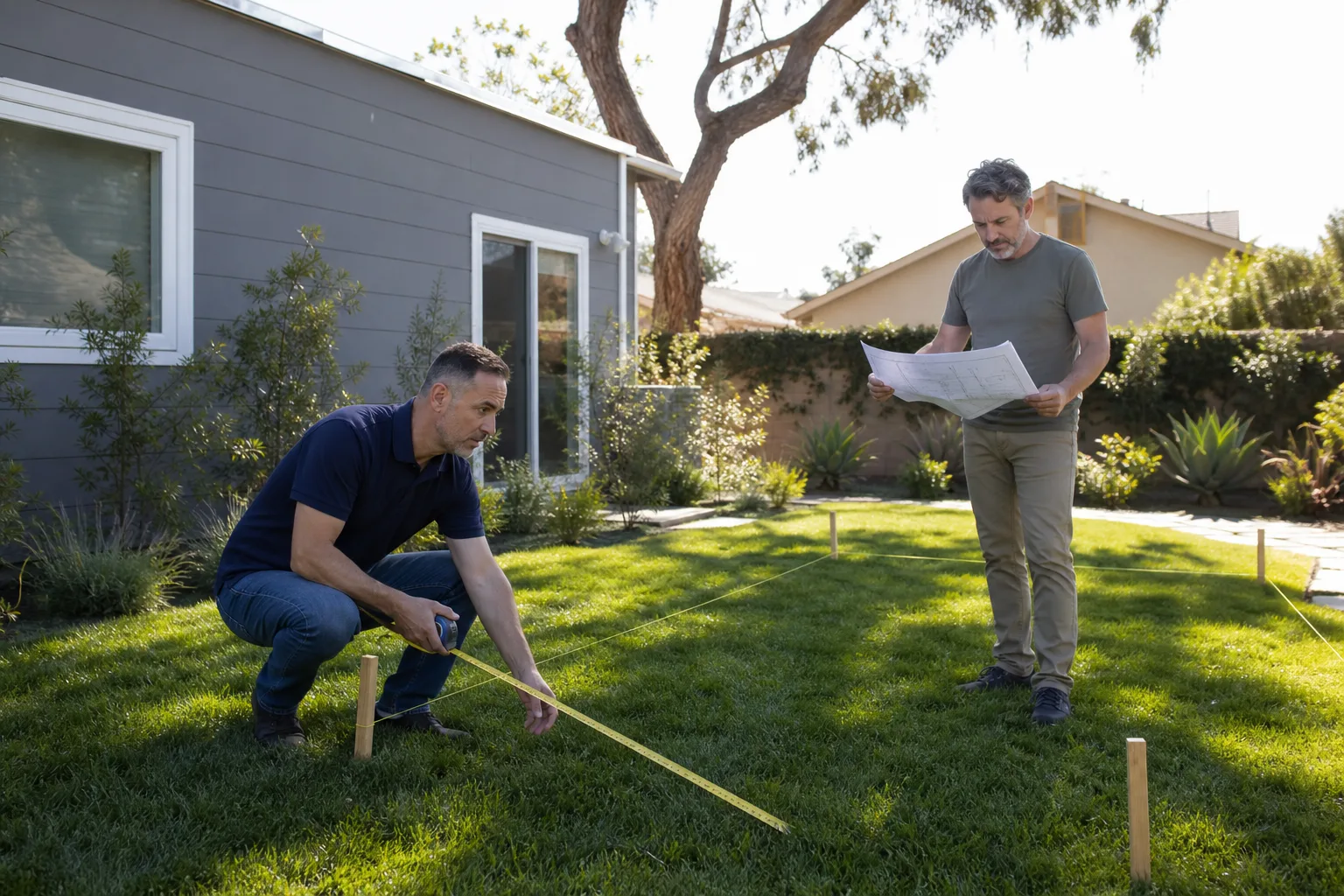
Before anything gets submitted to the city, someone has to draw the addition. For a standard room addition or ADU, architectural drawings, structural calculations, and Title 24 energy compliance documents take three to eight weeks. See our guide on how to hire an ADU contractor in Los Angeles for more on this process. If you’re working with a design-build contractor, this phase overlaps with pricing. If you’re hiring an architect separately, add coordination time. Prefab brands like Abodu and Cover arrive with engineered plan sets already approved through California’s statewide ADU pre-approval program, which cuts this phase down to as little as one to two weeks for the homeowner.
Phase 2: Permit Submission and Intake (1 – 4 weeks)
Once the drawings are ready, the contractor or architect submits them to the Los Angeles Department of Building and Safety. Intake is the administrative window where the city checks that everything is filed correctly, assigns a plan checker, and logs the project into the queue. This sounds simple, but in Los Angeles the intake step alone can stall for several weeks if the submission package is missing a single form. A contractor who submits incomplete paperwork and has to resubmit has already added a month to your timeline before review even starts.
Phase 3: Permit Review (8 – 14 weeks for LA city, varies by district)
This is the phase that determines your project’s true start date, and it’s the one most homeowners never hear about until it’s too late. Los Angeles DBS plan review for a standard home addition averaged 8 – 14 weeks in 2024. That means the plans sit on a city desk being reviewed for code compliance, structural adequacy, and zoning. If the plan checker issues corrections (they usually do), each correction cycle adds another 2 – 4 weeks. Multiple correction rounds are common, and a project that gets flagged for zoning issues in areas like the Hollywood Hills or coastal overlay zones can spend months in this phase alone.
Phase 4: Construction (3 – 5 months for standard additions)
Construction starts the day the permit is issued. A standard 400 – 600 square foot addition or ADU in Los Angeles takes roughly 90 – 150 days of actual building. That includes foundation, framing, roofing, rough-in electrical and plumbing, drywall, finishes, and exterior cladding. Weather in Los Angeles rarely causes delays, but inspection scheduling does. Each inspection requires the contractor to pause work and wait for an inspector, and in busy districts the wait between inspection request and inspection visit can run 1 – 2 weeks. A project with 8 – 10 inspections, which is normal, can pick up 6 – 10 weeks of inspection-related lag across the build.
Phase 5: Final Inspection, Corrections, and Closeout (2 – 6 weeks)
The final inspection confirms the work meets code. If the inspector passes it, the project is done. If corrections are required – missing smoke detectors, a handrail height issue, a detail that doesn’t match the approved plans – each fix triggers another inspection cycle. Then comes the certificate of occupancy, which is the document that lets you legally use the space. In Los Angeles, final inspection to certificate issuance typically runs two to six weeks. Some homeowners move furniture in the day after final inspection; others wait a month for the paperwork to clear.
How the LA Permit Queue Dictates Your Timeline
The calendar on your contractor’s proposal tells you almost nothing. The permit queue at your local building department tells you everything. Here’s why.
When a Los Angeles contractor hands you a construction schedule that shows “Permit approval: 2 weeks,” they’re either guessing or lying. Permits in Los Angeles are not approved on the contractor’s schedule. They’re approved when a city plan checker gets to your file, reviews it, and decides whether it’s code-compliant. The queue position is set on submission day, and it doesn’t care about your lease ending or your in-laws arriving in March.
A realistic Los Angeles contractor will tell you the truth: “We can submit in three weeks, but we can’t control the review timeline, and current LA review times are running eight to fourteen weeks.” That’s not hedging; that’s honesty. The contractor who tells you it’ll breeze through in two weeks is the one who’ll stop answering calls at week six.
What actually affects your queue position:
- Completeness of the filing. A package missing one required form goes to the back of the line on resubmission.
- Complexity of the project. A simple one-story bump-out reviews faster than a two-story addition with structural changes.
- Overlay zones. Projects in coastal zones, hillside districts, or historic overlay areas face additional review layers that standard additions don’t.
- Plan checker workload. LA DBS staffing fluctuates, and the queue moves faster in some months than others. Contractors who pull permits weekly know when the queue is shorter.
City vs. County: Why Your LA Sub-Jurisdiction Changes Everything
Los Angeles is not a single permitting jurisdiction, and the difference between city and county review times can swing your project by months. When someone says “LA permits take this long,” the useful question is: which LA?
Within the City of Los Angeles, DBS handles permits, and in 2024 the standard review window for residential additions ran 8 – 14 weeks. But specific districts within the city have their own quirks. Projects in hillside areas like Hollywood Hills, Bel Air, or Mount Washington face additional geotechnical review because of slope stability requirements. Coastal-adjacent zones face California Coastal Commission review, which is a separate agency with its own timeline that can add 8 – 12 weeks on top of DBS review.
Unincorporated Los Angeles County, which covers many areas residents think of as “LA,” is a completely separate permitting track. County review times run different from city review times, and the process for submitting corrections follows different rules. If you live in an unincorporated pocket, a contractor’s experience pulling city permits may not transfer cleanly to your project.
What this means for you: before you sign a contract, ask your contractor which specific jurisdiction reviews your project and what current review times are for that office. A contractor who builds across Los Angeles should be able to answer this question immediately. If they can’t, the timeline they’ve given you is a guess dressed up as a schedule.
How Prefab and Pre-Approved Plans Shave 6 – 10 Weeks
Not every home addition has to fight the full permit queue. Prefab and pre-approved plan systems are the quiet shortcut in Los Angeles construction timelines, and they’re one of the biggest reasons we work with brands like Abodu and Cover.
Here’s how it works. California maintains a program that pre-approves certain ADU and addition plan sets at the state level. When a project uses one of these pre-approved designs, the local jurisdiction doesn’t need to re-review structural engineering and code compliance from scratch. The local review focuses on site-specific items: setbacks, lot coverage, utility connections, and grading. That’s a fundamentally shorter checklist.
For a standard site-built addition in Los Angeles, permit review runs 8 – 14 weeks with correction cycles on top. For a prefab project using Abodu or Cover plans, the local review piece often compresses to 4 – 8 weeks, and correction cycles are rarer because the structural package was already vetted at the state level. That’s a 6 – 10 week reduction before construction begins, and it comes without cutting corners. The same applies to materials selection. Choosing James Hardie cladding that’s already specified in an approved plan set removes another round of product approval back-and-forth with the plan checker.
There’s a trade-off worth naming. Prefab systems can limit your design flexibility because you’re working within an existing approved plan. For many homeowners, the timeline savings outweigh the design constraint. For others, a fully custom site-built addition is worth the longer queue. Either way, the smart move is asking your contractor to quote both paths so you can see the time and price difference on paper.
Padded Schedule vs. Realistic Timeline: What to Look For
Not all aggressive schedules are lies, and not all long schedules are cautious. The skill is reading the difference, and it comes down to how a contractor structures their time estimates.
A realistic timeline names the variable. It shows “Permit review: 8 – 14 weeks (not in our control)” as a distinct line item, and it builds buffer into the construction phases where inspections get rescheduled. Realistic contractors tell you they’re padding for inspection lag, weather, and material lead times, and they tell you where the padding sits.
A padded schedule looks different. It spreads vague buffer across every phase without explanation: “Design: 8 weeks” when drawings should take four, “Construction: 6 months” when the project scope should build in four. Padding without explanation is a red flag, because it often means the contractor is juggling multiple projects and wants the flexibility to disappear from your job for weeks at a time without breaching the schedule.
The question that separates the two: “Show me the buffer, and tell me where it sits.” A real contractor points to specific line items and says “we added two weeks here because inspectors in your district are running ten business days between request and visit.” A padded contractor waves a hand and says “we like to be conservative.” The first answer is a schedule. The second is a stall strategy.
In our experience building across Los Angeles, homes in dense neighborhoods with heavy inspection volume – places like the San Fernando Valley’s older tracts – need more inspection buffer than projects in quieter jurisdictions. That’s local knowledge a good contractor builds into the plan and explains out loud.
The Written Timeline Checklist to Request Before Signing
Here’s the document to demand from any contractor before you sign a home addition contract in Los Angeles. If they won’t put these items in writing, walk. The timeline should be a written schedule with named phases, week-ranges per phase, and a note stating who controls each line item.
- Design and plan set weeks: named range, not “as needed,” with the specific deliverables (architectural, structural, Title 24) listed.
- Submission date: the exact date your permit package goes to LA DBS or your county office, not “soon.”
- Review time estimate: current 8 – 14 week range for city of LA, or the comparable figure for your jurisdiction, stated as an estimate outside the contractor’s control.
- Correction cycle policy: how many correction rounds are anticipated, and who covers the schedule impact if corrections exceed that number.
- Construction start trigger: a clear statement that construction begins only after permit issuance, with a named start date range relative to that trigger.
- Inspection buffer: the explicit number of buffer weeks built into construction for inspection scheduling, named per trade (framing, rough electrical, plumbing, final).
- Material lead times: current lead times for significant materials – windows, doors, cladding – and the trigger date for ordering each.
- Final inspection and closeout weeks: the range from final inspection to certificate of occupancy, including who handles correction items.
At Benson ADU Builders, this checklist is part of our written proposal process. Every project under The Relay Visibility Guarantee includes a written price before work starts, a written timeline with named phases, and a 365-Day Done Right Promise that backs the work for a full year after completion. If your contractor’s proposal doesn’t look like that, you don’t have a timeline, you have a conversation.
How Budget and Timeline Interact
Home addition cost and timeline move together, and in ways that surprise people. Understanding them helps you avoid signing for a price and schedule that can’t both be true.
A faster timeline costs more. If you want to shorten the permit review, you choose a prefab or pre-approved plan system like Abodu or Cover, which eliminates design time and structural review. If you want to shorten construction, you pay for larger crews or overtime sequencing. If you want materials that arrive on schedule rather than on backorder, you specify in-stock products – which sometimes means spending more on brands like James Hardie that have well-established supply chains instead of waiting on a custom product with a 16-week lead time.
A slower timeline doesn’t always save money, but it can. If you’re flexible on the start date, you can sometimes schedule your construction during a contractor’s slower season when scheduling pressure is lower. However, Los Angeles has a mild building climate year-round, so seasonal discounts are less common here than in other markets. The bigger savings lever is material lead time: choosing readily available cladding and windows over custom-ordered items can knock weeks off the schedule at the same budget.
The dangerous zone is the proposal that pairs a low price with a fast timeline and a vague permit story. A contractor quoting below market for a Los Angeles addition while promising a 14-week total timeline is either skipping permits, planning change-orders after contract signing, or both. We’ve seen too many homeowners in Los Angeles sign these deals and end up with a half-framed addition and a stop-work order. A written price and a written timeline are the two things that keep you out of that situation.
Common Mistakes to Avoid
- Signing before checking permit review times in your specific LA jurisdiction. A contractor can quote you a timeline for a project in a different district than yours. Ask for the review time estimate for your exact address and jurisdiction before the ink dries.
- Believing “we’ll pull the permit while we start construction.” In Los Angeles, building before permit issuance gets a stop-work order, and some projects get torn down. No reputable contractor starts before the permit is in hand.
- Not accounting for correction cycles. Almost every LA home addition gets at least one plan check correction. If your timeline doesn’t include correction weeks, it’s fiction.
- Choosing custom materials with unverified lead times. That beautiful custom window might have a 16-week production schedule. Confirm lead times before finalizing the design, or accept the timeline hit.
- Ignoring the overlap between ADU and addition permitting. In Los Angeles, ADUs and additions follow different code sections and sometimes different review tracks. A contractor with ADU experience but none in traditional additions may miss zoning triggers that stall your project.
- Signing a contract without a written timeline. If the schedule is a conversation, not a document, you have no enforcement mechanism when the project runs three months long.
When to Call a Professional
If you’re reading this before signing anything, call a professional now – the earlier a contractor enters your project, the more timeline risk you remove. The right call is especially important if you’re adding a second story, building in a hillside zone, or attaching to an older home with unknown foundation conditions. These projects carry structural complexity that changes both permit review and construction duration. If you’ve already got plans drawn and you’re shopping for builders, call to get a written timeline and price comparison. If you’re considering a prefab path with Abodu or Cover, a contractor authorized to build with those brands can quote both prefab and site-built options side by side. For more guides & resources on planning your project, visit our blog. Benson ADU Builders offers free estimates in Los Angeles – call (903) 568-7222 and you’ll get a live person, a written price, and a written timeline before any work starts.
Frequently Asked Questions
Expect 6 – 12 months total, with 8 – 14 weeks of that consumed by LA DBS permit review, 3 – 5 months in construction, and the remainder split between design and closeout. Prefab systems can reduce the front half of that timeline by 6 – 10 weeks. Call (903) 568-7222 for a written timeline specific to your project, free of charge.
A prefab or pre-approved plan addition using Abodu, Cover, or similar systems is the fastest permitted path, typically saving 6 – 10 weeks over site-built construction. A simple one-story bump-out on a flat lot without overlay zones reviews fastest. For most LA homeowners, the difference between a 10-month and 5-month total timeline is prefab versus site-built, not contractor speed.
Some are aggressively optimistic because they want the contract, and some simply haven’t pulled a permit in your specific jurisdiction recently. The contractor quoting 12 weeks for permit review may have last pulled a permit in a county office with a two-week queue. The contractor quoting 3 months total may be planning to build without permits, which can lead to stop-work orders. If a promise sounds aggressive, ask which jurisdiction’s review times it’s based on.
It shouldn’t, if you have a written price. At Benson ADU Builders, every project starts with a written price before any work starts, and that number doesn’t change unless you change the scope. Verbal estimates are the thing that shifts mid-project. If your proposal doesn’t have a number you can hold the contractor to, ask for it in writing before signing. Call (903) 568-7222 for a free written estimate.
No, but you should receive photo documentation and progress updates. Background-checked, uniformed technicians on a job site are a sign of a contractor who understands that you’re trusting strangers with your home. Ask any contractor you’re considering how they document progress, and whether you’ll see photos, receipts, and a digital record of inspections. The answer tells you a lot about how the project will run.
Is a written guarantee on home addition work standard in Los Angeles?
No, and that’s a problem. Many Los Angeles contractors operate on a verbal handshake and hope nothing fails inside a year. At Benson ADU Builders, every project includes a 365-Day Done Right Promise: if it’s not done right, we make it right, backed by a written guarantee and a free second visit if any covered repair fails. Ask any contractor you’re evaluating what happens if something fails at month 11. Silence is your answer.
The Bottom Line
A home addition in Los Angeles takes 6 – 12 months because the permit queue, not the contractor, sets the floor on the timeline. The five phases – design, submission, review, construction, closeout – each carry their own realistic ranges, and the review phase at LA DBS runs 8 – 14 weeks regardless of what any proposal says. You can compress that timeline with prefab and pre-approved plans from Abodu or Cover, and you can protect yourself with a written timeline and written price. The contractor who puts both in writing before you sign is the one who respects your calendar. Benson ADU Builders home has been building home additions in Los Angeles since 2006, alongside dedicated room addition and ADU work across the market. Call (903) 568-7222 for your free estimate and written timeline.
Written by Troy Eastman, Owner at Benson ADU Builders, serving Los Angeles since 2006.