Last updated October 9, 2026
How to Hire a ADU Contractor in Los Angeles: A Step-by-Step Guide
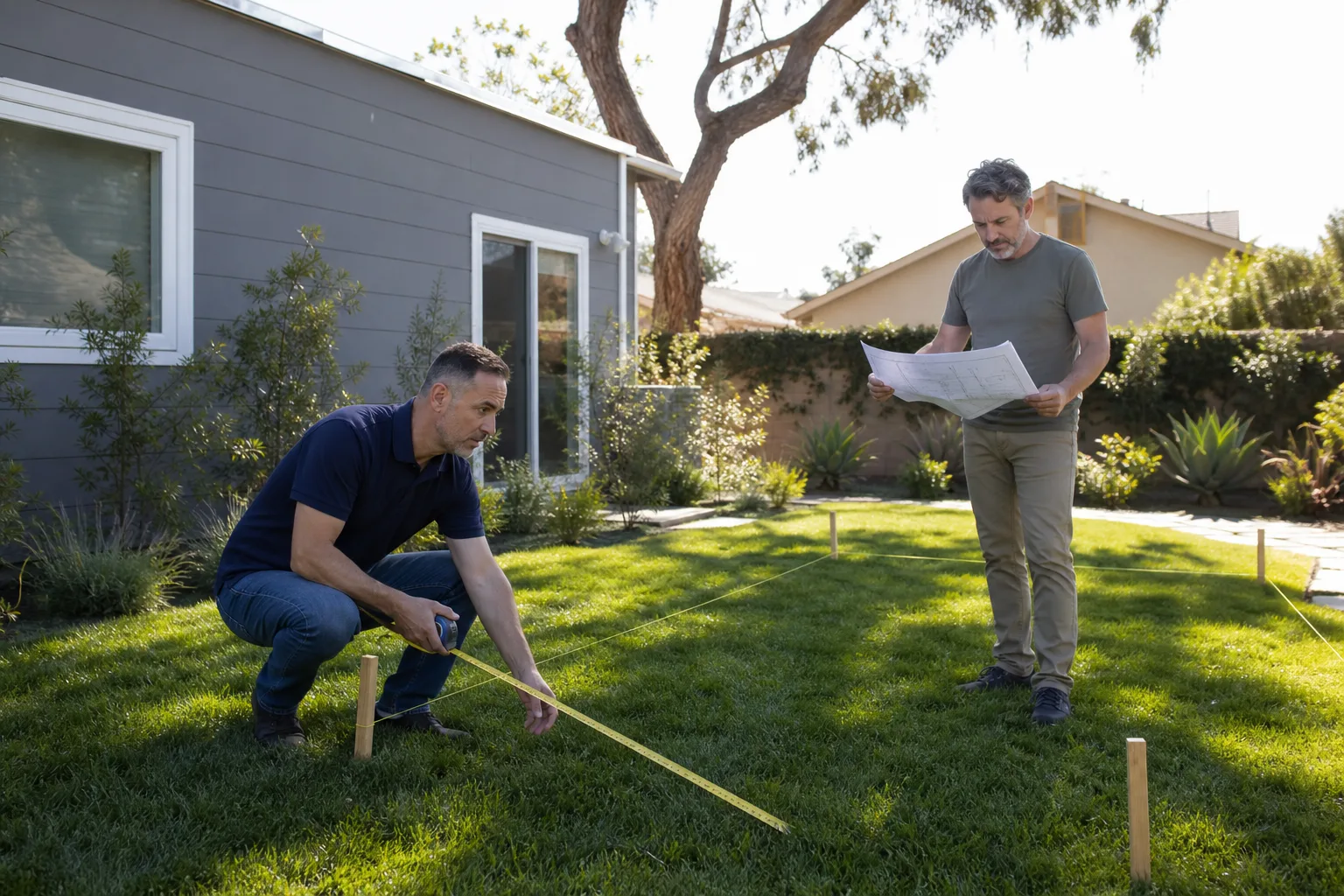
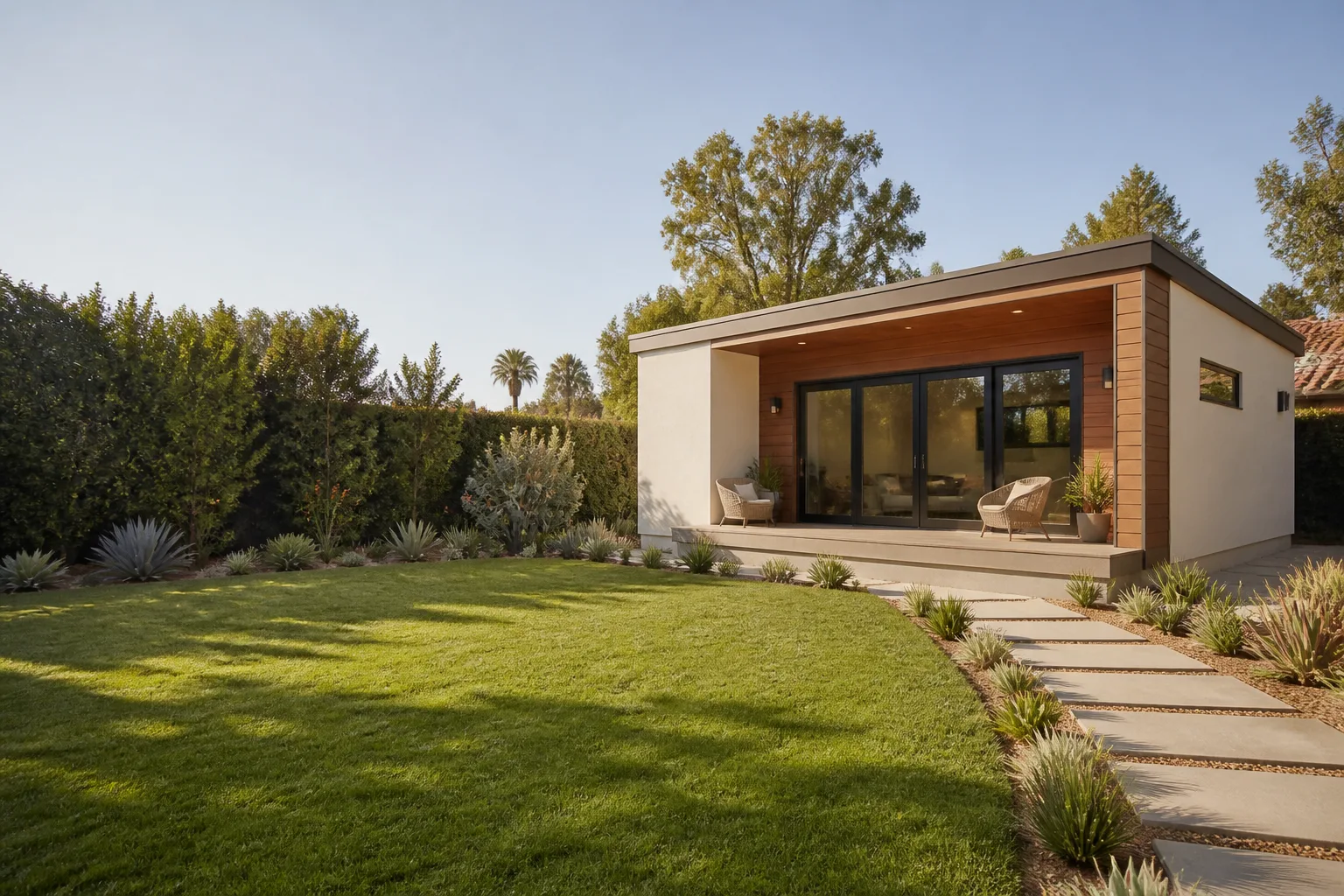
Of the roughly 4,000 licensed contractors in Los Angeles County, fewer than 200 have pulled an ADU permit in the last two years. Let that sink in for a second. That means when you start collecting bids for your accessory dwelling unit, most of the people quoting you are learning the ADU ropes on your property, with your money, on your timeline. Los Angeles has some of the most intricate ADU regulations in the state, from hillside overlays to coastal zone restrictions, and a contractor who treats your project like a standard room addition will bleed you dry through delays, failed inspections, and change orders. This guide turns the hiring process into a filter, not a formality. By the time you reach the end, you’ll know exactly which contractors to eliminate before they ever step foot on your property.
Quick Answer
To hire an ADU contractor in Los Angeles, verify their CSLB license and ADU-specific permit history first, then interview them with six pointed questions about local ADU law, demand a written scope of work with fixed pricing before any money changes hands, normalize bids so you’re comparing identical line items, and require real-time project tracking with milestone sign-offs after signing. Skip the verbal estimate phase entirely. A contractor who can’t produce a written price before work starts is a contractor who will produce a surprise invoice after it begins.
Table of Contents
- The Three License Checks Every LA Homeowner Must Run Before the First Meeting
- Six Interview Questions That Reveal Whether a Contractor Actually Knows ADU Permit Law
- Why a Verbal Estimate Is a Liability, Not a Courtesy
- How to Compare Bids When the Line Items Don’t Match
- Real-Time Project Tracking: What to Demand After Signing
- Prefab vs. Site-Built: What Los Angeles Homeowners Should Know
- Common Mistakes to Avoid
- When to Call a Professional
- Frequently Asked Questions
- The Bottom Line
The Three License Checks Every LA Homeowner Must Run Before the First Meeting
Most homeowners in Los Angeles do one thing before hiring a contractor: they ask for a license number and then never check it. That is backwards. The contractor’s license is the floor, not the ceiling. Here are the three checks that actually protect you, and they all take less time than watching a single episode of a home renovation show.
1. CSLB License Status
The California Contractors State License Board maintains a public database at cslb.ca.gov. Enter the license number and confirm three things: the license is active, the classification is “B” (General Building Contractor) or a specialized classification that includes residential construction, and the named licensee matches the person or company you’re actually talking to. If the name on the license doesn’t match the name on the bid, walk away. That mismatch usually means someone is borrowing a license, and in California, that arrangement voids most legal protections you’d otherwise have. We’ve seen too many Los Angeles homeowners discover after a dispute that the person who signed their contract wasn’t the person on the license at all.
2. ADU-Specific Permit History
The City of Los Angeles and most LA County municipalities publish building permit records online through their Department of Building and Safety portals. You can search by contractor name or license number and see every permit they’ve pulled, including whether the permits were for ADUs specifically. This matters because an ADU permit involves different code sections than a kitchen remodel does: setbacks, fire sprinkler requirements, utility connections, and separate electrical metering. A contractor with 30 years of experience and zero ADU permits is a contractor who will be reading the ADU ordinance for the first time on your job. Ask for permit numbers for their last three ADU projects, then verify those permits were finaled, not just pulled. An open permit means an unfinished project.
3. Insurance Certificate With You Listed as Additional Insured
Do not accept an insurance certificate as proof of coverage. Ask the contractor to have their insurance broker issue a certificate that names you, the homeowner, as an additional insured for the duration of your project. This takes one phone call on their end and protects you from liability if a worker is injured on your property. In Los Angeles, where a single workers’ compensation claim can run into six figures, this is non-negotiable. Also confirm the certificate includes general liability coverage of at least $1 million and workers’ compensation coverage, which California law requires for any contractor with employees.
These three checks, run before the first meeting, will eliminate roughly a third of the contractors bidding on Los Angeles ADUs. The ones who remain are worth your time.
Six Interview Questions That Reveal Whether a Contractor Actually Knows ADU Permit Law
The interview is where most homeowners go soft. They ask about timeline and price and then fill the silence with small talk. Instead, use these six questions to separate the contractors who build ADUs for a living from the ones who are hoping their first one goes okay. If you’re working with ADU Builders in Los Angeles, these questions should feel routine.
- “What setbacks apply to my property, and how did you determine them?” In Los Angeles, ADU setbacks vary by zone, lot type, and whether you’re converting existing space or building new. A knowledgeable contractor will ask for your address or at least your zone, then explain that ADUs within an existing structure often have zero side and rear setback requirements, while detached new construction typically requires four feet. If they give you a single number without asking about your property, they don’t know what they’re doing.
- “Is my project eligible for any fee waivers or deferrals?” Los Angeles offers impact fee waivers for ADUs under 750 square feet, and school district fees are often waived for ADUs under 500 square feet. A contractor who doesn’t raise this without prompting is either uninformed or hoping you won’t notice the money you’re leaving on the table.
- “How do you handle the fire sprinkler requirement for my specific ADU?” Many LA jurisdictions require fire sprinklers in detached ADUs. The cost varies significantly based on whether your existing water main can support the sprinkler demand or you need a meter upsizing. A contractor should be able to explain the tradeoff and give you a rough cost range for the sprinkler work before plans are drawn.
- “Who handles the plan drawings, and are they familiar with my local planning department?” Los Angeles has one of the most complex plan-check processes in the country, and different neighborhood offices within the city can interpret the same code section differently. If your contractor plans to use the same generic drafting service for a project in San Pedro that they used for a project in Sherman Oaks, that’s a red flag. Ask for a designer or architect who has worked in your specific LA neighborhood.
- “What’s your process when a permit correction comes back?” Every ADU permit receives corrections. The question is how the contractor handles them. A good answer sounds like: “We review corrections within 48 hours, we resolve them with the plan checker directly, and we don’t charge you for correction work that’s our responsibility.” A bad answer includes any version of “that won’t happen” or “we’ll deal with it when it comes up.”
- “Can you provide references for three ADU permits pulled within the last 18 months?” Not three projects. Three ADU permits. In Los Angeles, that is the difference between a specialist and a generalist. Follow up by asking whether those permits were finaled and whether those homeowners experienced any change orders after the written estimate was signed.
Any contractor who bristles at these questions is telling you something. Good contractors in Los Angeles expect sharp, informed clients and answer these easily because the answers are part of their daily work, much like the transparency covered in our Room Addition Contractor Warning Signs Every Homeowner Should Know.
Why a Verbal Estimate Is a Liability, Not a Courtesy
A verbal estimate is not a favor; it’s an open question, and a contractor who won’t answer it in writing before work begins is inviting a different answer after the deposit clears. The written scope of work is the single most important document in your ADU project. It’s the thing you’ll enforce if something goes wrong, and the thing that tells you, before you sign, whether the contractor intends to honor their price. At Benson ADU Builders home, every project gets a written price before any work starts. No exceptions, and no transition into a verbal conversation when it matters.
A binding written scope should include at minimum:
- Line-item pricing for every phase of work: demolition, foundation, framing, electrical, plumbing, HVAC, drywall, finishes, and site cleanup. If a line item says “miscellaneous,” get it defined.
- Allowances with hard caps for materials like tile, fixtures, and lighting. The cap prevents a $25 per square foot tile allowance from becoming a $40 per square foot surprise.
- Exclusions stated explicitly. If the contractor doesn’t plan to handle landscaping, painting, or furniture removal, that needs to be in writing. Silence is not an exclusion; it’s an ambiguity, and ambiguities get resolved in the contractor’s favor.
- A payment schedule tied to milestones, not to dates. “50% after drywall complete” is enforceable. “50% by week four” is a recipe for disputes when week four arrives and the work isn’t done.
- A change-order protocol stating that no additional work is performed and no additional charge is incurred unless you sign a written change order first. In Los Angeles, where material costs and labor rates have moved unpredictably, this clause protects you from “we had to adjust the price for current market conditions” after you’ve committed.
- A warranty section stating what is covered, for how long, and what happens if a covered item fails. The 365-Day Done Right Promise that we offer, for instance, means if the work isn’t right within a full year, it gets made right in writing.
The written scope is also your first real test of the contractor’s character. A contractor who sends a one-page estimate with a single lump-sum number at the bottom is either hiding their margins or planning to figure out the details at your expense. A contractor who sends a nine-page document with line items, exclusions, and a payment schedule is a contractor who has finished projects before and knows what it takes to finish yours.
How to Compare Bids When the Line Items Don’t Match
You will receive bids that are impossible to compare directly. One contractor itemizes electrical work separately; another folds it into a general construction line. One includes permit fees; another treats them as a “cost plus” item. One prices a Tuff Shed shell as the core structure; another prices a fully custom site-built frame. Comparing these apples to square footage is how homeowners pick the cheapest bid and end up paying the most. Here’s the normalization framework we recommend to every Los Angeles homeowner.
Step 1: Extract every bid into the same categories. Create a spreadsheet with rows for site prep, foundation, structure (framing or prefab shell), roofing, windows and doors, electrical, plumbing, HVAC, insulation and drywall, exterior cladding, interior finishes, and project management. Move every line item from every bid into this template. Some contractors will have items that don’t fit; that’s a finding in itself.
Step 2: Identify what’s absent. A bid that shows $180,000 for an ADU but has no line for electrical is not actually $180,000. It’s $180,000 plus whatever the electrical sub charges later. In our experience, omissions account for most of the gap between the apparent low bid and the eventual final cost. If a line is missing, call the contractor and ask. If they say it’s “included in the general line,” ask for the allocation. If they can’t produce it, price that line yourself based on LA market rates and add it to their bid for comparison purposes.
Step 3: Normalize for materials quality. James Hardie cladding costs more upfront than stucco and less over time because of lower maintenance and better fire performance, which matters in Los Angeles hillside zones. A bid that specifies the material by name is a bid you can verify. A bid that says “siding” with no further detail is a bid that will deliver whatever is cheapest that week. The same logic applies to everything from roofing membrane to window brands.
Step 4: Compare the price per enclosed square foot only after all adjustments. Once every bid includes the same scope and the same level of material specificity, divide the total by the conditioned square footage of the ADU. That number should land between $250 and $450 per square foot for most Los Angeles ADUs in 2025, depending on site conditions, access, and finish level. Anything below $200 should trigger a hard look at what’s missing. Anything above $500 should trigger a hard look at what’s being padded.
Step 5: Price the risk, not just the scope. The contractor who gives you a written price, a change-order protocol, and a published warranty is pricing their work honestly, and you can learn what breaks down in our Room Addition Contractor Troubleshooting: Common Problems and How to Fix Them. The contractor who gives you a verbal range and a handshake is pricing nothing; they’re just trying to win the job. When you adjust bids for risk, the honest bid usually looks like the better deal.
Real-Time Project Tracking: What to Demand After Signing
The biggest complaint Los Angeles homeowners have about ADU contractors isn’t cost. It’s silence. The contractor disappears after the deposit, and the homeowner spends the next eight months chasing answers by text. You should know exactly what’s happening on your project right now, who is on site, what the inspection schedule looks like, and whether the budget is holding. This is non-negotiable, and it should be written into your contract before you sign.
Here’s what real-time tracking looks like when it’s done well:
- A named project manager. You should have one person who owns your project from permit to final inspection, and that person should respond to your texts or calls within one business day. Not always, but almost always.
- A live schedule. Not a PDF that was accurate three weeks ago. The schedule should be accessible on your phone and updated as things change. If weather in Los Angeles delays a pour, the schedule should show it and show the new date.
- Photo documentation. Before-and-after photos of every phase: trenching, rebar, rough electrical, insulation, final finishes. These aren’t vanity shots; they’re your proof that the work inside the walls was done correctly, and they’re what you’ll reference if something fails after inspection.
- Written change orders with your sign-off. No work starts on a change until you’ve approved it in writing, and the change order states the price impact and the schedule impact in the same document. A change order that changes the price but not the schedule is an incomplete change order.
- Inspection scheduling transparency. You should know when each inspection is scheduled, what the inspector is checking, and what the result was. If an inspection fails, you should know why and what the corrective plan is, in writing.
We’ve built this level of visibility into every project we run because we’ve seen what happens without it. A homeowner who gets weekly updates, photos of completed work, and a few days’ notice before each inspection is a homeowner who stays calm when the inevitable small hiccup occurs, which is why we also publish a Room Addition Contractor Maintenance Schedule: What to Do and When for long-term success. A homeowner who gets silence has to assume the worst, and assumptions are where disputes are born.
Prefab vs. Site-Built: What Los Angeles Homeowners Should Know
Most Los Angeles homeowners assume an ADU means a site-built structure, framed stick by stick in the backyard over four to six months. That’s still a common approach, but it’s no longer the default. Prefabricated and panelized ADUs have taken a serious share of the Los Angeles market, and for good reason: they’re faster, their costs are more predictable, and their quality is more consistent because components are built in a controlled factory environment rather than in your backyard. When you’re comparing contractors, the question isn’t just “who builds the best ADU” but also “which approach is right for your site and your timeline.”
Site-built ADUs make the most sense when your lot has unusual dimensions, steep topography, or historical district restrictions that demand custom plans. A Woodland Hills hillside lot with a 35-degree grade will frustrate any prefab system, since most factory-built modules assume a relatively flat delivery path and crane access. Site-built also gives you total flexibility on interior layout, since you’re not constrained by module widths or panel dimensions.
Prefab systems like Boxabl and Plant Prefab trade that flexibility for speed and cost certainty. Boxabl’s folding modules, originally designed to solve a completely different problem, have become popular in Los Angeles for compact backyard units where crane access is available and the lot is flat enough for a standard foundation. Plant Prefab takes a different approach: panelized walls and roof sections built in a factory, then assembled on site in a fraction of the time of stick framing. Both routes mean fewer on-site trades for homeowners to manage, and fewer weather delays, which in Los Angeles usually means fewer marine-layer mornings slowing down the pour.
The material conversation matters too. James Hardie fiber cement cladding has become a go-to for Los Angeles ADUs because it delivers fire resistance that matters in hillside and canyon communities, and it holds up against the sun better than traditional wood siding. When you’re interviewing contractors, ask whether they’re authorized to source these products or whether they’ll be buying whatever’s available at the local lumberyard the week they start. Authorized relationships mean pricing is locked, delivery is scheduled, and the product is the product you approved.
Common Mistakes to Avoid
- Accepting a lump-sum bid without line items. A single number doesn’t tell you what you’re paying for, and it gives the contractor maximum room to substitute cheaper materials later. Insist on line items, or walk.
- Checking the license but not the permit history. A licensed general contractor who has never pulled an ADU permit is a bathroom remodeler asking you to fund their education. Verify ADU-specific permits in Los Angeles before the first meeting.
- Not being listed as additional insured. If a worker is injured on your property and you’re not on the insurance certificate, you’re exposed. This is a two-minute fix for the contractor and an easy way to test whether they’re organized.
- Signing a contract with no written warranty. A 365-day promise that isn’t in writing isn’t a promise. The warranty should state what’s covered, for how long, and what the process is when something fails.
- Paying a large deposit before any work begins. A deposit of 10 to 20 percent is reasonable to secure a spot in the schedule. A contractor asking for 50 percent before a single permit is pulled is financing their previous project with your money.
- Ignoring the notice of completion. In California, filing a notice of completion starts the clock on mechanics lien rights. If you don’t file it within 10 days of the project finishing, subcontractors have longer to file liens against your property. Ask your contractor to walk you through this.
- Hiring the first contractor who returns your call. Los Angeles has thousands of contractors, and return speed correlates with demand, not quality. Interview at least three, and use the framework in this guide to compare them honestly.
When to Call a Professional
You should call an ADU contractor before you do anything else: before you sketch a plan, before you apply for financing, before you clear out the garage to make room. The right contractor will help you understand what’s buildable on your specific Los Angeles lot, what the realistic budget is, and whether your project is better served by a site-built structure or a prefab system. They’ll also help you avoid the expensive mistake of designing an ADU that can’t be permitted. If you’re in Los Angeles and you want a written price before any work starts, along with a 365-day done-right promise in writing, Benson ADU Builders offers free estimates. Call (903) 568-7222 and you’ll reach a live person who can walk you through your options, including access to brands like Boxabl, Plant Prefab, and James Hardie cladding. The estimate is free, and the information will make you smarter whether or not you ever hire us.
Frequently Asked Questions
Most ADUs in Los Angeles currently cost between $250 and $450 per square foot all-in, which for a typical 500-square-foot unit means $125,000 to $225,000. That range accounts for site preparation, foundation, construction, finishes, and permit fees, and it can shift significantly based on hillside conditions, soil type, and whether you choose a prefab system or site-built construction. Call (903) 568-7222 for an exact written quote tied to your specific lot and scope.
Permitting in the City of Los Angeles typically takes 4 to 8 months depending on plan-check workload and whether your property is subject to overlay zones or historical review, and construction usually runs another 4 to 8 months after the permit is issued. Prefab systems can compress the construction phase significantly, but the permit timeline is driven by the city’s process.
Yes. In California, any construction project valued at $500 or more must be performed by a contractor with an active CSLB license, and an ADU is categorically beyond the owner-builder threshold for most homeowners. Using an unlicensed contractor exposes you to liability for worker injuries and voids most of the legal remedies you’d otherwise have if the work is defective.
A JADU (Junior Accessory Dwelling Unit) is a conversion of existing space within the walls of your primary home, capped at 500 square feet, while an ADU can be attached or detached and can be larger. JADUs have additional restrictions in Los Angeles, including owner-occupancy requirements for properties that receive certain JADU permits.
Some Los Angeles contractors can connect you with lenders who specialize in ADU construction loans or who use the projected rental income from the ADU to qualify you for a larger loan. This is a good interview question, since it tells you whether the contractor understands the full financial picture of ADU ownership, not just the construction side.
It should not, provided the scope doesn’t change and your contract includes a written change-order protocol and a fixed-price guarantee. If the contractor’s contract allows for “unforeseen conditions” without defining them, you should expect those conditions to be discovered on day two. A Home Addition Contractor in Los Angeles who offers a written price before work starts and honors it through completion is the standard you should accept.
The Bottom Line
Hiring an ADU contractor in Los Angeles is not a search for the lowest bid. It’s a filtering process: verify the license, the permit history, and the insurance; interview for actual ADU knowledge; demand a written scope with line items and exclusions; normalize bids so you’re comparing the same project; and require tracking after signing that keeps you informed without having to chase anyone. The contractors who survive that filter are the ones who finish projects on budget and stand behind the work, and they’re a small minority of the market. If you’re ready to start, Room Addition Contractor in Los Angeles services from Benson ADU Builders include a free estimate with a written price, a 365-day done-right promise, and access to leading prefab brands. Call (903) 568-7222 to schedule yours.
Written by Troy Eastman, Owner at Benson ADU Builders, serving Los Angeles since 2006.